Why can't I use my personal auto policy for business driving in Dallas?
Personal auto policies typically include a business-use exclusion that denies coverage for accidents occurring during commercial activities. If you use your vehicle for deliveries, transporting equipment, or hauling goods across the Metroplex, you need a commercial auto policy to ensure claims are paid. Without commercial coverage, an insurer can legally deny physical damage and liability claims resulting from a work-related incident.
- Insurance type
- commercial-auto
- Languages
- Spanish and English
- Documentation
- Options available depending on carrier and eligibility
- Free quote
- Yes, no obligation
- Carriers
- Several compared
- Phone
- 1-877-579-0587
Fast, free quotes with bilingual agents. No obligation.
If your business uses vehicles in Dallas, you likely need commercial auto insurance—not personal auto. That applies whether you run a single service van in Oak Cliff, a small contractor truck in East Dallas, a delivery car in Deep Ellum, or a growing fleet that moves between Dallas, Fort Worth, Irving, Plano, Mesquite, and the rest of the Metroplex. Dallas is a city built on commerce: construction, logistics, professional services, food distribution, real estate, HVAC, landscaping, plumbing, home health, and independent contractors all rely on vehicles to keep work moving. And with busy highways like I-35E, I-30, I-635, SH-114, US-75, and the DFW freight corridors, a business vehicle spends a lot of time in high-traffic, high-exposure conditions.
In Texas, business-owned vehicles or vehicles used for business purposes generally need commercial auto coverage. That’s especially important if the vehicle is titled to a business, is used to transport tools or equipment, carries employees or clients, makes regular deliveries, or is part of a fleet. Even if you personally drive the vehicle, once the use becomes business-related, a personal auto policy may not respond the way you expect. A commercial auto policy is designed for that kind of exposure and can help protect your company, your drivers, and your operations after an accident.
Dallas businesses also face practical realities that make the right coverage important: crowded parking lots in Uptown and Downtown, stop-and-go traffic on Belt Line and the Tollway, heavy truck movement near industrial areas in South Dallas and around the airport, and sudden North Texas weather that can turn a routine drive into a claim. Hail, flash flooding, severe thunderstorms, and slick roads can all create risk for work vehicles. For many local businesses, commercial auto is not just a formality; it is part of staying open and staying contract-compliant.
What commercial auto insurance covers vs. personal auto
Commercial auto insurance is designed for vehicles used in business. Personal auto insurance is usually intended for personal commuting and everyday household driving. The difference matters because insurers look closely at how a vehicle is owned, who drives it, what it carries, and whether it is being used to earn income or support business operations.
A commercial auto policy can help cover many common business-driving losses, depending on the policy forms and limits chosen. Typical protections may include:
- Liability coverage if your driver is at fault and injures someone or damages property.
- Collision coverage for damage to your covered vehicle from an accident, regardless of fault.
- Comprehensive coverage for non-collision losses such as theft, vandalism, hail, fire, or certain weather events.
- Medical payments or personal injury protections where available and selected.
- Uninsured/underinsured motorist coverage in some situations, depending on policy structure and state rules.
- Hired and non-owned auto coverage for certain business uses of rented vehicles or employee-owned vehicles used for work.
By contrast, a personal auto policy may not be intended to cover:
- Vehicles titled to a business
- Regular commercial use such as deliveries, service calls, or hauling equipment
- Vehicles carrying tools, materials, or business inventory
- Multiple drivers from a company
- Fleets or route-based operations
That difference can become a serious issue after a loss. If a claim happens and the insurer determines the vehicle was being used for business in a way the personal policy did not contemplate, the claim could be limited or denied. For Dallas businesses, that can mean an accident affects not just one driver, but also project timelines, customer relationships, and cash flow. Commercial auto helps align your insurance with how the vehicle is actually used.
Another important point is that commercial auto can be customized to the type of work you do. A local electrician in Garland may need different protection than a Dallas-based courier, a landscaping company with trailers, or a regional trucking operation passing through the Metroplex. The right policy starts with the vehicle, but it also depends on the business model behind the wheel.
Higher limits required by contracts, lenders, lessors, and DOT/FMCSA
Texas law sets a minimum liability requirement for motor vehicles, and businesses must be aware of it. In Texas, the legal minimum is 30/60/25: $30,000 bodily injury per person, $60,000 bodily injury per accident, and $25,000 property damage. But for most Dallas businesses, that minimum is only the starting point. Clients, general contractors, lessors, and lenders often require much higher limits before they will let you work, lease, or sign a service agreement.
This is especially true in Dallas industries like construction, oilfield support, delivery, logistics, and specialty contracting. Large commercial accounts often ask for a combined single limit of $500,000 to $1,000,000 or more, depending on the contract. That higher requirement is common because one serious accident can involve multiple vehicles, expensive property damage, and injury claims that exceed the state minimum very quickly.
For businesses that operate across state lines or move freight for hire, federal rules may apply. Interstate for-hire trucking is regulated by the Federal Motor Carrier Safety Administration (FMCSA), and many operations must carry at least $750,000 in financial responsibility, with some cargo or operation types requiring more. If your trucking or hotshot business serves Dallas, Fort Worth, the Port of Houston, out-of-state loads, or long-haul routes through Texas and beyond, your insurance needs may be driven by federal compliance as much as by state law.
Common situations that call for higher limits include:
- General contractors requiring certificate holders and additional insureds
- Commercial leases for work trucks or vans
- Warehouse and delivery contracts
- Municipal or government vendor agreements
- Oilfield, construction, and industrial service contracts
- Interstate trucking and FMCSA-regulated for-hire operations
Higher limits are not just about compliance. They also help protect the business itself. A liability claim that goes beyond your policy limit can put company assets, bank accounts, and future earnings at risk. In a metro area as busy as Dallas, where vehicles encounter dense traffic, freight activity, and fast-changing weather, many owners choose limits that match the actual exposure of the business rather than the bare minimum required by law.
If you are unsure whether your business needs a standard commercial auto policy, a higher-limit policy, or trucking-specific coverage, it helps to review your contracts and how your vehicles are actually used. A policy should fit both the legal requirement and the real-world risk.
Vehicle types we insure in Dallas
Dallas businesses use many different kinds of vehicles, and commercial auto can be written for a wide range of operations. What matters is not only the make and model, but also how the vehicle is used and whether it supports business income.
Service vans and cargo vans
These are common with HVAC, plumbing, electrical, pest control, appliance repair, locksmiths, and mobile service businesses. Vans often carry tools, parts, ladders, and ladders racks, which increases the importance of the right liability and physical damage coverage. A van moving through neighborhoods like Lakewood, Bishop Arts, North Dallas, or Richardson for repeated service calls has different risk than a private family vehicle.
Pickup trucks and work trucks
Pickup trucks are used throughout Dallas for construction, landscaping, fencing, hauling, and field service work. These vehicles may pull trailers, carry materials, or transport crews between job sites. Depending on the truck’s use, you may need commercial liability, collision, comprehensive, and possibly towing or rental reimbursement options to keep the business moving after a loss.
Fleets
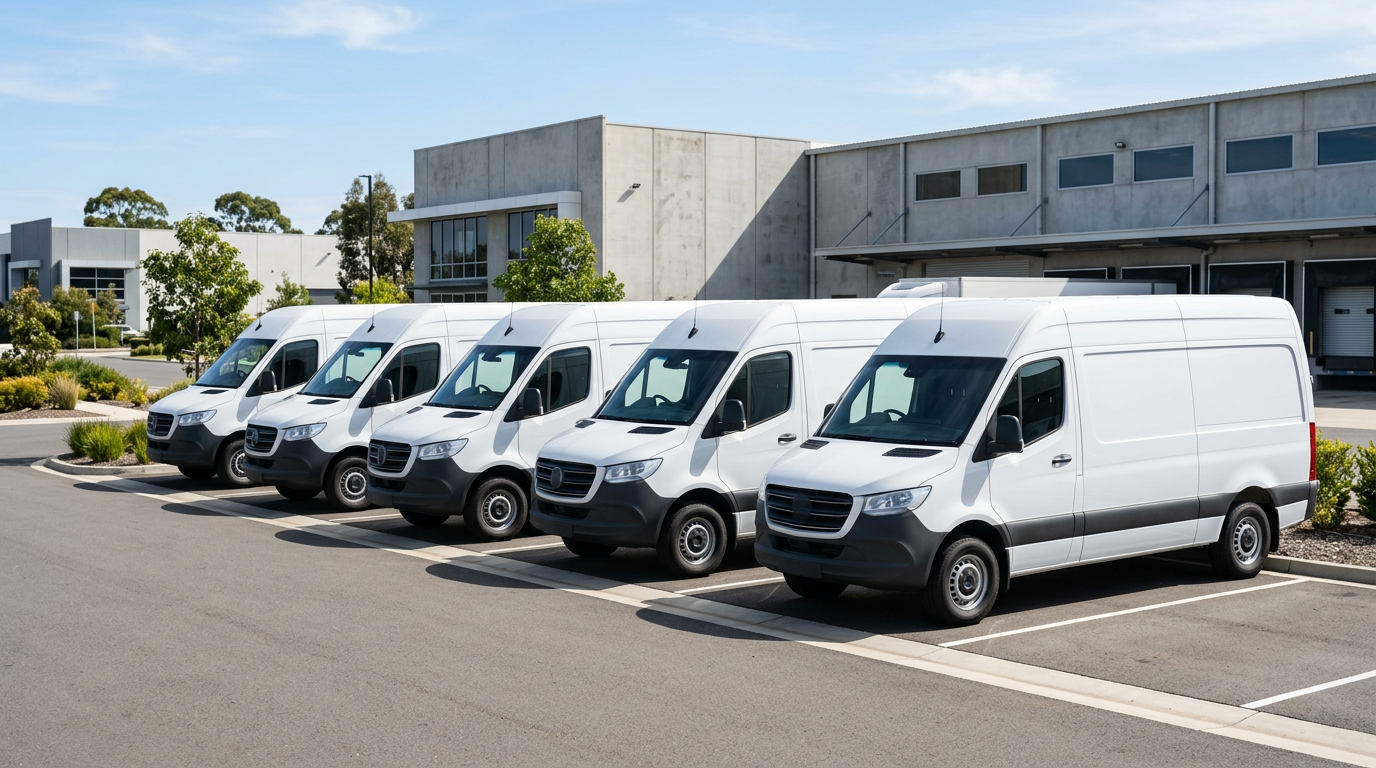
Some Dallas companies operate several vehicles at once—delivery fleets, courier services, contractor fleets, or local service fleets that travel across the Metroplex. Fleet coverage can simplify administration while giving the business a centralized way to insure multiple units and multiple drivers. It can also make it easier to keep up with changing vehicle counts as the business grows.
Hotshot and expedited hauling
Hotshot operations are common in Texas because businesses often need time-sensitive freight moved quickly using pickup trucks and trailers. These operations can fall into a higher-risk category because they combine highway driving, tight delivery windows, commercial cargo, and often interstate movement. If your Dallas hotshot business hauls equipment, materials, or urgent loads, your insurance should reflect the hauling exposure and any FMCSA-related requirements that apply.
Box trucks, delivery vehicles, and specialty units
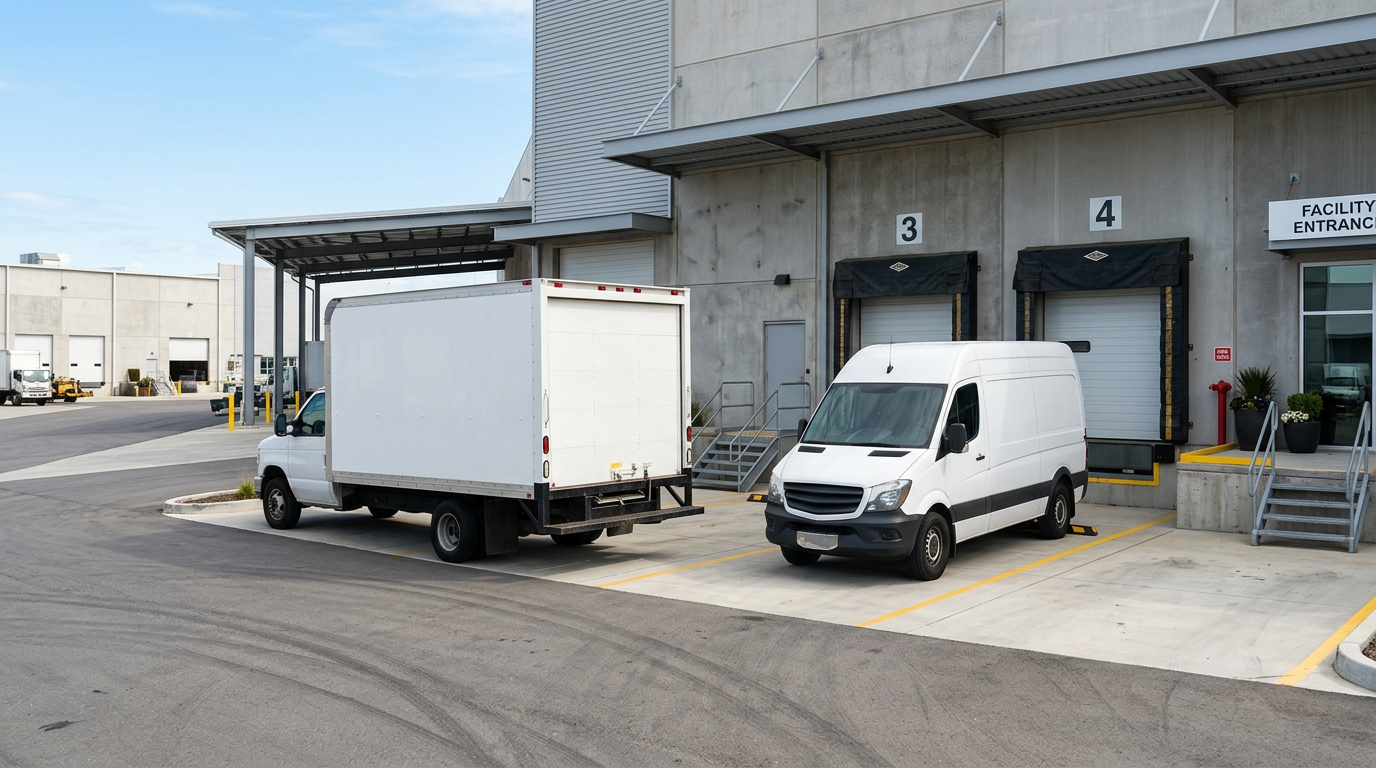
Box trucks are used by moving companies, furniture delivery services, retail distribution, and local logistics companies. Specialty vehicles may include flatbeds, dump trucks, utility trucks, food trucks, and other work vehicles. Each has its own risk profile. A food distributor driving daily routes in Dallas County has different exposure than a contractor with a single dump truck used on job sites.
Because Dallas has a strong mix of small businesses and regional operations, many owners benefit from a policy review whenever they add a new vehicle, change the way a vehicle is used, or expand into interstate driving. A personal policy may have been fine when the vehicle was used only occasionally, but the moment the vehicle becomes part of a business revenue stream, commercial auto should be on the table.
Why Dallas conditions make the right coverage especially important
Dallas driving comes with a specific set of challenges. Traffic congestion on major arteries can create frequent rear-end and lane-change accidents. Construction zones are common. Freight traffic is heavy. Parking and loading areas in commercial districts can be tight. And North Texas weather can change quickly, bringing hail, wind, tornado risk, and flash flooding that may damage vehicles or interrupt business operations. Businesses that depend on reliable transportation need protection that accounts for these local realities.
The local economy also matters. Dallas is a major hub for construction, logistics, healthcare, professional services, retail, manufacturing support, and small business ownership. Many of those sectors use vehicles every day. Hispanic-owned businesses and bilingual teams are a major part of the local economy, especially in service trades, transport, landscaping, and construction. For many owners, being able to review coverage in English or Spanish is important for making the right choice and understanding what the policy does and does not cover.
Commercial auto should be built around real use, not guesswork. That means looking at:
- Who owns the vehicle
- Who drives it
- Whether it hauls tools, materials, or passengers
- Whether it crosses state lines
- Whether it is leased, financed, or owned outright
- What contracts require
- How much liability protection the business needs
How TOP Insurance helps Dallas businesses
TOP Insurance LLC helps Dallas businesses find commercial auto coverage that fits the way they actually operate. As an independent agency, we can compare options from multiple carriers instead of offering just one company’s policy. That matters when you need a solution for a van, truck, fleet, or trucking operation with specific contract and compliance requirements.
We also understand that many Dallas business owners and managers prefer bilingual support. Our team can help in English and Spanish, making it easier to review coverage details, explain limits, and understand what documents may be needed for a certificate of insurance or contract request. For busy owners, that can save time and reduce confusion.
When you work with TOP Insurance, we can help you:
- Review whether your vehicles need commercial auto instead of personal auto
- Match your limits to Texas law and contract requirements
- Compare options across multiple carriers
- Look at coverage for vans, trucks, fleets, and hotshot operations
- Support certificate requests and common business insurance needs
- Get a free quote without guessing on the right protection
Every Dallas business is different. A single service van operating in Oak Cliff does not need the same structure as a multi-truck contractor fleet serving North Texas or an interstate freight operation moving loads through Texas. That is why an independent review is helpful: it gives you options, not assumptions.
FAQ
Do I need commercial auto if I only use my vehicle for work part of the time?
Possibly, yes. If the vehicle is used to support business operations, carry tools or materials, make deliveries, or transport employees or clients, a commercial auto policy may be appropriate even if you also use the vehicle personally. The key is how the vehicle is used overall.
Can my personal auto policy cover a business vehicle?
Usually not if the vehicle is owned by a business or regularly used for business purposes. Personal auto policies are generally intended for personal driving. If you use the vehicle to earn income or support a company, you should review whether commercial auto is required.
What liability limits do Dallas businesses usually need?
It depends on the contract, lender, lessor, or regulatory requirement. Texas minimum liability is 30/60/25, but many businesses need much higher limits, and some contracts call for a combined single limit of $500,000 to $1,000,000 or more. Interstate for-hire trucking may also fall under FMCSA financial responsibility rules, including at least $750,000 in many cases.
Can TOP Insurance help with fleets and hotshot trucking?
Yes. TOP Insurance helps Dallas businesses with vans, trucks, fleets, and many commercial vehicle needs, including operations that may have contract or federal compliance concerns. We can help you compare carriers and get a free quote based on your actual use.
Protect your Dallas business on the road
Commercial auto insurance is one of the most important coverages for a Dallas business that depends on vehicles. Whether you run a single work truck, a service van, a delivery vehicle, a fleet, or a hotshot operation, the right policy helps protect your company from the financial impact of an accident, a weather loss, or a contract problem. Because Dallas roads are busy and local business activity is so vehicle-dependent, the coverage should be built for real-world use, not a one-size-fits-all assumption.
If you are not sure whether your current policy is commercial enough, whether your limits meet Texas and contract requirements, or whether you need trucking-specific protection, TOP Insurance can help you review the options in English or Spanish. We are here to make the process straightforward, compare carriers, and help Dallas business owners get the coverage they need to keep moving.
Frequently Asked Questions
Why can't I use my personal auto policy for business driving in Dallas?
Personal auto policies typically include a business-use exclusion that denies coverage for accidents occurring during commercial activities. If you use your vehicle for deliveries, transporting equipment, or hauling goods across the Metroplex, you need a commercial auto policy to ensure claims are paid. Without commercial coverage, an insurer can legally deny physical damage and liability claims resulting from a work-related incident.
What are the minimum commercial auto liability requirements in Texas?
Texas law requires all commercial motor vehicles to carry basic liability coverage to pay for bodily injury and property damage caused to third parties. These state-mandated limits provide a legal baseline, but most business owners purchase higher combined single limits to shield their company assets from severe lawsuits. Heavier commercial vehicles and certain industry types may also be subject to higher state or federal regulatory liability mandates.
Does commercial auto insurance cover employees driving my company vehicles?
Yes, commercial auto insurance covers permissive drivers, meaning employees with valid licenses are protected while operating company-owned vehicles for business purposes. To ensure proper coverage, business owners must list regular drivers on the policy and maintain clean motor vehicle records for their staff. You can also add specific endorsements to protect your business if employees drive their personal cars for work tasks.
What is Hired and Non-Owned Auto insurance, and do Dallas businesses need it?
Hired and Non-Owned Auto (HNOA) insurance provides liability protection when your business utilizes rented vehicles or when employees drive their personal cars for company errands. If a worker causes an accident while picking up supplies or driving to a client meeting in Dallas, this coverage protects your business from third-party lawsuits. It bridges the critical coverage gap between personal auto policies and standard commercial auto policies.
What primary coverage types should be included in a Dallas commercial auto policy?
A comprehensive commercial auto policy typically includes auto liability, collision, comprehensive, and uninsured/underinsured motorist coverage. Collision and comprehensive cover physical damage to your business vehicles from traffic crashes, severe weather, vandalism, or theft. Adding uninsured motorist protection is also critical to cover damages if your vehicle is struck by a driver who lacks adequate insurance.

TOP Insurance LLC is a licensed independent insurance agency serving Georgia, Florida, South Carolina, Tennessee, Alabama, Indiana and Texas. Our bilingual team of licensed agents compares options from several carriers to find an alternative that fits your needs and budget. With offices in Duluth, Lawrenceville and Gainesville, GA, we specialize in auto, home, life, health and commercial insurance for the Hispanic community and all residents. Some carriers may offer options for applicants with an ITIN, consular ID, foreign passport or foreign license; required documentation and eligibility depend on each carrier.
Ready for your free quote?
Our bilingual agents help you compare options from multiple carriers to find an alternative that fits your needs and budget. Same-day response, no obligation.