Will Uber or Lyft pay for damage to my vehicle if I crash during Phase 1?
Typically, during Phase 1 (app on, waiting for a ride), the platforms do not cover physical damage to your own vehicle. Without a rideshare endorsement on your personal policy, you may have to cover the repair costs yourself, subject to the platform's and your personal policy's terms.
- Insurance type
- Commercial Auto Insurance
- Languages
- Spanish and English
- Documentation
- Options available depending on carrier and eligibility
- Free quote
- Yes, no obligation
- Carriers
- Several compared
- Phone
- 1-877-579-0587
Fast, free quotes with bilingual agents. No obligation.
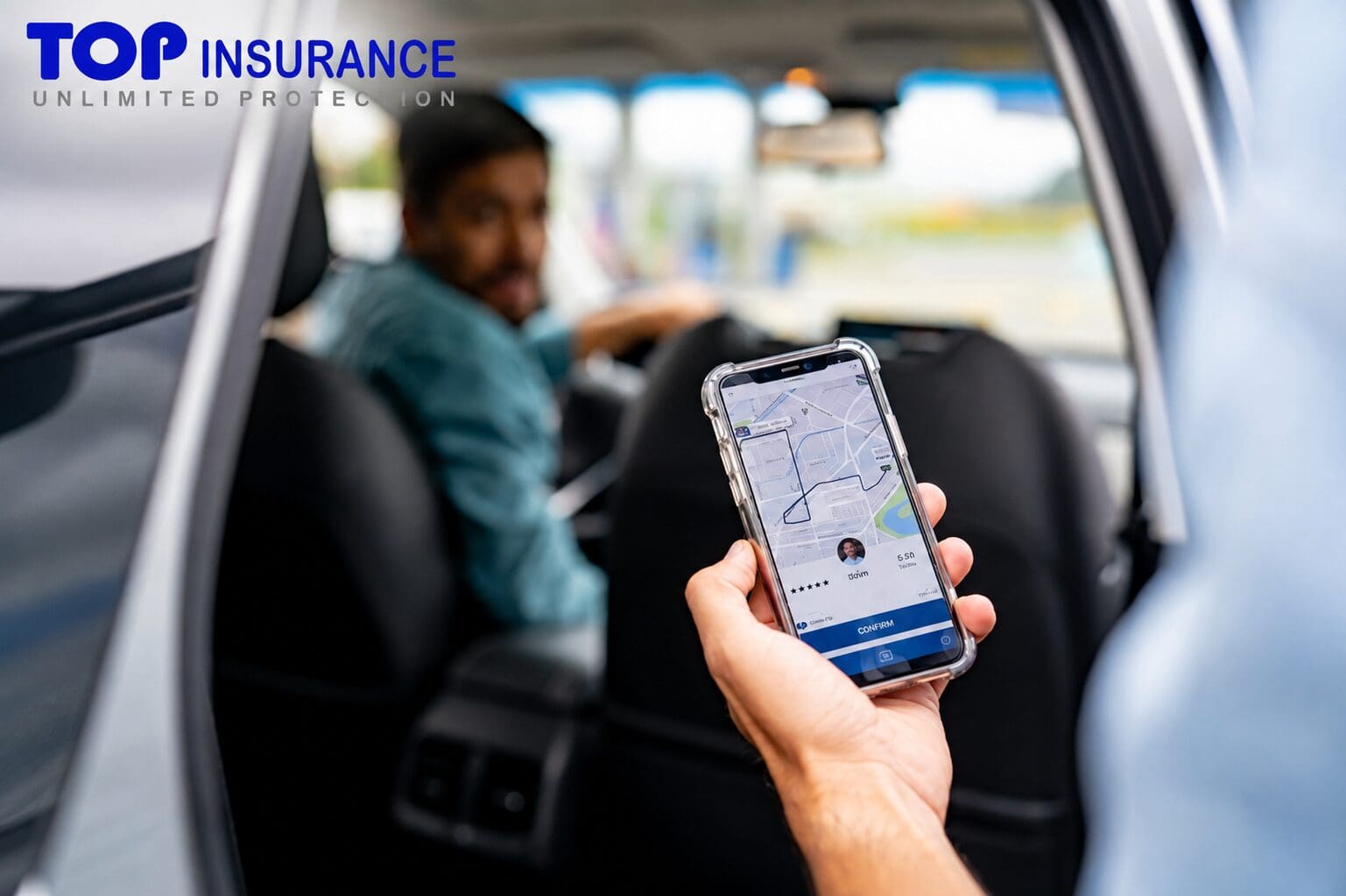
Working as a driver for rideshare platforms such as Uber or Lyft has become a primary or supplemental income source for thousands of people across Georgia. However, behind the flexible schedule lies a critical financial and legal reality: using a vehicle for rideshare can create limitations or exclusions under a personal policy. The protection available can change depending on the phase of the activity, the coverage provided by the platform and any applicable rideshare endorsement.
Many drivers mistakenly assume that the corporate insurance provided by Uber or Lyft covers every scenario at all times. In reality, there may be significant gaps or reduced-coverage periods where your personal assets and vehicle may be left unprotected.
In this guide prepared by top insurance llc, we break down exactly how rideshare insurance works in Georgia, the driving phases involved, why you may need a specialized endorsement or policy, and how to compare coverage and price options.
Informational Notice: This article is intended for general informational and educational purposes. Transportation network company (TNC) coverage policies and private insurer terms are subject to specific policy conditions and limits. Contact top insurance llc for a personalized assessment.
The Big Problem: Business Use Exclusion in Personal Policies
Many personal auto insurance policies contain an explicit clause known as the livery exclusion (business use exclusion). This clause may limit or exclude coverage for bodily injury or property damage if the vehicle was being used to transport passengers or goods in exchange for compensation.
If you have an accident while the Uber or Lyft app is open and your personal insurer does not have a rideshare endorsement in place:
-
Your personal insurer may deny the claim upon verifying app activity.
-
Your personal policy could be canceled for breach of policy terms and failure to disclose commercial use.
-
You may be personally responsible for third-party damages, medical expenses, and the repair or total loss of your vehicle.
The 4 Rideshare Driver Phases and How Coverage Works
To understand insurance coverage in Georgia, the industry and state law divide rideshare activity into four specific periods:
[Phase 0: App Off] ➡️ [Phase 1: App On / Waiting for a Ride] ➡️ [Phase 2: Ride Accepted / En Route] ➡️ [Phase 3: Passenger Onboard]
Phase 0: App Off (Personal Use)
-
Activity: Driving for everyday personal or family purposes.
-
Applicable Coverage: Your personal auto policy applies normally under your contracted limits (liability, collision, comprehensive, etc.). Uber and Lyft provide no coverage here.
Phase 1: App On, Waiting for a Ride Request (The Biggest Coverage Gap)
-
Activity: The app is connected and active, waiting for a ride request, but you haven’t accepted a passenger yet.
-
Platform Coverage: The apps may provide contingent liability coverage with certain limits (subject to the platform's policy terms).
-
The Critical Gap: During this phase, the platforms typically do not cover physical damage to your own vehicle (no collision or comprehensive coverage). Furthermore, your personal insurer may deny any claim because the app was active. Without a rideshare endorsement, you may pay for all vehicle repairs out of pocket.
Phase 2: Ride Accepted and En Route to Pick Up the Passenger
-
Activity: You’ve accepted the ride request and are driving toward the passenger’s pickup location.
-
Platform Coverage: The app’s commercial policy may take effect with certain liability limits and contingent physical damage coverage for your vehicle, subject to the platform's policy terms and conditions.
-
Note on Deductibles: Platform collision deductibles may be high, subject to the platform's policy terms.
Phase 3: Passenger Onboard (Until Trip Completion)
-
Activity: The passenger is in the vehicle until the trip is completed on the platform.
-
Platform Coverage: Commercial liability coverage, uninsured/underinsured motorist coverage (UM/UIM), and contingent physical damage coverage may remain in effect, subject to the platform's policy terms, limits, exclusions and deductibles.
Coverage Comparison Summary by Phase
| Driver Phase | Does Your Standard Personal Insurance Cover It? | What Does the Platform (Uber / Lyft) Cover? | What Does the top insurance llc Rideshare Endorsement Protect? |
|---|---|---|---|
| Phase 0 (App Off) | Yes (Full contracted coverage) | Not applicable | Full personal coverage |
| Phase 1 (App On / Waiting) | May be limited or excluded | Contingent liability (subject to platform terms); typically no physical damage to your vehicle | May cover your vehicle (Collision/Comprehensive) and provide additional liability protection |
| Phase 2 (En route to pickup) | May be limited or excluded | Liability + Physical damage (subject to platform deductible and terms) | May help close gaps and deductible differences |
| Phase 3 (Passenger onboard) | May be limited or excluded | Liability + Physical damage (subject to platform deductible and terms) | Maintains policy validity and prevents cancellation |
What Is a Rideshare Endorsement and Why Do You Need It?
A rideshare insurance endorsement is an add-on to your personal auto insurance policy. This endorsement may:
-
Remove or modify the commercial use exclusion: Authorizes use of the vehicle for rideshare and food delivery platforms, subject to the policy terms.
-
Help close the Phase 1 gap: May provide collision and comprehensive coverage for your own vehicle while waiting for a ride request with the app on, subject to the endorsement terms.
-
Deductible gap coverage/reduction: Some endorsed policies may help cover the difference between your personal deductible and the platform's deductible, subject to the policy terms.
-
Help prevent policy cancellation: Keeps your insurance record clean and transparent with carriers in Georgia.
Legal Requirements for Rideshare Drivers in Georgia
To operate legally and safely in the State of Georgia, you should comply with local and state regulations:
-
Valid Georgia driver’s license: Or a license accepted under state regulation and platform standards.
-
Active Georgia vehicle registration: With current tags issued by your County Tag Office.
-
Insurance meeting state minimums: Georgia requires liability limits of at least 25/50/25 for vehicles subject to its insurance requirements.
-
Vehicle and emissions inspection: Compliance with platform mechanical requirements and the emissions test in the 13 metro Atlanta counties, if applicable.
-
Formal notification to your insurer: Disclosing that the vehicle is used for rideshare activity by adding the corresponding endorsement, subject to the insurer's requirements.
Factors That Influence the Cost of Rideshare Insurance
The additional cost of adding rideshare coverage to your policy in Georgia depends on:
-
Driving History: A clean driving record free of speeding tickets, traffic citations, or at-fault accidents.
-
Location and ZIP Code: Frequent routes in high-traffic areas such as Atlanta, Norcross, Lawrenceville, Duluth, or Marietta.
-
Vehicle Make and Model Year: Repair costs, parts availability, and vehicle safety equipment.
-
Estimated Annual Mileage: More time on the road increases exposure to potential incidents.
-
Selected Deductibles: Choice of personal collision and comprehensive deductibles ($500 vs. $1,000).
Frequently Asked Questions (FAQ)
Will Uber or Lyft pay for damage to my vehicle if I crash during Phase 1?
Typically, during Phase 1 (app on, waiting for a ride), the platforms do not cover physical damage to your own vehicle. Without a rideshare endorsement on your personal policy, you may have to cover the repair costs yourself, subject to the platform's and your personal policy's terms.
Does the rideshare endorsement also cover delivery work like Uber Eats, DoorDash, or Instacart?
Some rideshare endorsements may extend coverage to food and package delivery services as well. However, this varies by insurer, so at top insurance llc we review the exact terms to ensure both activities may be properly covered, subject to the policy terms.
Is it expensive to add a rideshare endorsement to my insurance in Georgia?
The cost of adding a rideshare endorsement varies depending on your profile, insurer and coverage selected. It may represent a modest fraction of your regular monthly premium, which may be minimal compared to the risk of an uncovered loss.
Can I keep it from my personal insurer that I drive for Uber or Lyft?
It’s not advisable. In the event of a claim, insurers may investigate digital records and request connection logs from the platforms. If they discover the app was active, they may deny the claim and may cancel your policy for fraud or misrepresentation.
What deductible applies if I have an accident with a passenger onboard?
The deductible from the rideshare platform’s contingent coverage may apply, subject to the platform's policy terms. The deductible may be high, depending on the platform and the policy.
Protect Your Income and Your Vehicle with top insurance llc
At top insurance llc, we help app-based drivers across Georgia work with peace of mind, protecting their vehicle, their income, and their financial stability.
We compare options from several licensed insurance carriers in Georgia to offer you:
-
Personal policies with full rideshare and delivery endorsements.
-
Comprehensive, collision, and uninsured/underinsured motorist (UM/UIM) coverage options.
-
Roadside assistance and rental car reimbursement.
-
Clear, fast, hassle-free bilingual guidance.
Get a Quote Today from Our Advisors
-
Auto Insurance Quotes: auto.topinsus.com
-
Commercial & Business Insurance: comercial.topinsus.com
-
General Quotes: cotiza.topinsus.com
-
Direct Phone Line: 877-579-0587
-
Website: www.topinsus.com
Visit us at our offices in Duluth and Lawrenceville, serving all of Georgia and licensed in FL, TN, IN, SC, AL, and TX.
Conclusion
Earning income with Uber or Lyft in Georgia is a great opportunity, but driving without proper coverage may be an unnecessary financial risk. Closing the Phase 1 gap with a rideshare endorsement may help protect your work vehicle and help prevent unexpected expenses that could impact your household finances.
Don’t put your investment or your peace of mind at risk. Contact top insurance llc today and get the support you need for every mile you drive.

TOP Insurance LLC is a licensed independent insurance agency serving Georgia, Florida, South Carolina, Tennessee, Alabama, Indiana and Texas. Our bilingual team of licensed agents compares options from several carriers to find an alternative that fits your needs and budget. With offices in Duluth, Lawrenceville and Gainesville, GA, we specialize in auto, home, life, health and commercial insurance for the Hispanic community and all residents. Some carriers may offer options for applicants with an ITIN, consular ID, foreign passport or foreign license; required documentation and eligibility depend on each carrier.
Ready for your free quote?
Our bilingual agents help you compare options from multiple carriers to find an alternative that fits your needs and budget. Same-day response, no obligation.