Do I need commercial insurance if I only carry tools in my pickup?
Not always. If the pickup is in your name and you only haul your own tools to the job, some personal policies allow it. If it is titled to your company, employees drive it, or you regularly haul materials or goods, you usually need a commercial policy.
- Insurance type
- Commercial Auto Insurance
- Languages
- Spanish and English
- Documentation
- Options available depending on carrier and eligibility
- Free quote
- Yes, no obligation
- Carriers
- Several compared
- Phone
- 1-877-579-0587
Fast, free quotes with bilingual agents. No obligation.
Short answer: your vehicle usually needs commercial auto insurance if it is titled to a business, if you are paid to carry people or goods, if it is heavier than a personal policy allows, or if employees drive it as part of their job. Other uses, such as visiting clients or carrying tools in your pickup, may or may not be covered by a personal policy depending on each insurer's terms. That is why you should always disclose how the vehicle is really used when you get a quote.
This guide helps you identify which situation you are in, what you risk by using a personal policy for work, and which type of policy fits. We serve Georgia, Florida, South Carolina, Tennessee, Alabama, Indiana, and Texas.
Quick test: 6 questions
If you answer yes to any of them, talk to an agent before you keep relying on a personal policy:
- Is the vehicle registered or financed in the name of your LLC or corporation?
- Are you paid to carry passengers, packages, food, or goods?
- Is it a truck, a large van, or a vehicle with a trailer or installed equipment?
- Do employees or helpers drive it as part of their work?
- Do you have more than one work vehicle?
- Does a client or contract require a certificate of insurance with specific limits?
Usually requires a commercial policy vs. depends on the insurer
Personal auto policies are usually based on a standard industry form that excludes carrying people or property for a fee and limits business use of certain vehicles. Every insurer uses its own wording, so what follows describes typical policy language, not a rule for every policy.
| Usually requires a commercial policy | Depends on each insurer |
|---|---|
| The vehicle is titled to an LLC or corporation. | Driving your personal car to visit clients or attend meetings. |
| You carry passengers or goods for pay as a main activity. | Carrying your own tools in a personally owned pickup. |
| Heavy trucks or vans, or vehicle types a personal policy does not accept. | Occasional or low-volume deliveries. |
| Employees drive the vehicle as part of their job. | Rideshare or delivery app work with an endorsement from your personal insurer, where available. |
| Fleets or several work vehicles. | Mixed personal and work use of a single vehicle in your name. |
If your situation is in the right-hand column, the answer lies in your policy and in what you disclosed when you bought it. An agent can review it with you.
Common situations
Contractors with a work pickup
The typical personal form allows pickups and light vans used in business in certain cases, such as hauling tools to a job site, but may exclude delivering goods and vehicles above a certain weight. If the pickup is titled to your company, carries installed equipment, or is driven by employees, a commercial policy is usually the right fit. We cover this in work pickup truck insurance in Georgia and commercial auto for contractors.
Delivery and rideshare apps
In Georgia, the law (O.C.G.A. § 33-1-24) requires the transportation network company (TNC) driver, the platform, or both to maintain at least 50/100/50 while logged in and available, and $1 million during an accepted ride; the platform typically provides part of that coverage. A personal policy may exclude all time logged in to the app, so ask your insurer whether it offers an endorsement for that period. Food and package delivery works differently depending on the platform and the insurer. More in auto insurance for delivery drivers in Georgia.
Cargo vans and Sprinters
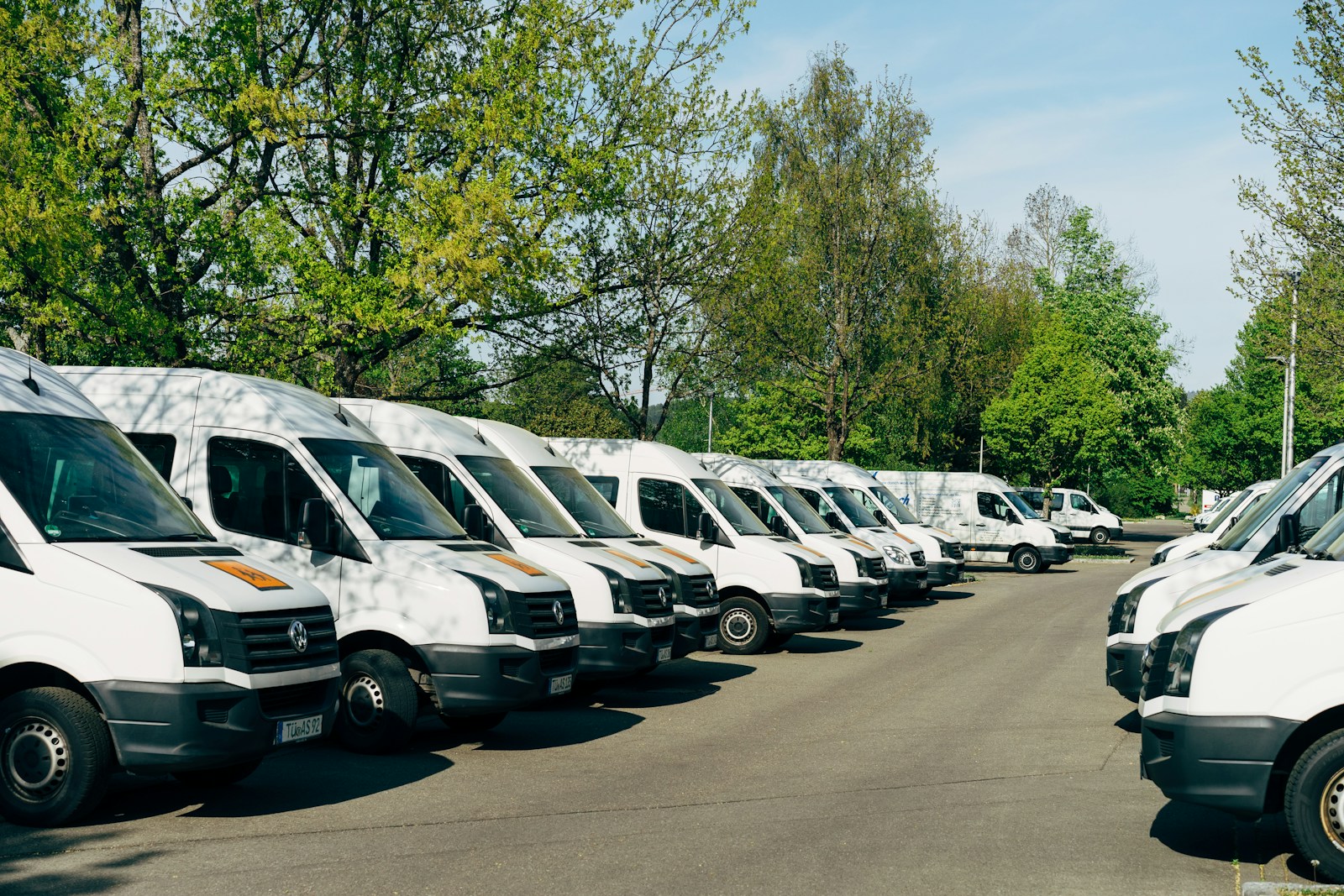
Cargo vans used to carry goods, equipment, or materials are usually insured on a commercial policy, especially if they have shelving, signage, or third-party cargo. See cargo van and Sprinter insurance.
Employees who use their own car for the business
If an employee uses their own vehicle for company errands, client visits, or deliveries, their personal insurance responds first, but the business can be sued if the limits fall short or the employee's insurer denies the claim. Hired and non-owned auto coverage (HNOA) protects the business in that case: what HNOA is and when you need it.
What happens if you crash while working on a personal policy?
If what you were doing at the time of the accident is excluded by your policy, or does not match what you disclosed, the insurer may deny the claim, charge additional premium, or cancel or non-renew the policy. In the worst case, you or your business pay out of pocket for third-party damage and injuries. Disclosing the real use from the start is the simplest way to avoid that.
Policy in the LLC's name or yours?
The policy should match the vehicle's owner. If the vehicle is registered to the LLC, you usually need a commercial policy in the LLC's name. If it is in your name and you use it occasionally for work, a personal policy may or may not be enough, depending on the insurer. Moving the vehicle to the business without changing the policy creates a mismatch that can complicate a claim.
How insurers assess your commercial risk
- Vehicle type: larger or specialized vehicles can cause more damage and often need higher limits.
- Cargo: carrying valuable or hazardous goods increases risk.
- Mileage and radius: more miles and longer routes mean more exposure.
- Driver profiles: the experience and driving records of those operating the vehicles directly affect available coverage and cost.
Some heavy or interstate vehicles are also subject to federal insurance requirements; your agent can tell you whether they apply.
Coverages a commercial auto policy can include
- Liability: damage or injuries your vehicle causes to others. In Georgia, every registered vehicle must carry at least the state minimum liability (25/50/25), and many contracts and clients ask for higher limits.
- Collision: repair or replacement of your vehicle after a crash, regardless of fault.
- Comprehensive: theft, vandalism, hail, and other non-collision damage.
- Uninsured/underinsured motorist.
- Cargo: loss, damage, or theft of cargo in your care. Your own tools and equipment usually need separate coverage, such as inland marine or contractor's equipment.
- HNOA: rented or employee-owned vehicles used for the business.
For insurance requirements and complaints in Georgia, the official reference is the Georgia Office of Commissioner of Insurance (OCI).
How much does commercial auto insurance cost?
It depends on vehicle type, use, drivers, radius, limits, and claims history. There is no single price. See which factors weigh most in what drives commercial auto prices in Georgia.
Personal vs. commercial auto, side by side
To see differences in coverage, ownership, and limits in one table, see commercial auto vs. personal auto. If a contract asks for a certificate of insurance, read what a certificate of insurance (COI) is.
We serve 7 states
We quote commercial auto insurance in Georgia, Florida, South Carolina, Tennessee, Alabama, Indiana, and Texas. Liability minimums and rideshare rules vary by state; your agent will explain yours.
How TOP Insurance helps
TOP Insurance is an independent agency. We review how you use your vehicles, tell you whether your situation usually calls for a commercial policy, and compare options from several insurers, in English or Spanish. Approval, start date, and price depend on each insurer.
Request your commercial auto quote, contact us, or call (877) 579-0587.
Frequently asked questions
Do I need commercial insurance if I only carry tools in my pickup?
Not always. If the pickup is in your name and you only haul your own tools to the job, some personal policies allow it. If it is titled to your company, employees drive it, or you regularly haul materials or goods, you usually need a commercial policy.
I'm self-employed and use my car for work. What do I need?
It depends on how you use it. Visiting clients may fall within a personal policy; being paid to carry people or things usually does not. Disclose the exact use when you quote.
Does my personal policy cover me if I drive for Uber, Lyft, or DoorDash?
Many personal policies exclude time logged in to the app. Georgia requires specific coverage for rideshare drivers. Ask about an endorsement for that use or about the coverage the platform provides.
The vehicle is in my name but I use it for my LLC. Which policy fits?
A personal policy with the use disclosed may be enough, or a commercial one may be required, depending on the insurer and how heavily you use it. If the vehicle is moved into the LLC's name, the policy must change too.
How do my employees affect the policy?
If they drive company vehicles, you usually need a commercial policy and the insurer will review their driving records. If they use their own cars for company tasks, consider HNOA coverage.
Contact — TOP Insurance LLC
- 📞 Phone: (877) 579-0587
- 💻 Free quote: topinsus.com/en/commercial-auto
- 🏢 Commercial insurance: comercial.topinsus.com
- 📍 We serve: Georgia · Florida · Tennessee · Indiana · South Carolina · Alabama · Texas
This article is for information only and is not legal or insurance advice. Coverage, eligibility, exclusions, and prices vary by insurer, state, and situation. Consult a licensed agent.
Explore your coverage options

TOP Insurance LLC is a licensed independent insurance agency serving Georgia, Florida, South Carolina, Tennessee, Alabama, Indiana and Texas. Our bilingual team of licensed agents compares options from several carriers to find an alternative that fits your needs and budget. With offices in Duluth, Lawrenceville and Gainesville, GA, we specialize in auto, home, life, health and commercial insurance for the Hispanic community and all residents. Some carriers may offer options for applicants with an ITIN, consular ID, foreign passport or foreign license; required documentation and eligibility depend on each carrier.
Ready for your free quote?
Our bilingual agents help you compare options from multiple carriers to find an alternative that fits your needs and budget. Same-day response, no obligation.