Does my commercial auto insurance cover the kitchen equipment inside my food truck?
Kitchen equipment may require separate or specifically endorsed property/equipment coverage. The appropriate coverage depends on whether the equipment is permanently installed, removable, owned, leased or otherwise scheduled under the applicable policy.
- Insurance type
- Commercial Auto Insurance
- Languages
- Spanish and English
- Documentation
- Options available depending on carrier and eligibility
- Free quote
- Yes, no obligation
- Carriers
- Several, depending on product, risk and eligibility
- Phone
- 1-877-579-0587
Fast, free quotes with bilingual agents. No obligation.
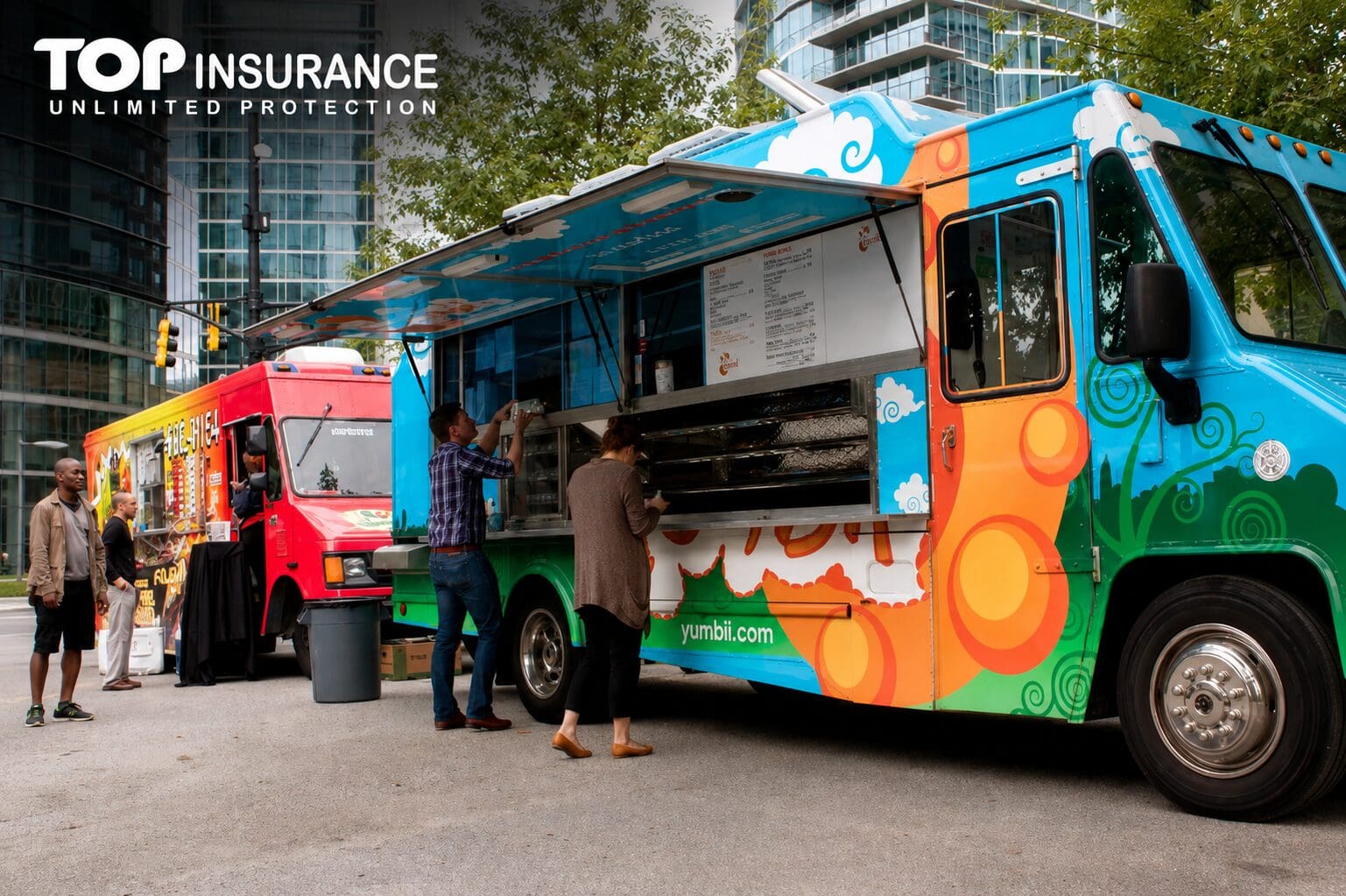
The food truck industry in Georgia has grown steadily, from events in Atlanta to mobile markets in Duluth, Lawrenceville, and surrounding cities. However, running a mobile food business involves a unique level of risk: your vehicle doesn’t just travel from event to event — it also functions as a complete kitchen, with cooking equipment, propane tanks, and direct contact with the public.
A food truck combines the risks of a commercial vehicle with those of a restaurant. Using a vehicle for business activities can create exposures different from personal use. A personal policy may limit or exclude certain commercial uses. The appropriate coverage depends on factors such as vehicle ownership, the business activity, drivers, frequency and type of use, goods or equipment transported and the policy terms. Georgia requires the applicable liability coverage to be maintained on vehicles subject to its insurance requirements. Certain commercial or motor carrier operations may also be subject to additional contractual, state or federal requirements.
In this comprehensive guide from top insurance llc, we explain the essential coverages, legal requirements in Georgia, and how to structure a complete policy that protects your food truck, your equipment, your employees, and your liability toward customers.
Informational Notice: This content is for educational purposes only and does not constitute legal advice or an insurance policy. Terms and coverage availability vary by insurer. Consult an agent at top insurance llc for a personalized quote.
Why Does a Food Truck Need Different Insurance Than a Regular Commercial Vehicle?
A food truck combines two businesses in a single vehicle: transportation and food preparation/sales. This creates exposures that a delivery truck or contractor van doesn’t face:
-
Elevated fire risk: Cooking equipment, fryers, griddles, and propane tanks significantly increase the risk of fire inside the vehicle.
-
Product liability: If a customer gets sick or has an allergic reaction from food you prepare and sell, your business can face a lawsuit.
-
High-value equipment built into the vehicle: Fryers, grills, refrigerators, and generators are part of the vehicle but aren’t always automatically covered by a standard auto policy.
-
Operating in multiple locations: Festivals, private events, parks, and commercial areas frequently require a Certificate of Insurance (COI) before authorizing your presence.
-
Constant direct interaction with the public: Unlike a delivery truck, a food truck serves customers right next to the vehicle, increasing the risk of injuries from slips, burns, or falls.
Essential Commercial Auto Coverages for Food Trucks
1. Commercial Auto Liability
Covers bodily injury and property damage to others if your food truck causes an accident while traveling between events or locations. Georgia requires minimum limits, but higher limits are recommended given constant traffic in urban areas like Atlanta.
2. Physical Damage Coverage (Collision & Comprehensive)
-
Collision: Repairs or replaces the vehicle after a crash, rollover, or impact with a fixed object.
-
Comprehensive: Protects against fire, theft, vandalism, and weather-related damage — a particularly relevant risk given the built-in cooking equipment.
3. Built-In Commercial Equipment Coverage (Business Personal Property / Equipment Coverage)
This is one of the most critical elements for a food truck. Kitchen equipment may require separate or specifically endorsed property/equipment coverage. The appropriate coverage depends on whether the equipment is permanently installed, removable, owned, leased or otherwise scheduled under the applicable policy. This may protect:
-
Cooking equipment (fryers, griddles, ovens).
-
Refrigeration systems and freezers.
-
Electrical generators.
-
Utensils, cookware, and prep equipment.
-
Point-of-sale (POS) systems and business technology.
4. General Liability & Product Liability
Covers third-party claims for injuries not related to the vehicle (for example, a customer slipping near the truck) and, crucially, claims arising from food poisoning or allergic reactions caused by the products you sell.
5. Fire and Propane Tank Explosion Coverage
Given the constant use of propane tanks for cooking, many insurers require or recommend specific endorsements covering fires or explosions related to these systems.
6. Workers’ Compensation
Georgia employers that regularly have three or more employees in service are generally subject to the state's Workers' Compensation requirements. Part-time employees may count toward this threshold. Specific rules apply to corporate officers, LLC members and other business structures, and worker classification depends on the actual employment relationship and applicable law. This coverage can help protect against burns, cuts, and other injuries common in a food truck’s kitchen environment.
7. Uninsured/Underinsured Motorist Coverage (UM/UIM)
Protects the food truck’s driver and business if an inadequately insured third party causes an accident while traveling between locations.
8. Business Income Interruption
If your food truck is put out of service by a covered accident or fire, this coverage can compensate for lost income while repairs are made.
9. Hired and Non-Owned Auto Coverage (HNOA)
Hired and Non-Owned Auto may provide certain liability protection for exposures related to vehicles the business does not own, subject to the policy definitions, limits, exclusions and conditions. It does not automatically replace the vehicle owner's policy. This may be relevant if you use additional vehicles to transport supplies or if an employee uses their personal vehicle to run business-related errands.
Legal and Operational Requirements for Food Trucks in Georgia
-
Commercial vehicle registration: The food truck may need to be registered and insured under commercial coverage depending on the operation and use.
-
County Health Permit (Mobile Food Service Permit): Issued by the relevant county health department (Gwinnett, Fulton, DeKalb, etc.), requiring periodic vehicle inspections.
-
Certificate of Insurance (COI): Most festivals, private events, and commercial property owners require a COI before granting permission to operate at their location.
-
Business License: Issued by the city or county where the business primarily operates.
-
Fire code compliance: Inspections related to propane tank handling and fire suppression systems installed in the vehicle.
Factors That Affect the Cost of Food Truck Insurance
-
Value of the vehicle and installed kitchen equipment.
-
Type of cooking and preparation method (high-risk fryers vs. cold preparation).
-
Number of employees and their work history.
-
Frequency and type of events where you operate (large festivals vs. low-traffic fixed locations).
-
The business’s claims history.
-
Selected liability limits and deductibles.
-
Operating radius: Businesses operating only in Gwinnett County versus those traveling across multiple counties or states.
Common Mistakes to Avoid
| Common Mistake | Consequence / Risk |
|---|---|
| Relying only on a standard commercial auto policy | Kitchen equipment may require separate or specifically endorsed coverage. |
| Not including product liability | No protection against claims for food poisoning or allergic reactions. |
| Skipping the Certificate of Insurance (COI) | Loss of contracts with festivals, private events, and property owners. |
| Not disclosing propane tank use | May affect coverage determinations for claims related to kitchen fires. |
| Not carrying Workers’ Compensation when required | Potential state penalties and personal liability for employee burns or injuries. |
| Underestimating the value of insured equipment | Insufficient payout to replace fryers, griddles, and refrigerators after a loss. |
Frequently Asked Questions (FAQ)
Does my commercial auto insurance cover the kitchen equipment inside my food truck?
Kitchen equipment may require separate or specifically endorsed property/equipment coverage. The appropriate coverage depends on whether the equipment is permanently installed, removable, owned, leased or otherwise scheduled under the applicable policy.
Do I need product liability insurance if I sell food from my food truck?
It is often worth evaluating. This coverage can help protect your business against covered claims for food poisoning, allergic reactions, or any harm related to the food you prepare and sell.
Do festivals and events require a Certificate of Insurance to allow my food truck?
Yes, the vast majority of festivals, private events, and commercial property owners in Georgia require a COI before authorizing your operation at their location.
Is Workers’ Compensation required for my food truck business in Georgia?
Georgia employers that regularly have three or more employees in service are generally subject to the state's Workers' Compensation requirements. Part-time employees may count toward this threshold. Specific rules apply to corporate officers, LLC members and other business structures, and worker classification depends on the actual employment relationship and applicable law.
What happens if my food truck has a fire related to the propane tank?
Coverage may depend on whether your policy includes specific endorsements for fire or explosion related to cooking and propane systems. It’s essential to disclose the use of this equipment when insuring the vehicle.
How do I get a fast Certificate of Insurance (COI) for an upcoming event?
Once your commercial auto and general liability policies are active with top insurance llc, we can help with Certificates of Insurance for eligible, active policies, subject to the carrier's applicable procedures, so you may meet the event’s requirements.
Protect Your Food Truck with top insurance llc
At top insurance llc, we understand the specific needs of mobile food businesses in Georgia. We work with you to design a complete commercial insurance package that protects your vehicle, your kitchen equipment, your employees, and your business against the unexpected.
We can help you structure:
-
Commercial auto insurance for your food truck.
-
Coverage for built-in kitchen and refrigeration equipment.
-
General and product liability insurance.
-
Workers’ Compensation for your team.
-
Certificates of Insurance (COI) for festivals and private events.
Get Your Commercial Insurance Quote Today
-
Commercial and Business Insurance: comercial.topinsus.com
-
Auto Insurance Quotes: auto.topinsus.com
-
General Quote Request: cotiza.topinsus.com
-
Direct Phone Line: 877-579-0587
-
Website: www.topinsus.com
Visit us at our offices in Duluth and Lawrenceville, serving all of Georgia and offering coverage in FL, TN, IN, SC, AL, and TX.
Conclusion
A food truck in Georgia combines the risks of a commercial vehicle and a restaurant, which is why it needs protection specifically designed for this dual exposure. Failing to properly protect your vehicle, your kitchen equipment, and your liability toward customers can put your business’s continuity at risk in the event of an accident, fire, or claim.
Contact top insurance llc today and get coverage specifically designed for the needs of your mobile food business.

TOP Insurance LLC is a licensed independent insurance agency serving Georgia, Florida, South Carolina, Tennessee, Alabama, Indiana and Texas. Our bilingual team of licensed agents compares options from several carriers to find an alternative that fits your needs and budget. With offices in Duluth, Lawrenceville and Gainesville, GA, we specialize in auto, home, life, health and commercial insurance for the Hispanic community and all residents. Some carriers may offer options for applicants with an ITIN, consular ID, foreign passport or foreign license; required documentation and eligibility depend on each carrier.
Ready for your free quote?
Our bilingual agents help you compare options from multiple carriers to find an alternative that fits your needs and budget. Same-day response, no obligation.