Will my auto insurance cover damage from a hit and run accident?
Coverage typically depends on the specific optional protections you carry on your auto policy, such as collision coverage or uninsured motorist property damage. If you only carry state-mandated liability insurance, the damage to your vehicle will generally not be covered. Review your declarations page or contact your insurance agent to confirm your available coverages.
- Insurance type
- Auto Insurance
- Languages
- Spanish and English
- Documentation
- Options available depending on carrier and eligibility
- Free quote
- Yes, no obligation
- Carriers
- Several compared
- Phone
- 1-877-579-0587
Fast, free quotes with bilingual agents. No obligation.
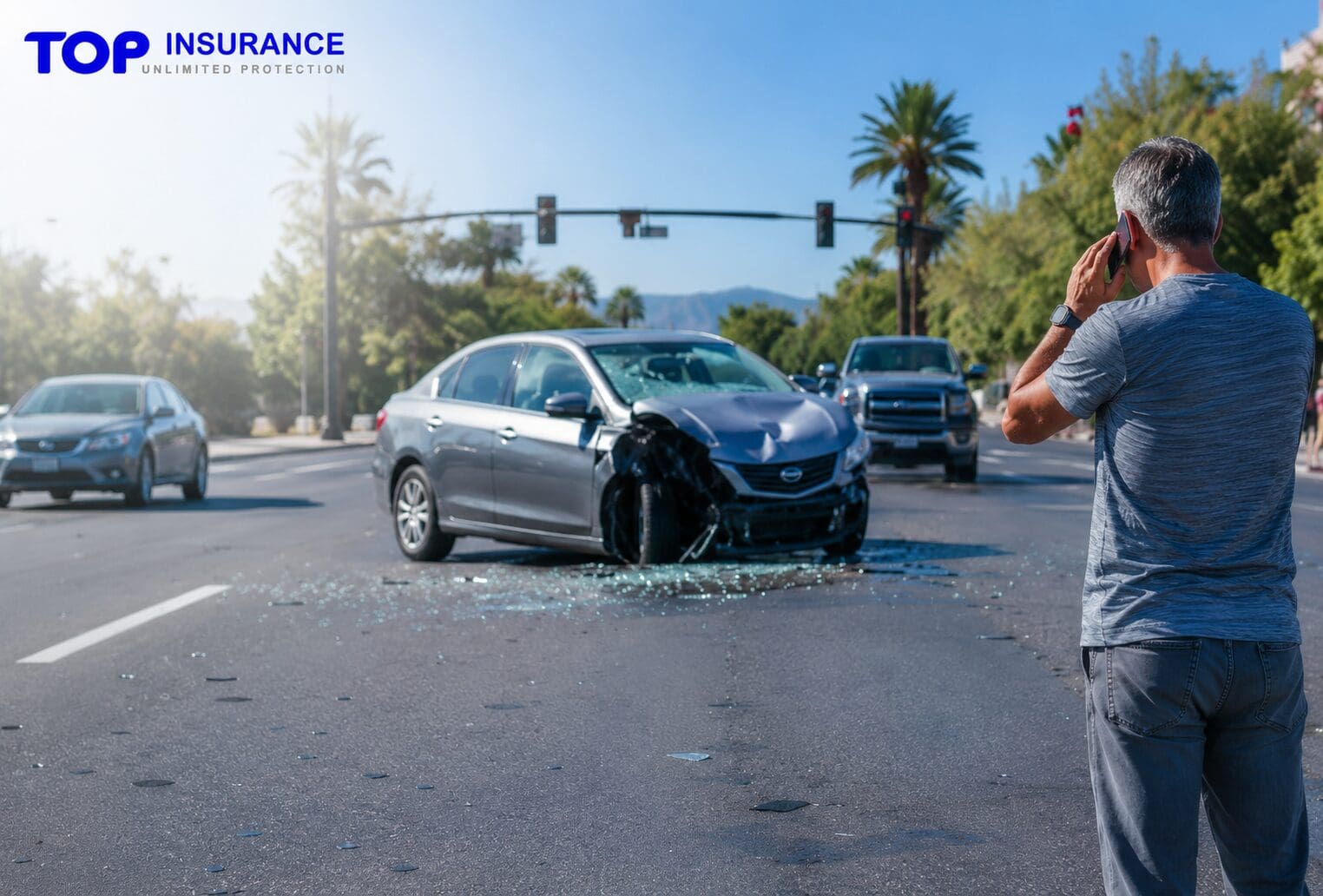
Discovering that your car has been hit—whether you were driving or it was parked—only to find that the other driver has fled the scene is a frustrating and stressful experience. A hit and run occurs when a driver involved in a collision fails to stop, provide their information, or render aid as required by law.
While your first instinct might be to chase the other vehicle, doing so can be dangerous and may lead to further accidents or legal complications. The best course of action is to stay calm, prioritize safety, and follow a specific protocol to protect your rights and your insurance claim.
This guide outlines the essential steps to take if you are a victim of a hit and run.
Important: Laws regarding hit and run accidents, reporting requirements, and insurance coverage vary by state and policy. This information is for educational purposes and does not replace legal advice or the specific terms of your insurance policy.
1. Prioritize Safety First
Immediately after the impact, your safety and the safety of your passengers are the top priority.
-
Stay at the scene: Do not chase the other driver. Chasing can lead to reckless driving and puts you at risk of another confrontation.
-
Move to a safe area: If your car is in the middle of a busy road and can still be driven, move it to the shoulder or a nearby parking lot.
-
Check for injuries: Assess yourself and your passengers for any pain or injuries. If someone is hurt, call 911 immediately.
-
Turn on hazard lights: Make your vehicle visible to other drivers to prevent secondary collisions.
2. Call the Police
Regardless of how minor the damage may seem, you should report a hit and run to the police.
-
File an official report: A police report is a critical piece of evidence for your insurance company. Many insurers require a police report to process a hit and run claim.
-
Stay on the line: Provide the dispatcher with your exact location and a brief description of what happened.
-
Officer Arrival: When the officer arrives, state the facts clearly. Do not guess about details you aren’t sure of.
3. Document Everything Immediately
While waiting for the police, collect as much information as possible. Your memory of the event is freshest right after it happens.
Information about the other vehicle:
Even if you only caught a glimpse, try to remember:
-
License plate number (even a partial plate helps).
-
Make, model, and color of the car.
-
Any distinguishing features (stickers, dents, roof racks).
-
Direction the vehicle was headed.
Information about the scene:
-
Take photos and videos: Capture the damage to your car, the position of your vehicle, and the surrounding area (street signs, skid marks, or debris).
-
Note the time and location: Record the exact time of the accident and the nearest intersection or address.
-
Look for witnesses: If anyone saw the accident, ask for their names and contact information. Witness statements can be vital.
-
Check for cameras: Look for nearby businesses, traffic cameras, or dashcams that might have recorded the incident.
4. Understand Your Insurance Coverage
A hit and run claim is handled differently than a standard two-vehicle accident because the at-fault party is unknown. Your ability to recover costs depends on the coverages in your policy.
-
Uninsured Motorist Bodily Injury (UMBI): In many states, a hit and run is treated as an encounter with an uninsured driver. This coverage may help with medical bills if you or your passengers are injured.
-
Uninsured Motorist Property Damage (UMPD): Some states allow this coverage to pay for repairs to your vehicle in a hit and run. Note that some states have specific rules or deductibles for these cases.
-
Collision Coverage: This typically covers damage to your vehicle regardless of who was at fault. You will likely have to pay your deductible.
-
Personal Injury Protection (PIP) or Medical Payments: These may help cover medical expenses regardless of who caused the accident.
Note: If you only have “Basic Liability” or “Liability Only” coverage, your insurance company may not pay for the damage to your vehicle in a hit and run.
5. Contact Your Insurance Agent
Report the accident to your insurance company or agent as soon as possible.
-
Provide the Police Report Number: This speeds up the claims process.
-
Share your documentation: Send the photos, witness contact info, and any details about the fleeing vehicle to your adjuster.
-
Ask about your deductible: Confirm which coverage applies and what your out-of-pocket costs will be.
Common Mistakes to Avoid
To protect your claim, avoid these common errors:
-
Don’t wait to report it: Waiting days to call the police or your insurer can make your claim look suspicious or lead to a denial.
-
Don’t misrepresent the facts: Be honest about what you saw and what you didn’t.
-
Don’t forget the “Parked Car” scenario: If you come back to your parked car and find it damaged, the same steps apply—call the police and document the scene.
How Top Insurance LLC Can Help
At Top Insurance LLC, we understand how stressful a hit and run can be. We are here to help our clients navigate the claims process and ensure they have the right coverage in place before an accident happens.
We can review your policy to see if you have:
-
Uninsured Motorist protection.
-
Adequate Collision coverage.
-
Proper deductibles for your budget.
Get the Protection You Need
Contact us today for a policy review:
Website: Top Insurance LLC
Quote Online: auto.topinsus.com
Phone: (877) 579-0587
Serving: Georgia, Florida, Tennessee, Indiana, South Carolina, Alabama, and Texas.
Explore your coverage options
Frequently Asked Questions
Will my auto insurance cover damage from a hit and run accident?
Coverage typically depends on the specific optional protections you carry on your auto policy, such as collision coverage or uninsured motorist property damage. If you only carry state-mandated liability insurance, the damage to your vehicle will generally not be covered. Review your declarations page or contact your insurance agent to confirm your available coverages.
Do I need to file a police report after a hit and run?
Yes, filing an official police report immediately is crucial for documenting the crime and supporting your insurance claim. Many insurers require a police report number before they will process a hit and run claim under uninsured motorist coverage. The report establishes an official record of the incident and can aid law enforcement in locating the at-fault driver.
Will I have to pay a deductible if I file a hit and run claim?
Yes, you will usually be responsible for paying your comprehensive, collision, or uninsured motorist property damage deductible before your benefits apply. In some states, uninsured motorist coverage carries a lower deductible than standard collision coverage. If the police eventually identify the fleeing driver, your insurer may attempt subrogation to recover your deductible.
Will a hit and run claim cause my insurance premiums to increase?
Because you are not at fault for the accident, some states prohibit insurance carriers from raising your rates for a hit and run claim. However, premium impact ultimately depends on state insurance regulations and your insurer's specific underwriting guidelines. Filing multiple claims within a short period, regardless of fault, may also influence your future premium rates.
What should I do if my parked car was damaged while I was away?
First, inspect the area thoroughly to see if the other driver left a note with their contact information, and look for nearby surveillance cameras or witnesses. Take photos and videos of the damage, the surrounding scene, and any paint transfer from the other vehicle before calling the local police non-emergency line to file a report. Once you have the police report number, notify your insurance carrier to initiate the claims process.

TOP Insurance LLC is a licensed independent insurance agency serving Georgia, Florida, South Carolina, Tennessee, Alabama, Indiana and Texas. Our bilingual team of licensed agents compares options from several carriers to find an alternative that fits your needs and budget. With offices in Duluth, Lawrenceville and Gainesville, GA, we specialize in auto, home, life, health and commercial insurance for the Hispanic community and all residents. Some carriers may offer options for applicants with an ITIN, consular ID, foreign passport or foreign license; required documentation and eligibility depend on each carrier.
Ready for your free quote?
Our bilingual agents help you compare options from multiple carriers to find an alternative that fits your needs and budget. Same-day response, no obligation.