Do I need workers' comp as a Texas caterer?
Not by state law — Texas is a non-subscriber state where workers' compensation is optional for most private employers. But general contractors and clients almost always require it by contract, and going without it exposes you to injury lawsuits.
- Insurance type
- General Liability
- Languages
- Spanish and English
- Documentation
- Options available depending on carrier and eligibility
- Free quote
- Yes, no obligation
- Carriers
- Several compared
- Phone
- 1-877-579-0587
Fast, free quotes with bilingual agents. No obligation.
For caterers in Texas, the right insurance is what lets you book venues, sign event contracts, and get paid. Catering carries exposures a restaurant policy does not fully address — foodborne illness that surfaces after an event, alcohol served at receptions, and staff driving personal cars between the commissary and the venue. This guide explains the coverage a Texas catering business needs in 2026 and the mistakes that leave you exposed.
Quick Answer: Caterer Insurance in Texas (2026)
- General liability is the core policy — it covers third-party injury and property damage at events.
- Products-completed operations covers foodborne illness and allergic reactions that surface after food is served.
- Liquor liability is usually a separate policy — many general liability policies exclude or limit alcohol-related claims for businesses that serve or sell alcohol, and many venues require proof of it.
- Workers' compensation is optional for most private employers in Texas (but general contractors and clients usually require proof of coverage).
- Hired and non-owned auto covers staff driving personal vehicles for event errands.
What Insurance a Caterer Needs in Texas
Catering combines food preparation, off-site event service, alcohol service, and transport, so most caterers carry a stack of policies rather than a single one. Here are the core coverages and why each matters on a Texas event.
| Policy | What it covers | Why a Caterer needs it |
|---|---|---|
| General Liability | Third-party bodily injury and property damage at events | A guest trips over your equipment or you damage the venue |
| Products-Completed Operations | Foodborne illness and allergic reactions after food is served | Guests get sick from a dish served hours earlier — a core catering exposure |
| Liquor Liability | Claims arising from alcohol you serve or sell | Many GL policies exclude or limit alcohol claims; many venues require it for bar service |
| Workers' Compensation | Medical bills and lost wages for injured employees | Optional in Texas but usually required by contract; burns, cuts, and slips are common |
| Commercial Property & Inland Marine | Your commissary, and equipment in transit | Chafing dishes, portable ovens, and gear are damaged or stolen off-site |
The Most Common Insurance Mistakes for Caterers in Texas
Mistake #1: Assuming general liability covers alcohol
Many general liability policies exclude or limit claims arising from alcohol, depending on your operations and the policy terms. If you serve, sell, or manage alcohol at events, ask your agent whether you need separate liquor liability — many venues ask for proof of it before your bar can open.
Mistake #2: Skipping products-completed operations
Much of a caterer's risk shows up after the event — foodborne illness or an allergic reaction from food served hours earlier. Without products-completed operations, that claim may not be covered.
Mistake #3: Assuming you don't need workers' comp
Texas does not require workers' compensation for most private employers. Kitchen burns, knife cuts, and slips make catering injuries common, and going without coverage can leave you personally liable.
Mistake #4: Forgetting hired and non-owned auto
When staff use personal vehicles to run to the commissary or a venue, an accident can expose your business. Hired and non-owned auto fills that gap, alongside commercial auto for company vehicles.
Mistake #5: Not carrying a Certificate of Insurance for the venue
Most venues require a Certificate of Insurance naming them as additional insured before your event. Not having it ready can cost you the booking on the day of the event.
Caterer Risks in Texas
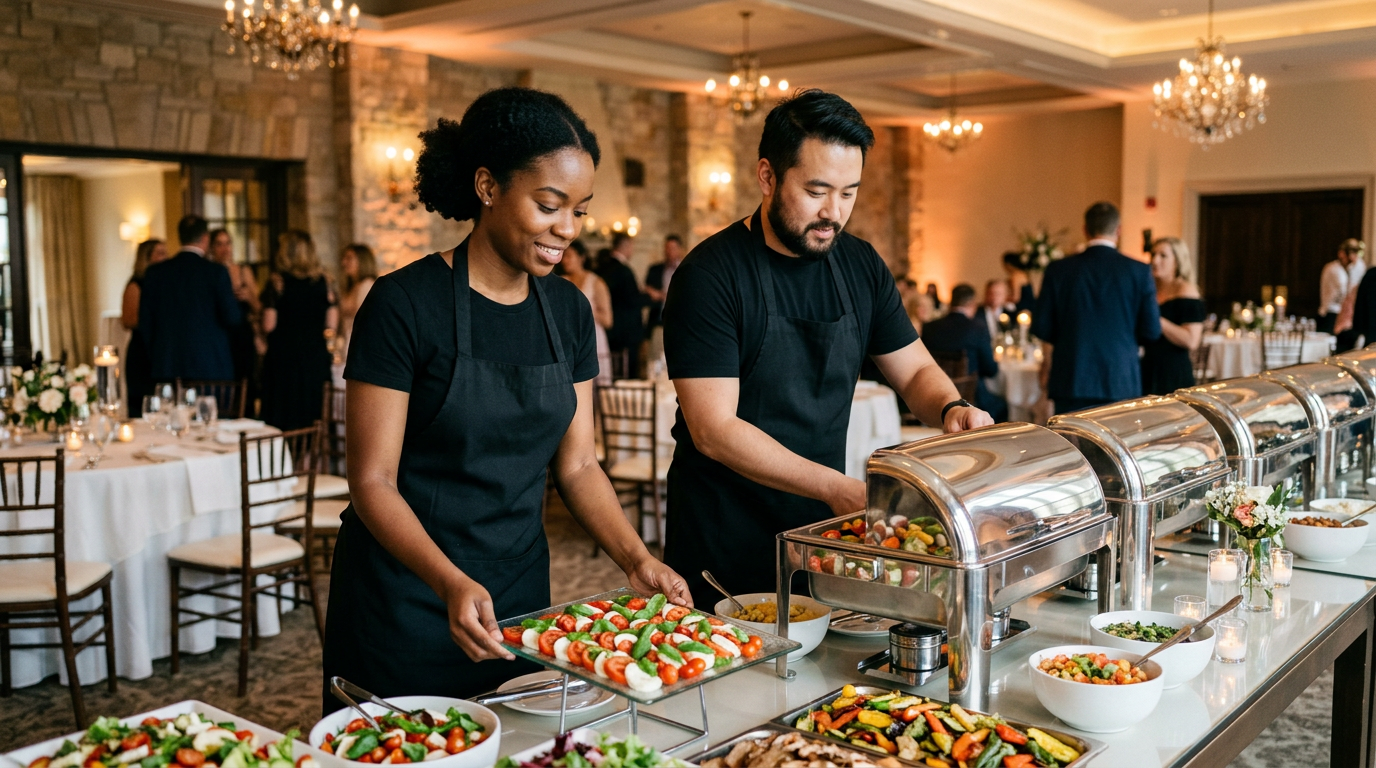
Texas caterers serve weddings, corporate events, and private parties across the Dallas–Fort Worth and Houston metros and beyond — cooking on-site, transporting food, and running bar service. Foodborne illness and allergic reactions, alcohol-related incidents, kitchen burns and cuts, guest slips and falls, vehicle accidents during event errands, and equipment damage in transit are the most common losses. Because venues routinely require proof of coverage, liquor liability, and additional-insured status, keeping the right policies active is essential to booking the best venues and events.
How to Save on Caterer Insurance in Texas
- Bundle general liability and property into a Business Owner's Policy (BOP).
- Maintain documented food-safety (HACCP) practices and a clean claims history.
- Add liquor liability and products-completed operations instead of buying them after a loss.
- Match your limits to the venues and events you actually book.
- Compare quotes from multiple carriers through an independent agency.
Why Choose TOP Insurance in Texas
TOP Insurance has helped over 10,000 families and business owners across Georgia, Florida, Texas, South Carolina, Tennessee, Alabama, and Indiana find coverage options that fit their needs and budget. Our licensed, bilingual agents compare quotes from several carriers, so you never have to shop one company at a time.
Because we are an independent agency, we work for you, not the insurance company. We explain your general liability options in plain English or Spanish, help you avoid the common mistakes below, and stay with you at claim time. Visit us at one of our three Georgia offices in Duluth, Lawrenceville, or Gainesville, or get a free quote by phone.
Informational note
This guide is provided for general educational purposes and reflects rules and figures known as of 2026. Insurance laws and carrier programs change — for advice specific to your situation, speak with a licensed TOP Insurance agent.
Frequently Asked Questions
Do I need workers' comp as a Texas caterer?
Not by state law — Texas is a non-subscriber state where workers' compensation is optional for most private employers. But general contractors and clients almost always require it by contract, and going without it exposes you to injury lawsuits.
Does general liability cover alcohol at events?
It depends on your operations and the policy terms. Many general liability policies exclude or limit alcohol-related claims for businesses that serve, sell, or furnish alcohol. If you serve or sell alcohol, ask your agent whether separate liquor liability is needed; many venues require it.
Am I covered if guests get sick after an event?
That is products-completed operations exposure. Make sure your policy includes it so foodborne illness or allergic reactions after the event can be covered.
What insurance do venues require?
Most venues require general liability, and liquor liability when alcohol is served, shown on a Certificate of Insurance that names the venue as additional insured.
Get a Free Texas Quote Today
Ready to protect what matters most? Our bilingual team makes it easy. Request your free, no-obligation quote and let a licensed agent compare your options in minutes. Explore our coverage options, learn more about insurance in Texas, Georgia, and Florida, or contact us today. Call 1-877-579-0587 or message us on WhatsApp at 1-470-429-0756.

TOP Insurance LLC is a licensed independent insurance agency serving Georgia, Florida, South Carolina, Tennessee, Alabama, Indiana and Texas. Our bilingual team of licensed agents compares options from several carriers to find an alternative that fits your needs and budget. With offices in Duluth, Lawrenceville and Gainesville, GA, we specialize in auto, home, life, health and commercial insurance for the Hispanic community and all residents. Some carriers may offer options for applicants with an ITIN, consular ID, foreign passport or foreign license; required documentation and eligibility depend on each carrier.
Ready for your free quote?
Our bilingual agents help you compare options from multiple carriers to find an alternative that fits your needs and budget. Same-day response, no obligation.