What is restaurant and food truck insurance?
Restaurant and food truck insurance is a group of commercial policies that may protect restaurants, cafés, bars, catering businesses, and food trucks against claims involving injuries, property damage, food contamination, vehicle accidents, theft, equipment damage, and loss of income.
- Insurance type
- General Liability
- Languages
- Spanish and English
- Documentation
- Options available depending on carrier and eligibility
- Free quote
- Yes, no obligation
- Carriers
- Several compared
- Phone
- 1-877-579-0587
Fast, free quotes with bilingual agents. No obligation.
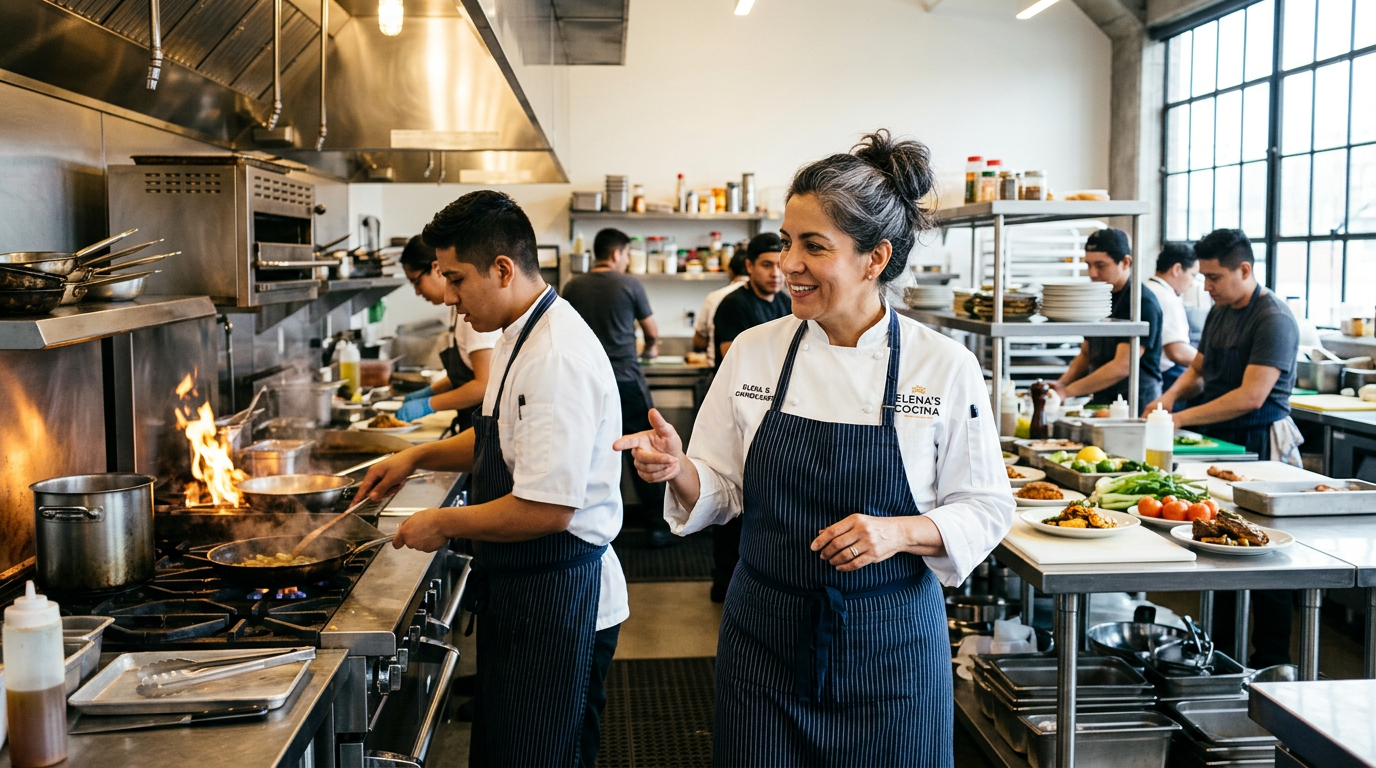
Restaurants and food trucks are an important part of the food and hospitality industry. These businesses serve customers, prepare food, operate commercial equipment, store ingredients, transport supplies, and often work on property owned by someone else.
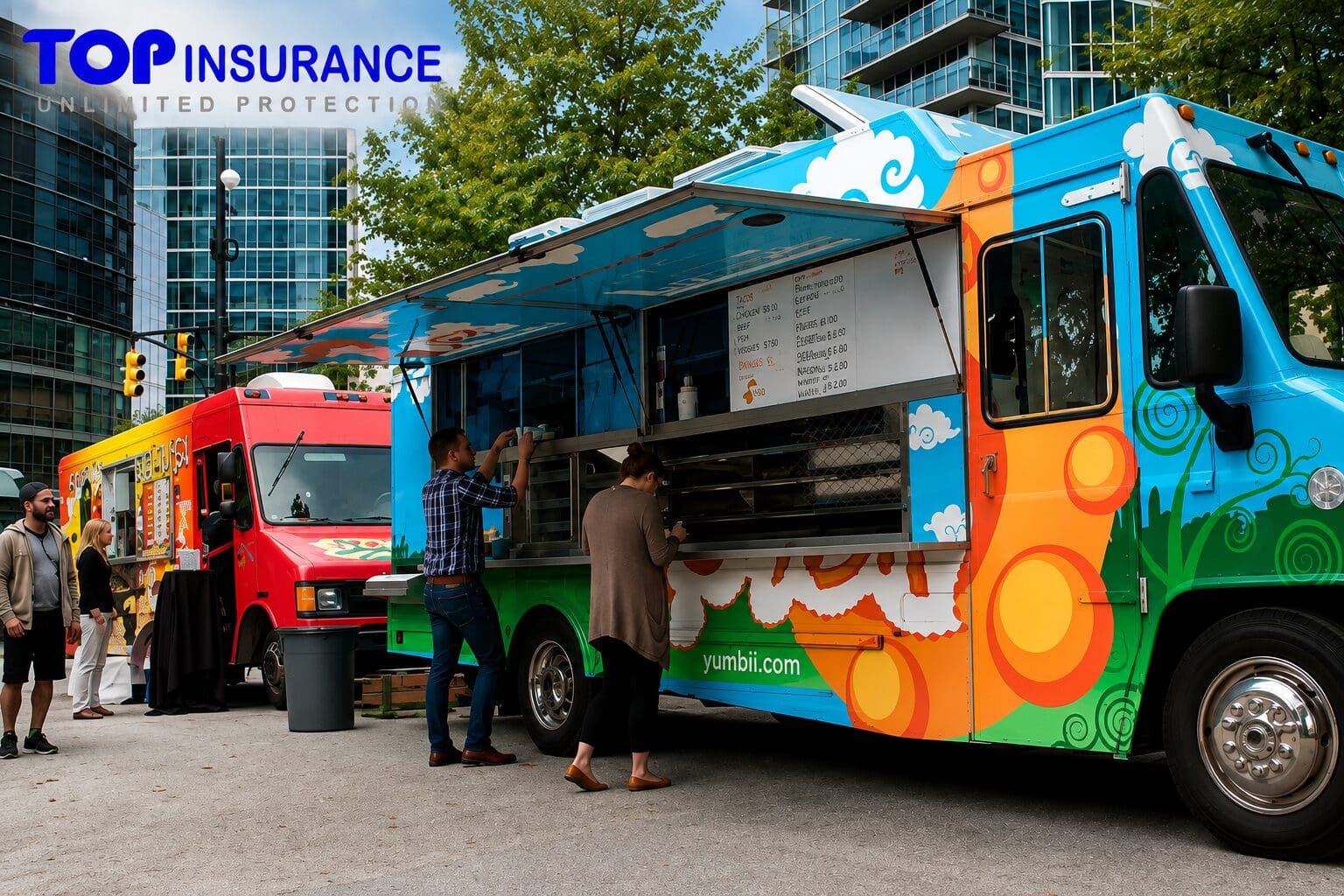
A restaurant may operate from a permanent location, while a food truck operates from a commercial vehicle that travels to different locations and events. Although their business models are different, both types of businesses can face significant risks.
Some accidents may seem minor at first but can result in expensive claims.
For example:
-
A customer slips on a wet restaurant floor.
-
A customer is burned by a hot drink.
-
A customer claims that food caused an illness.
-
An employee cuts themselves while using a knife.
-
A worker is burned by hot oil or cooking equipment.
-
A fire damages the restaurant and forces the business to close.
-
A refrigerator stops working and food inventory spoils.
-
A food truck causes an accident while traveling to an event.
-
Kitchen equipment, inventory, or money is stolen.
-
A customer claims to have suffered an allergic reaction.
-
An employee damages property at an event location.
-
A restaurant loses income because of a covered interruption.
-
A customer claims that food poisoning occurred after eating at the business.
-
An employee causes an accident while making a delivery.
-
Alcohol served at the business contributes to an accident or liability claim.
For these reasons, restaurant and food truck insurance should be designed around the business’s actual operations.
The appropriate insurance program may depend on:
-
The type of food prepared.
-
The size of the restaurant.
-
Whether the business has a commercial kitchen.
-
The use of fryers, grills, ovens, or gas equipment.
-
Whether alcohol is sold or served.
-
The number of employees.
-
Delivery operations.
-
Vehicles used by the business.
-
Whether the business is mobile or permanent.
-
The value of equipment and inventory.
-
The location of the business.
-
Claims history.
-
Contracts with landlords, venues, or event organizers.
-
Participation in festivals and special events.
-
Use of outside vendors or subcontractors.
Quick Answer: What Insurance Does a Restaurant or Food Truck Need?
A restaurant, café, bar, catering company, bakery, or food truck may need to evaluate the following coverages:
-
General Liability Insurance.
-
Commercial Property Insurance.
-
Business Owner’s Policy.
-
Business Income Insurance.
-
Food Contamination Coverage.
-
Food Spoilage Coverage.
-
Equipment Breakdown Coverage.
-
Workers’ Compensation.
-
Commercial Auto Insurance.
-
Hired and Non-Owned Auto Coverage.
-
Inland Marine Insurance.
-
Liquor Liability Insurance.
-
Commercial Umbrella Insurance.
-
Cyber Liability Insurance.
-
Employment Practices Liability Insurance.
-
Crime Insurance.
-
Employee Dishonesty Coverage.
-
Product Liability.
-
Event-specific insurance.
-
Coverage for mobile equipment.
-
Coverage for catering operations.
-
Coverage for signs, fixtures, and tenant improvements.
Not every food business needs the same policies.
A small family-owned restaurant may have different insurance needs than:
-
A food truck that attends festivals.
-
A bar that serves alcoholic beverages.
-
A bakery with commercial ovens.
-
A café that offers delivery.
-
A restaurant with several delivery vehicles.
-
A catering business.
-
A business that prepares food for schools or medical facilities.
-
A commercial kitchen that rents space to other businesses.
-
A restaurant that sells packaged food products.
What Is Restaurant and Food Truck Insurance?
Restaurant and food truck insurance is a group of commercial insurance policies designed to help protect businesses that prepare, sell, serve, or transport food and beverages.
It may apply to:
-
Restaurants.
-
Food trucks.
-
Food trailers.
-
Cafés.
-
Bakeries.
-
Bars.
-
Delis.
-
Pizzerias.
-
Taquerias.
-
Fast-food restaurants.
-
Family restaurants.
-
International restaurants.
-
Catering companies.
-
Commercial kitchens.
-
Delivery kitchens.
-
Dessert businesses.
-
Ice cream shops.
-
Juice bars.
-
Restaurants located inside hotels.
-
Businesses that sell food at events.
The policy should accurately describe all of the business’s operations. For example, a restaurant that also provides catering, delivery, packaged food, or off-site events should disclose those activities.
A food truck should also provide information about:
-
Where it operates.
-
The type of vehicle used.
-
Whether it uses a trailer.
-
Whether food is cooked inside the vehicle.
-
Whether food is prepared in an outside commercial kitchen.
-
Whether the business participates in events.
-
Whether alcohol is sold.
-
Whether the business travels between cities or states.
-
Whether employees operate the vehicle.
-
Whether generators are used.
-
Whether food is stored outside the vehicle.
Why Is Insurance Important for Restaurants?
Restaurants invite customers onto their premises, prepare food, and use equipment that may generate heat, steam, smoke, electricity, and fire.
Potential risks include:
-
Wet floors.
-
Spills.
-
Burns.
-
Cuts.
-
Falls.
-
Fires.
-
Gas leaks.
-
Water damage.
-
Electrical problems.
-
Food contamination.
-
Allergic reactions.
-
Equipment breakdown.
-
Theft.
-
Spoiled inventory.
-
Employee injuries.
-
Damage to neighboring property.
-
Delivery accidents.
A claim may result in expenses related to:
-
Medical treatment.
-
Property repairs.
-
Equipment replacement.
-
Legal defense.
-
Food disposal.
-
Lost income.
-
Cleaning and decontamination.
-
Product recalls.
-
Customer claims.
-
Vehicle repairs.
-
Temporary relocation.
-
Business interruption.
Insurance may respond to covered claims, subject to policy limits, deductibles, exclusions, conditions, and applicable requirements.
General Liability for Restaurants and Food Trucks
General Liability is one of the most important coverages for many restaurants and food businesses.
It may help protect the business against certain third-party claims involving:
-
Bodily injury.
-
Property damage.
-
Accidents inside the restaurant.
-
Operations performed at an event.
-
Operations performed at a customer’s property.
-
Products and completed operations.
-
Legal defense expenses for covered claims.
Example: A customer slips inside the restaurant
A customer walks toward a table and slips because of a spill on the floor. The customer is injured and files a claim against the restaurant.
General Liability may respond to certain covered bodily injury claims, subject to the policy terms and limits.
Example: A customer is burned by a hot drink
An employee serves a hot beverage. The customer accidentally spills it and suffers a burn.
The restaurant may receive a claim for bodily injury. Coverage depends on the circumstances and the policy language.
Example: Damage to a landlord’s property
A restaurant rents a commercial space, and a water leak damages walls, flooring, or other parts of the building.
The business’s legal responsibility and the applicable coverage may depend on the cause of the damage, the lease agreement, and the policy terms.
What May General Liability Cover?
| Coverage area | Possible protection | Restaurant or food truck example |
|---|---|---|
| Bodily Injury | Claims involving injuries to third parties | A customer falls inside the restaurant |
| Property Damage | Damage to property owned by someone else | The business damages a rented commercial space |
| Products-Completed Operations | Certain claims related to food or products sold | A customer files a claim after consuming food |
| Personal and Advertising Injury | Certain covered personal or advertising claims | A covered claim related to business advertising |
| Legal Defense | Defense for covered lawsuits | The business receives a lawsuit from a customer |
General Liability does not automatically replace Food Contamination Coverage, Workers’ Compensation, Commercial Auto, Liquor Liability, or Commercial Property Insurance.
Food Contamination and Food Spoilage Insurance
Food businesses can face claims and losses related to:
-
Contaminated food.
-
Spoiled ingredients.
-
Improper food temperatures.
-
Refrigeration failure.
-
Cross-contamination.
-
Undeclared allergens.
-
Product recalls.
-
Foodborne illness allegations.
-
Damaged inventory.
-
Business interruption.
Coverage can vary significantly between policies. Some policies may offer food contamination or spoilage coverage, while others may contain exclusions or require specific endorsements.
Example: A commercial refrigerator fails
A commercial refrigerator stops working overnight. The next morning, the restaurant discovers that meat, dairy products, and other ingredients can no longer be used.
Food Spoilage Coverage may be relevant, depending on the cause of the loss and the policy purchased.
Example: Cross-contamination
A prepared food item contains an ingredient that should not have been present because of cross-contamination.
The restaurant may receive a customer claim. Coverage depends on the facts, the product involved, the cause of the claim, and the applicable exclusions.
Allergic Reactions and Food Liability
Restaurants should have procedures for identifying and managing food allergens.
Common allergens may include:
-
Peanuts.
-
Tree nuts.
-
Milk.
-
Eggs.
-
Wheat.
-
Soy.
-
Fish.
-
Shellfish.
-
Sesame.
Risk may increase when:
-
The same utensils are used for different foods.
-
Preparation surfaces are shared.
-
Ingredients are not labeled correctly.
-
Employees are not trained.
-
Customers do not receive accurate information.
-
Special orders are not clearly communicated.
-
Food is prepared in a rushed environment.
Insurance does not replace food safety procedures. A business should establish controls for:
-
Identifying ingredients.
-
Training employees.
-
Preventing cross-contamination.
-
Cleaning food preparation surfaces.
-
Separating utensils.
-
Confirming special orders.
-
Communicating risks to customers.
-
Maintaining supplier records.
Product Liability for Restaurants
Product Liability may be relevant when a business sells food, drinks, or prepared products.
Examples include:
-
Prepared meals.
-
Desserts.
-
Sauces.
-
Bottled products.
-
Packaged food.
-
Frozen food.
-
Baked goods.
-
Takeout meals.
-
Food prepared for events.
-
Products sold through a third party.
A restaurant may receive a claim after the customer has left the premises. For this reason, products and completed operations are important when evaluating coverage.
Liquor Liability for Restaurants and Bars
If a restaurant, bar, food truck, or catering company sells, serves, or allows the consumption of alcohol, it should evaluate Liquor Liability Insurance.
This coverage may be relevant to claims involving:
-
Serving alcohol.
-
Selling alcohol.
-
Intoxicated customers.
-
Injuries that occur after alcohol consumption.
-
Damage to third parties.
-
Claims against the business for serving alcohol.
General Liability does not always provide adequate protection for every alcohol-related exposure. Coverage depends on the policy, the business operations, applicable laws, and how alcohol is sold or served.
Businesses that may need Liquor Liability
-
Bars.
-
Restaurants that sell beer or wine.
-
Restaurants with a full bar.
-
Food trucks serving alcohol at events.
-
Catering companies.
-
Event venues with beverage service.
-
Businesses hosting tastings.
-
Restaurants offering alcohol packages.
The business should disclose whether it:
-
Sells alcohol.
-
Serves alcohol.
-
Allows customers to bring alcohol.
-
Hires bartenders.
-
Works at private events.
-
Includes drinks in event packages.
-
Delivers alcoholic beverages.
Workers’ Compensation for Restaurants and Food Trucks
Restaurant and food truck employees may face a variety of workplace hazards.
Examples include:
-
Knife injuries.
-
Burns.
-
Slips and falls.
-
Lifting injuries.
-
Exposure to heat.
-
Repetitive-motion injuries.
-
Fryer accidents.
-
Injuries involving cooking equipment.
-
Exposure to cleaning products.
-
Injuries while loading or unloading supplies.
-
Delivery-related accidents.
-
Vehicle accidents.
-
Injuries caused by doors, shelves, or equipment.
Workers’ Compensation may help with certain covered work-related injuries and illnesses, according to applicable requirements and policy terms.
Benefits may relate to:
-
Medical treatment.
-
Rehabilitation.
-
Lost wages.
-
Disability.
-
Work-related injuries.
General Liability vs. Workers’ Compensation
| Situation | Coverage that may apply |
|---|---|
| A customer slips inside the restaurant | General Liability |
| A cook cuts their hand while working | Workers’ Compensation |
| A delivery van causes an accident | Commercial Auto |
| Food spoils after a refrigeration failure | Food Spoilage Coverage |
| Restaurant equipment is stolen | Commercial Property or Crime Coverage |
| A customer claims illness after eating food | Product Liability or food-related coverage |
Workers’ Compensation requirements may depend on the business structure, number of employees, payroll, job classifications, and applicable rules.
Commercial Property Insurance for Restaurants
Commercial Property Insurance may help protect the restaurant’s location, equipment, inventory, and other business property.
It may include:
-
The building, when applicable.
-
Tenant improvements.
-
Commercial ovens.
-
Fryers.
-
Grills.
-
Refrigerators.
-
Freezers.
-
Food preparation tables.
-
Furniture.
-
Computers.
-
Point-of-sale systems.
-
Food inventory.
-
Ingredients.
-
Utensils.
-
Signs.
-
Decorations.
-
Security systems.
-
Business personal property.
A restaurant that rents its location should still evaluate coverage for tenant improvements, equipment, inventory, furniture, and business property.
Equipment Breakdown Coverage for Restaurants
Kitchen equipment is essential to restaurant operations. A breakdown can immediately interrupt service.
Equipment Breakdown Coverage may be relevant for:
-
Refrigerators.
-
Freezers.
-
Ovens.
-
Fryers.
-
Grills.
-
Ice machines.
-
Dishwashers.
-
Electrical systems.
-
Boilers.
-
Ventilation systems.
-
Compressors.
-
Food preparation equipment.
An equipment breakdown may cause:
-
Food spoilage.
-
Temperature-related losses.
-
Service interruptions.
-
Expensive repairs.
-
Cancelled orders.
-
Lost income.
The applicable coverage depends on the cause of the breakdown and the policy terms.
Business Income Insurance for Restaurants
A restaurant may lose income if a fire, storm, water damage, equipment failure, or another covered event forces it to close temporarily.
Business Income Coverage may help with certain:
-
Lost income.
-
Continuing expenses.
-
Rent payments.
-
Payroll.
-
Utilities.
-
Loan payments.
-
Administrative expenses.
-
Temporary relocation costs.
The business should review:
-
The policy limit.
-
The period of restoration.
-
The waiting period.
-
Covered causes of loss.
-
Exclusions.
-
Expenses that continue during a closure.
Business Owner’s Policy for Restaurants
A Business Owner’s Policy, commonly called a BOP, may combine certain commercial coverages into one package.
A BOP may include:
-
General Liability.
-
Commercial Property.
-
Business Income.
-
Additional endorsements.
Some small restaurants may qualify for a BOP, but eligibility depends on factors such as:
-
Type of food prepared.
-
Size of the location.
-
Revenue.
-
Number of employees.
-
Use of cooking equipment.
-
Use of gas.
-
Alcohol sales.
-
Claims history.
-
Building type.
-
Catering operations.
-
Delivery operations.
A BOP does not automatically replace:
-
Workers’ Compensation.
-
Commercial Auto.
-
Liquor Liability.
-
Food Contamination Coverage.
-
Equipment Breakdown.
-
Commercial Umbrella.
-
Cyber Liability.
-
Specialized food truck coverage.
Commercial Auto Insurance for Food Trucks
A food truck is both a business and a commercial vehicle. For this reason, it may need Commercial Auto Insurance in addition to other business policies.
Using a vehicle for business activities can create exposures different from personal use. A personal policy may limit or exclude certain commercial uses. The appropriate coverage depends on factors such as vehicle ownership, the business activity, drivers, frequency and type of use, goods or equipment transported and the policy terms. Georgia requires the applicable liability coverage to be maintained on vehicles subject to its insurance requirements. Certain commercial or motor carrier operations may also be subject to additional contractual, state or federal requirements.
Commercial Auto may be relevant for:
-
Food trucks.
-
Food trailers.
-
Delivery vehicles.
-
Support vans.
-
Vehicles transporting ingredients.
-
Vehicles transporting equipment.
-
Vehicles used for catering events.
Commercial Auto may include
Depending on the policy:
-
Auto Liability.
-
Collision.
-
Comprehensive.
-
Uninsured Motorist.
-
Underinsured Motorist.
-
Hired Auto.
-
Non-Owned Auto.
-
Towing and Labor.
-
Physical Damage.
Example: A food truck causes an accident
A food truck is traveling to a festival and causes an accident.
Commercial Auto Liability may help with certain covered claims involving bodily injury or property damage to others, subject to policy limits and conditions.
Example: A food truck is damaged
The food truck is damaged in a collision or another covered event.
Collision or Comprehensive Coverage may be relevant, depending on the cause of the damage and the coverage purchased.
Insurance for Equipment Installed in a Food Truck
A food truck may contain permanently installed equipment such as:
-
Grills.
-
Fryers.
-
Refrigerators.
-
Freezers.
-
Ovens.
-
Exhaust hoods.
-
Generators.
-
Water systems.
-
Tanks.
-
Preparation tables.
-
Ice machines.
-
Ventilation systems.
-
Electrical equipment.
Tools and equipment being transported may require Inland Marine, Tools & Equipment or other specific coverage depending on the risk and the policy.
The business should confirm whether the equipment is covered under:
-
Commercial Auto.
-
Commercial Property.
-
Inland Marine.
-
Equipment Breakdown.
-
A specialized food truck policy.
Coverage may depend on whether the equipment is permanently installed, removable, financed, leased, or stored separately.
Inland Marine for Restaurant and Catering Equipment
Inland Marine Insurance may be useful for businesses that transport equipment between different locations.
It may be relevant for:
-
Catering equipment.
-
Portable ovens.
-
Tables.
-
Tents.
-
Portable refrigerators.
-
Coffee machines.
-
Serving equipment.
-
Specialized utensils.
-
Event equipment.
-
Generators.
-
Mobile cooking equipment.
A restaurant offering catering may transport valuable equipment to weddings, private parties, corporate events, festivals, and convention centers.
Hired and Non-Owned Auto for Restaurants
Hired and Non-Owned Auto may provide certain liability protection for exposures related to vehicles the business does not own, subject to the policy definitions, limits, exclusions and conditions. It does not automatically replace the vehicle owner's policy.
Hired Auto
Hired Auto may apply when the restaurant rents a vehicle to:
-
Transport food.
-
Deliver ingredients.
-
Move equipment to an event.
-
Support catering operations.
Non-Owned Auto
Non-Owned Auto may be relevant when employees use personal vehicles to:
-
Deliver food.
-
Purchase ingredients.
-
Pick up supplies.
-
Transport documents.
-
Perform business errands.
The company should disclose how vehicles are used and who drives them.
Insurance for Restaurants That Offer Delivery
Food delivery may create additional risks.
The business should review:
-
Who performs deliveries.
-
Whether employees make deliveries.
-
Whether independent contractors are used.
-
What vehicles are used.
-
Whether a third-party delivery platform is involved.
-
Who is responsible during transportation.
-
What food is transported.
-
How far deliveries travel.
-
Whether drivers use personal vehicles.
A restaurant should not assume that a driver's personal auto insurance will cover all business delivery activities. Using a vehicle for business activities can create exposures different from personal use. A personal policy may limit or exclude certain commercial uses.
Catering Insurance
Catering companies may work at:
-
Weddings.
-
Private parties.
-
Corporate events.
-
Event halls.
-
Schools.
-
Festivals.
-
Churches.
-
Hotels.
-
Convention centers.
-
Residential properties.
A catering business may need to evaluate:
-
General Liability.
-
Commercial Auto.
-
Inland Marine.
-
Workers’ Compensation.
-
Food Contamination Coverage.
-
Liquor Liability.
-
Equipment Breakdown.
-
Business Income.
-
Commercial Umbrella.
-
Event-specific coverage.
Customers and event venues may request a Certificate of Insurance before allowing the catering company to work at the location.
Certificate of Insurance for Restaurants and Food Trucks
A Certificate of Insurance, or COI, summarizes certain active insurance policies.
A landlord, property manager, event organizer, contractor, or venue may request a COI before:
-
Signing a lease.
-
Renting a commercial space.
-
Participating in a festival.
-
Operating at a market.
-
Catering a wedding.
-
Providing corporate catering.
-
Installing a food truck.
-
Participating in a private event.
-
Using a shared commercial kitchen.
A COI may show:
-
The legal business name.
-
The insurance company.
-
The type of coverage.
-
Policy limits.
-
Effective dates.
-
General Liability.
-
Commercial Auto.
-
Workers’ Compensation.
-
Liquor Liability.
-
Additional Insured status, when applicable.
A Certificate of Insurance does not replace the policy and does not create coverage that was not issued.
Additional Insured for Restaurants and Food Trucks
A landlord, event organizer, property manager, or contractor may request to be added as an Additional Insured.
The request should be reviewed to confirm:
-
The exact legal name.
-
The restaurant or event address.
-
Event dates.
-
Covered operations.
-
Required limits.
-
Required endorsements.
-
Products-completed operations.
-
Contract requirements.
-
Additional premium, if applicable.
How Much Does Restaurant Insurance Cost?
The cost varies according to the restaurant’s operations.
Factors that may affect the premium include:
-
Annual revenue.
-
Payroll.
-
Number of employees.
-
Type of food.
-
Size of the business.
-
Value of equipment.
-
Use of fryers.
-
Use of ovens.
-
Use of gas.
-
Alcohol sales.
-
Delivery services.
-
Catering.
-
Number of vehicles.
-
Claims history.
-
Location.
-
Policy limits.
-
Deductibles.
-
Safety procedures.
-
Building type.
-
Lease requirements.
-
Operating hours.
A small café may receive a different quote than a restaurant with a bar, full commercial kitchen, multiple employees, and delivery operations.
How Much Does Food Truck Insurance Cost?
The cost of food truck insurance may vary based on:
-
The vehicle’s type and value.
-
The value of installed equipment.
-
The type of food prepared.
-
The number of employees.
-
The area of operation.
-
Travel distance.
-
Driver history.
-
Claims history.
-
Participation in events.
-
Use of gas or generators.
-
Alcohol sales.
-
Inventory value.
-
Liability limits.
-
Deductibles.
A food truck should be evaluated as both a food business and a commercial vehicle.
The most accurate way to determine the cost is to request a personalized quote using complete and current business information.
How to Reduce Insurance Costs for Restaurants and Food Trucks
Train employees
Training may include:
-
Knife safety.
-
Burn prevention.
-
Hot oil safety.
-
Fire extinguisher use.
-
Food safety.
-
Cross-contamination prevention.
-
Slip-and-fall prevention.
-
Safe lifting.
-
Cleaning-product safety.
-
Safe driving.
Keep floors safe
Establish procedures to:
-
Clean spills immediately.
-
Place warning signs.
-
Keep walkways clear.
-
Inspect mats.
-
Repair damaged flooring.
-
Separate customer and work areas.
-
Keep cords away from walking paths.
Maintain kitchen equipment
Regularly inspect:
-
Fryers.
-
Ovens.
-
Grills.
-
Refrigerators.
-
Freezers.
-
Exhaust systems.
-
Generators.
-
Electrical connections.
-
Tanks.
-
Hoses.
-
Fire extinguishers.
Document the condition of the property and equipment
Keep:
-
Photographs.
-
Maintenance records.
-
Equipment inventories.
-
Receipts.
-
Serial numbers.
-
Inspection reports.
-
Temperature logs.
-
Supplier records.
Protect food inventory
Use procedures to:
-
Control temperatures.
-
Separate raw and cooked food.
-
Check expiration dates.
-
Clean preparation surfaces.
-
Manage allergens.
-
Maintain refrigeration.
-
Document refrigerator problems.
Review driver safety
For food trucks and delivery operations, establish procedures involving:
-
Driver history.
-
Training.
-
Vehicle maintenance.
-
Seat belt use.
-
Secure loading.
-
Driving in severe weather.
-
Trailer safety.
Compare equivalent quotes
Compare similar limits, deductibles, exclusions, endorsements, and conditions. The least expensive policy may not provide the protection your business needs.
Update the policy as the business grows
Notify the insurance professional when the business:
-
Purchases another vehicle.
-
Adds a food truck.
-
Begins catering.
-
Starts selling alcohol.
-
Hires more employees.
-
Purchases expensive equipment.
-
Opens another location.
-
Begins delivery operations.
-
Participates in new events.
-
Increases revenue.
Common Restaurant and Food Truck Insurance Mistakes
Operating without General Liability
An injured customer or property damage claim can create significant expenses.
Using personal insurance for a food truck
A vehicle used to prepare and sell food should be evaluated for commercial insurance. Using a vehicle for business activities can create exposures different from personal use. A personal policy may limit or exclude certain commercial uses.
Failing to insure kitchen equipment
Commercial ovens, refrigerators, fryers, and other equipment can represent a significant investment.
Not evaluating food contamination risks
General Liability may not address every loss involving contamination, spoilage, product recall, or foodborne illness allegations.
Failing to disclose alcohol sales
Selling or serving alcohol may require Liquor Liability coverage.
Not insuring stored food
Ingredients and finished products may be damaged by refrigeration failures, power interruptions, storms, or other covered events.
Failing to disclose delivery operations
Using vehicles and drivers for delivery may change the business’s coverage needs.
Not keeping temperature records
Temperature logs may be important for food safety and risk management.
Ignoring event contracts
Event organizers may request specific limits, Additional Insured status, a Certificate of Insurance, and event-specific coverage.
Failing to update insurance after business growth
The policy should reflect the company’s current operations, revenue, equipment, vehicles, and employees.
Practical Restaurant and Food Truck Scenarios
“I own a small family restaurant.”
You may evaluate General Liability, Commercial Property, Business Income, Equipment Breakdown, Workers’ Compensation, and food-related coverage.
“I own a food truck.”
You may need to review Commercial Auto, General Liability, coverage for installed equipment, Inland Marine, Workers’ Compensation, Food Contamination, Spoilage, and Business Income.
“I sell beer and wine.”
Evaluate Liquor Liability and review applicable legal and contractual requirements.
“I participate in festivals.”
The event organizer may request a Certificate of Insurance, Additional Insured status, specific liability limits, and coverage for the event period.
“I also provide catering.”
Disclose that you transport food and equipment to other locations. Commercial Auto and Inland Marine may need to be evaluated.
“A refrigerator stopped working.”
Review Food Spoilage Coverage, Equipment Breakdown, Commercial Property, and Business Income coverage.
“A customer says they became sick after eating at my restaurant.”
Document the information, preserve ingredient, temperature, employee, and supplier records, and notify the insurance company according to the policy requirements.
“An employee cut themselves in the kitchen.”
Follow workplace safety procedures and report the incident according to Workers’ Compensation requirements and applicable rules.
“My food truck was involved in an accident.”
Protect people at the scene, document the accident, exchange required information, and notify the insurance company.
“Kitchen equipment was stolen.”
Review Commercial Property, Inland Marine, Crime Insurance, and equipment coverage.
Restaurant and Food Truck Insurance Quote Checklist
Prepare the following information before requesting a quote:
-
Legal business name.
-
Trade name.
-
Business address.
-
Business entity type.
-
Business start date.
-
Type of operation.
-
Restaurant, food truck, catering company, café, bakery, or other.
-
Type of food prepared.
-
Type of beverages sold.
-
Alcohol sales or service.
-
Annual revenue.
-
Payroll.
-
Number of employees.
-
Operating hours.
-
Delivery operations.
-
Event participation.
-
Use of outside vendors.
-
Vehicle list.
-
Driver information.
-
Driver history.
-
Equipment list.
-
Value of ovens and refrigerators.
-
Inventory value.
-
Value of tenant improvements.
-
Use of gas.
-
Use of generators.
-
Ventilation systems.
-
Food safety procedures.
-
Maintenance records.
-
Claims history.
-
Current insurance policies.
-
Lease agreements.
-
Event contracts.
-
Certificate of Insurance requirements.
-
Additional Insured requirements.
-
Required limits.
-
Desired deductibles.
-
Requested effective date.
Questions to Ask an Insurance Agent
Before purchasing a policy, ask:
-
What insurance does my restaurant need?
-
What insurance does my food truck need?
-
Does General Liability cover my operations?
-
Are food products and completed operations included?
-
Do I need Food Contamination Coverage?
-
Do I need Food Spoilage Coverage?
-
Is my kitchen equipment protected?
-
Do I need Equipment Breakdown Coverage?
-
Do I need Commercial Property Insurance?
-
Do I need Business Income Coverage?
-
Do I need Commercial Auto?
-
Is equipment installed inside the food truck covered?
-
Do I need Inland Marine Insurance?
-
Do I need Liquor Liability?
-
Do I need Workers’ Compensation?
-
What coverage applies to delivery operations?
-
Can I obtain a Certificate of Insurance?
-
Can I add the landlord or event venue as an Additional Insured?
-
Can I obtain coverage for a specific event?
-
What exclusions apply?
-
What is my deductible?
-
What are my liability limits?
-
What happens if I purchase another vehicle?
-
What happens if I open another location?
-
How should I report a customer illness claim?
-
What documents should I preserve after a loss?
What to Do After an Accident or Claim
If an accident occurs at the restaurant, food truck, or event:
-
Protect customers and employees.
-
Contact emergency services when necessary.
-
Stop using equipment or food that may present a danger.
-
Preserve food samples or product lots when appropriate.
-
Take photographs and videos.
-
Record the date, time, location, and circumstances.
-
Obtain witness information.
-
Preserve receipts, temperature logs, and supplier records.
-
Do not admit fault or promise payment without appropriate guidance.
-
Notify the insurance company as soon as possible.
-
Cooperate with the claim investigation.
-
Keep communications with the customer.
-
Follow instructions from authorities and the insurance policy.
Frequently Asked Questions
What is restaurant and food truck insurance?
Restaurant and food truck insurance is a group of commercial policies that may protect restaurants, cafés, bars, catering businesses, and food trucks against claims involving injuries, property damage, food contamination, vehicle accidents, theft, equipment damage, and loss of income.
What insurance does a restaurant need?
A restaurant may need General Liability, Commercial Property, Business Income, Workers’ Compensation, Food Contamination, Food Spoilage, Equipment Breakdown, Commercial Umbrella, and Liquor Liability if alcohol is sold or served.
What insurance does a food truck need?
A food truck may need Commercial Auto, General Liability, Workers’ Compensation, coverage for installed equipment, Inland Marine, Food Contamination, Food Spoilage, Business Income, and Liquor Liability if alcoholic beverages are sold.
Is insurance required for a restaurant?
Requirements depend on the location, business structure, employees, vehicles, lease agreements, contracts, and applicable regulations. Many landlords, event organizers, and commercial customers require proof of insurance.
Does General Liability cover food poisoning?
General Liability may respond to certain covered product-related claims, but coverage depends on the policy, cause of the claim, exclusions, and limits. Specific food contamination coverage may also need to be evaluated.
Do I need Liquor Liability if I only sell beer and wine?
Possibly. A restaurant that sells or serves alcoholic beverages should evaluate Liquor Liability and review applicable legal and contractual requirements.
Do I need Commercial Auto for a food truck?
A food truck should generally be evaluated for Commercial Auto because it is a vehicle used for business purposes. Coverage should also address installed equipment and business operations.
Does food truck insurance cover kitchen equipment?
Not necessarily. Equipment may require Commercial Property, Inland Marine, Equipment Breakdown, or specialized food truck coverage.
Do restaurant employees need Workers’ Compensation?
Requirements depend on the business and applicable rules. Restaurants should review Workers’ Compensation because employees may face risks involving cuts, burns, falls, lifting injuries, and cooking equipment.
What is Food Spoilage Coverage?
Food Spoilage Coverage may help with certain losses involving food damaged by covered events, such as refrigeration or power-related problems, depending on the policy terms.
What is Food Contamination Coverage?
Food Contamination Coverage is specialized protection that may address certain risks involving contaminated food, product recalls, foodborne illness allegations, or other defined events.
How much does restaurant insurance cost?
The cost depends on the type of food, business size, revenue, employees, equipment, alcohol sales, delivery, location, claims history, limits, and deductibles. A personalized quote is the best way to determine the cost.
How much does food truck insurance cost?
The cost depends on the vehicle, installed equipment, type of food, employees, operating area, driving history, event participation, alcohol sales, limits, and deductibles.
Do I need insurance to participate in festivals?
Event organizers frequently request a Certificate of Insurance and may require specific limits, Additional Insured status, and other conditions.
Does a restaurant with delivery need additional insurance?
Delivery operations may require a review of Commercial Auto, Hired and Non-Owned Auto, drivers, vehicles, and responsibility during transportation.
Do I need insurance for a catering business?
Yes. A catering business should evaluate General Liability, Commercial Auto, Inland Marine, Workers’ Compensation, Food Contamination, Liquor Liability, and event-related coverage.
Can I add a landlord as an Additional Insured?
It may be possible if the policy and contract allow it. The legal name, address, dates, operations, and required endorsement should be confirmed.
Can I obtain a Certificate of Insurance?
Yes. An insurance professional can help request a certificate showing certain active policies, limits, and effective dates.
What should I do if a customer says they became sick after eating at my business?
Document the information, preserve ingredient, supplier, and temperature records, avoid admitting responsibility, and notify the insurance company according to the policy.
What should I do if a commercial refrigerator breaks down?
Document the failure, separate potentially damaged food, preserve temperature records, contact the maintenance provider, and notify the insurance company when appropriate.
Is a BOP appropriate for a restaurant?
Some small restaurants may qualify for a BOP, but a BOP generally does not replace Workers’ Compensation, Commercial Auto, Liquor Liability, Food Contamination, or Equipment Breakdown coverage.
Conclusion
Restaurant and food truck insurance is an important part of protecting any business that prepares, sells, serves, or transports food and beverages.
These businesses may face risks involving:
-
Customers.
-
Food products.
-
Allergies.
-
Contamination.
-
Wet floors.
-
Burns.
-
Cuts.
-
Fires.
-
Kitchen equipment.
-
Refrigerators.
-
Vehicles.
-
Employees.
-
Alcohol.
-
Theft.
-
Property damage.
-
Business interruption.
-
Event contracts.
Coverage options to evaluate may include:
-
General Liability.
-
Commercial Property.
-
Business Income.
-
Food Contamination.
-
Food Spoilage.
-
Equipment Breakdown.
-
Workers’ Compensation.
-
Commercial Auto.
-
Inland Marine.
-
Hired and Non-Owned Auto.
-
Liquor Liability.
-
Commercial Umbrella.
-
Crime Insurance.
-
Cyber Liability.
-
Event coverage.
-
Certificate of Insurance.
-
Additional Insured endorsements.
Do not choose a policy based only on the monthly price. The insurance professional should understand the type of food you prepare, the equipment you use, the vehicles you operate, the number of employees you have, the events you attend, and whether you sell or serve alcohol.
If you own a restaurant, food truck, café, bakery, bar, catering company, or commercial kitchen, Top Insurance LLC can help you review commercial insurance options for your business.
Top Insurance LLC
Phone: (877) 579-0587
Website: www.topinsus.com
Commercial insurance: comercial.topinsus.com
Request a quote: cotiza.topinsus.com

TOP Insurance LLC is a licensed independent insurance agency serving Georgia, Florida, South Carolina, Tennessee, Alabama, Indiana and Texas. Our bilingual team of licensed agents compares options from several carriers to find an alternative that fits your needs and budget. With offices in Duluth, Lawrenceville and Gainesville, GA, we specialize in auto, home, life, health and commercial insurance for the Hispanic community and all residents. Some carriers may offer options for applicants with an ITIN, consular ID, foreign passport or foreign license; required documentation and eligibility depend on each carrier.
Ready for your free quote?
Our bilingual agents help you compare options from multiple carriers to find an alternative that fits your needs and budget. Same-day response, no obligation.