Do I need workers' comp as a Florida roofer?
Yes, if you have one or more employees. Florida law requires workers' compensation once you reach that threshold, and roofing rates are high because of fall risk.
- Insurance type
- General Liability
- Languages
- Spanish and English
- Documentation
- Options available depending on carrier and eligibility
- Free quote
- Yes, no obligation
- Carriers
- Several compared
- Phone
- 1-877-579-0587
Fast, free quotes with bilingual agents. No obligation.
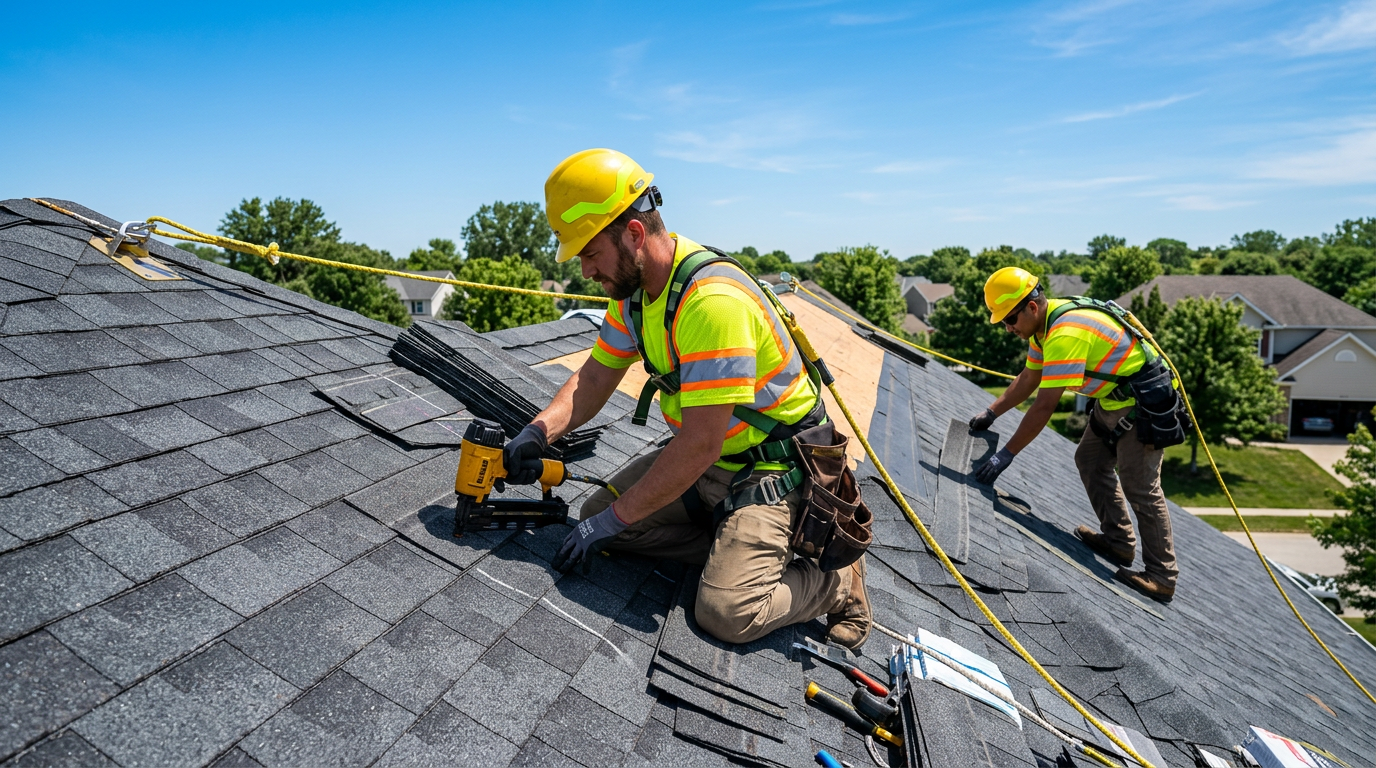
Roofing is one of the highest-risk trades in construction, and in Florida it is also one of the busiest — storm season keeps roofers working year-round. Because of fall risk, roofing carries some of the highest workers' compensation and liability costs of any trade, and general contractors and homeowners will not hire you without proof of coverage. This guide explains the insurance a Florida roofing contractor needs in 2026 and the mistakes that can put you out of business.
Quick Answer: Roofing Contractor Insurance in Florida (2026)
- General liability is the core policy — falling tools, debris, and water intrusion cause frequent third-party claims.
- Workers' compensation is required in Florida once you have one or more employees, and roofing rates are high because of fall risk.
- Commercial auto covers your trucks and dump trailers — personal auto policies exclude business use.
- Completed operations is critical — most roof-leak claims appear after the job is done.
- General contractors and homeowners almost always require a Certificate of Insurance (COI), often naming them as additional insured.
What Insurance a Roofing Contractor Needs in Florida
Roofing combines extreme height risk with weather exposure, so a single policy is never enough. Here are the core coverages and why each matters on a Florida roof.
| Policy | What it covers | Why a Roofing Contractor needs it |
|---|---|---|
| General Liability | Third-party bodily injury and property damage | A dropped tool injures someone or debris damages a car below |
| Workers' Compensation | Medical bills and lost wages for injured workers | Required in Florida at 1+ employee; falls are the leading roofing injury |
| Commercial Auto | Accidents involving trucks and dump trailers | Personal auto excludes hauling materials, tear-off, and crews |
| Completed Operations | Damage after the roof is finished | A leak weeks later damages the interior — the most common roofing claim |
| Tools & Equipment | Theft or damage of tools and gear on-site or in transit | Nail guns, compressors, and ladders are frequent job-site theft targets |
The Most Common Insurance Mistakes for Roofing Contractors in Florida
Mistake #1: Working without a Certificate of Insurance ready
General contractors and homeowners will not let you start — or make final payment — without a COI, often naming them as additional insured. Not having it ready costs you the job.
Mistake #2: Misclassifying crews to avoid workers' comp
Florida requires workers' compensation at 1+ employee. Because roofing rates are high, some contractors misclassify workers as subs to save money — a serious risk if someone falls and you owe the claim personally.
Mistake #3: Skipping completed-operations coverage
Most roofing claims — leaks and interior water damage — surface after the job. Without completed operations, that claim may not be covered.
Mistake #4: Letting subcontractors work uninsured
If a sub without coverage falls or causes damage, the claim can land on your policy and your experience rating. Always require subs to carry their own insurance and provide a COI.
Mistake #5: Buying liability limits that are too low
A single serious fall or major water-damage claim can blow past a low limit. When the limit runs out, the rest comes from your business and personal assets.
Roofing Contractor Risks in Florida
Florida roofers work steep pitches, high heat, and post-storm emergency repairs across the state. Falls from roofs and ladders are the leading cause of serious injury and are why roofing carries high workers' comp rates; dropped tools, debris damage, and post-job leaks round out the most common losses. Because nearly every contract requires proof of coverage and additional-insured status, keeping the right policies active is essential to staying eligible for insurance-restoration and new-construction work.
How to Save on Roofing Contractor Insurance in Florida
- Maintain a documented fall-protection and safety program — carriers reward it.
- Keep a clean claims history and a good workers' comp experience rating.
- Require every subcontractor to carry their own insurance and provide a COI.
- Match your limits to your actual contracts — not just the cheapest option.
- Compare quotes from multiple carriers through an independent agency that knows roofing.
Why Choose TOP Insurance in Florida
TOP Insurance has helped over 10,000 families and business owners across Georgia, Florida, Texas, South Carolina, Tennessee, Alabama, and Indiana find coverage options that fit their needs and budget. Our licensed, bilingual agents compare quotes from several carriers, so you never have to shop one company at a time.
Because we are an independent agency, we work for you, not the insurance company. We explain your general liability options in plain English or Spanish, help you avoid the common mistakes below, and stay with you at claim time. Visit us at one of our three Georgia offices in Duluth, Lawrenceville, or Gainesville, or get a free quote by phone.
Informational note
This guide is provided for general educational purposes and reflects rules and figures known as of 2026. Insurance laws and carrier programs change — for advice specific to your situation, speak with a licensed TOP Insurance agent.
Frequently Asked Questions
Do I need workers' comp as a Florida roofer?
Yes, if you have one or more employees. Florida law requires workers' compensation once you reach that threshold, and roofing rates are high because of fall risk.
Why is roofing insurance more expensive than other trades?
Roofing has one of the highest injury rates in construction because of falls, so both workers' comp and general liability cost more. A strong safety program and clean claims history help control your rates.
Does general liability cover a leak that appears after the job?
That is completed-operations exposure. Make sure your policy includes products-completed operations so post-job leaks and interior damage can be covered.
Is insurance required to do roofing work in Florida?
Clients, general contractors, and lenders commonly require general liability and proof of workers' comp before you start; requirements vary by contract, so confirm with a licensed agent.
Get a Free Florida Quote Today
Ready to protect what matters most? Our bilingual team makes it easy. Request your free, no-obligation quote and let a licensed agent compare your options in minutes. Explore our coverage options, learn more about insurance in Florida, Georgia, and Texas, or contact us today. Call 1-877-579-0587 or message us on WhatsApp at 1-470-429-0756.

TOP Insurance LLC is a licensed independent insurance agency serving Georgia, Florida, South Carolina, Tennessee, Alabama, Indiana and Texas. Our bilingual team of licensed agents compares options from several carriers to find an alternative that fits your needs and budget. With offices in Duluth, Lawrenceville and Gainesville, GA, we specialize in auto, home, life, health and commercial insurance for the Hispanic community and all residents. Some carriers may offer options for applicants with an ITIN, consular ID, foreign passport or foreign license; required documentation and eligibility depend on each carrier.
Ready for your free quote?
Our bilingual agents help you compare options from multiple carriers to find an alternative that fits your needs and budget. Same-day response, no obligation.