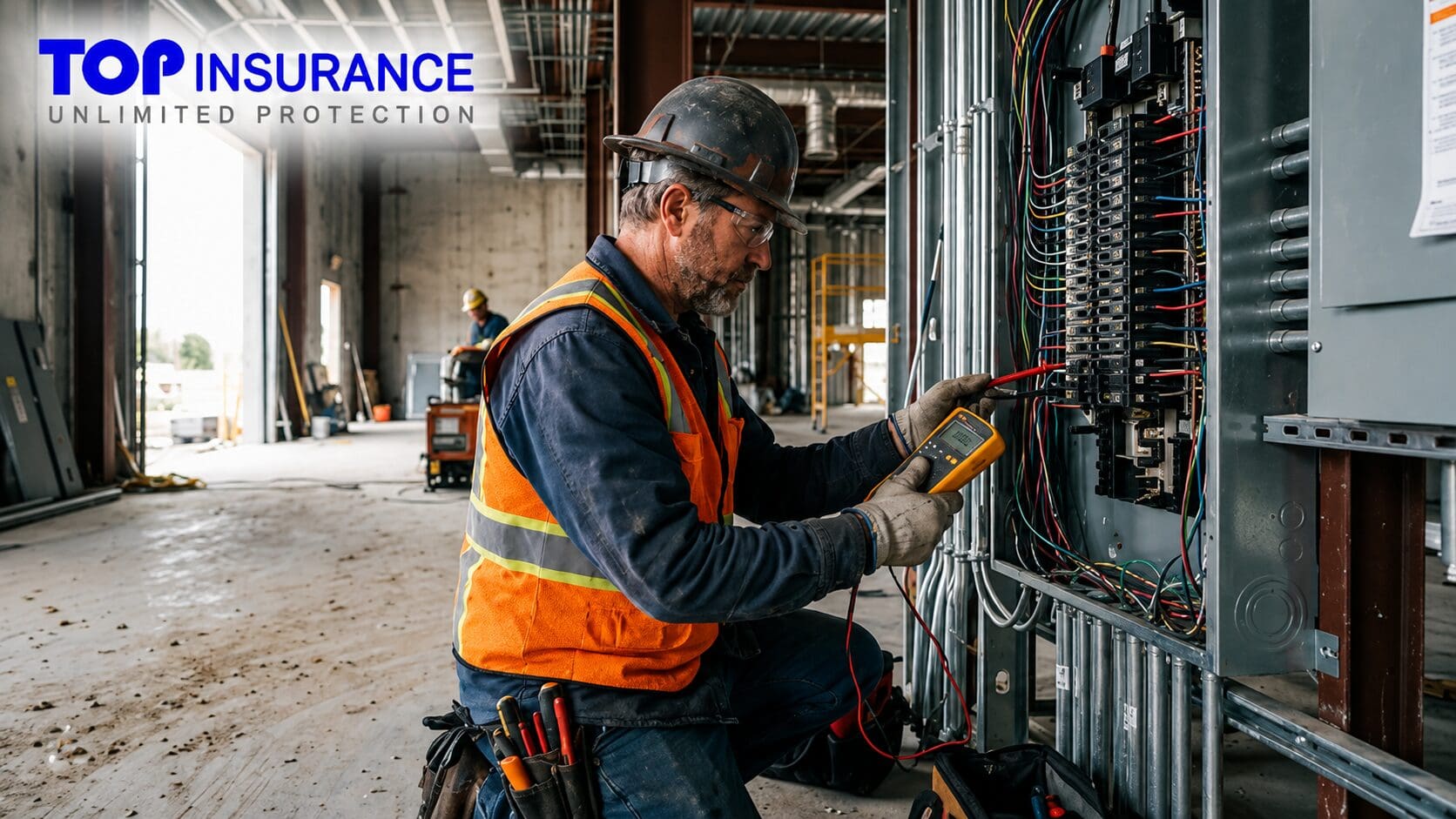
What insurance does an electrician need in Georgia?
An electrician may need to evaluate General Liability, completed operations, Workers’ Compensation, Commercial Auto, tools and equipment coverage, Inland Marine, Commercial Property, Professional Liability, Commercial Umbrella, and contractor bonds, depending on the business operations, employees, vehicles, contracts, and project requirements.
- Insurance type
- General Liability
- Languages
- Spanish and English
- Documentation
- Options available depending on carrier and eligibility
- Free quote
- Yes, no obligation
- Carriers
- Several compared
- Phone
- 1-877-579-0587
Fast, free quotes with bilingual agents. No obligation.
Electricians provide essential services to homes, businesses, construction projects, restaurants, offices, warehouses, apartment buildings, industrial facilities, and public properties throughout Georgia.
They install, repair, inspect, and maintain the electrical systems that allow buildings and businesses to operate safely and efficiently.
However, electrical work involves significant risks. An error during an installation, faulty wiring, a panel failure, or an accident at a job site can result in serious injuries, fires, expensive property damage, project delays, legal claims, or lost business income.
For this reason, an independent electrician, small electrical company, or commercial electrical contractor should consider an insurance program based on the actual operations of the business.
Not all electricians face the same level of risk. A residential electrician who performs minor repairs may need a different insurance structure from a contractor working on commercial construction, industrial systems, generators, high-voltage equipment, new buildings, or infrastructure projects.
This guide explains the most important insurance coverages that electricians and electrical contractors in Georgia may need to evaluate to protect their business, employees, vehicles, tools, customers, and professional reputation.
Quick Answer: What Insurance Does an Electrician Need in Georgia?
Electricians and electrical contractors in Georgia may need to evaluate:
-
General Liability Insurance.
-
Products and Completed Operations Coverage.
-
Workers’ Compensation.
-
Commercial Auto Insurance.
-
Hired and Non-Owned Auto Coverage.
-
Tools and Equipment Insurance.
-
Inland Marine Insurance.
-
Commercial Property Insurance.
-
Business Owner’s Policy.
-
Business Income and Extra Expense Coverage.
-
Professional Liability or Errors and Omissions Insurance.
-
Commercial Umbrella Insurance.
-
Cyber Liability Insurance.
-
Employment Practices Liability Insurance.
-
Contractor license bonds.
-
Permit bonds.
-
Bid bonds.
-
Payment bonds.
-
Performance bonds.
-
Certificates of Insurance.
-
Additional Insured endorsements.
-
Subcontractor insurance requirements.
The right combination depends on the type of electrical work performed, number of employees, vehicles, tools, project values, revenue, contracts, claims history, and customer or general contractor requirements.
What Is Electrician Insurance?
Electrician insurance is not a single policy. It is a combination of commercial insurance coverages designed to help protect an electrical business from certain claims, accidents, property damage, tool losses, vehicle damage, workplace injuries, and lawsuits.
It may be relevant for:
-
Independent electricians.
-
Electrical contractors.
-
Electrical installation companies.
-
Residential electricians.
-
Commercial electricians.
-
Industrial electricians.
-
Electrical maintenance companies.
-
Electrical panel installers.
-
Generator installers.
-
Lighting installers.
-
Electric vehicle charger installers.
-
Structured cabling contractors.
-
Low-voltage technicians.
-
Alarm system companies.
-
Security camera installers.
-
Access-control installers.
-
Solar contractors.
-
Electrical remodeling contractors.
-
Electrical subcontractors.
-
New-construction electrical companies.
The policy should accurately describe all of the business’s operations. For example, if the company performs commercial installations, industrial wiring, solar work, generator installation, excavation, low-voltage work, alarm systems, or subcontracting, that information should be disclosed to the insurance professional.
An incomplete description of the business operations can create coverage problems if a claim occurs.
Why Do Electricians in Georgia Need Commercial Insurance?
Electricians may face risks that are not common in many other service businesses. They work around electricity, electrical panels, wiring, ladders, roofs, high-voltage systems, active construction sites, heavy equipment, and occupied properties.
Common risks may include:
-
Electrical shocks.
-
Burns.
-
Fires.
-
Electrical arcs.
-
Falls from ladders.
-
Falls from roofs.
-
Injuries involving power tools.
-
Damage to electrical panels.
-
Damage to HVAC systems.
-
Damage to walls, ceilings, or floors.
-
Damage to electronic equipment.
-
Power outages.
-
Wiring errors.
-
Damage discovered after a project is completed.
-
Theft of tools from a service vehicle.
-
Accidents involving company vehicles.
-
Employee injuries.
-
Customer claims.
-
Contractual insurance requirements.
-
Subcontractor-related risks.
A small mistake can have serious consequences. For example, an incorrect connection may damage equipment, interrupt power, destroy inventory, interrupt business operations, or possibly cause a fire.
Insurance does not eliminate risk or replace safety procedures. However, it may help respond to certain covered claims, subject to the policy’s limits, deductibles, exclusions, conditions, and terms.
General Liability Insurance for Electricians
General Liability Insurance is one of the main coverages that many electricians and electrical contractors should evaluate.
It may help with certain third-party claims involving:
-
Bodily injury.
-
Property damage.
-
Accidents at a job site.
-
Damage caused during operations.
-
Injuries to customers or visitors.
-
Completed operations claims.
-
Legal defense expenses for covered claims.
Example: Damage to a customer’s property
An electrician is working in a home and accidentally damages a wall, plumbing system, appliance, or expensive equipment while installing wiring.
General Liability may be relevant to certain third-party property damage claims, depending on the circumstances and policy terms.
Example: A customer is injured in the work area
A customer enters the area where an electrical repair is being performed, trips over cables or materials, and suffers an injury.
General Liability may help with certain covered bodily injury claims.
Example: Damage during a commercial installation
An electrical contractor is working in a commercial location and accidentally damages a wall, ceiling, piece of equipment, or system belonging to the customer.
The applicable coverage depends on the cause of the damage, the contract, the contractor’s legal responsibility, and the policy language.
What May General Liability Cover?
| Situation | Coverage that may apply | Example |
|---|---|---|
| Injury to a third party | General Liability | A customer trips over materials at a job site |
| Damage to a third party’s property | General Liability | A wall or piece of equipment is damaged during work |
| A claim after a project is completed | Products and Completed Operations | An installation failure causes damage later |
| Employee accident | Workers’ Compensation | An electrician falls while working |
| Accident involving a service vehicle | Commercial Auto | A company vehicle damages another car |
| Stolen tools | Tools and Equipment or Inland Marine | Tools are stolen from a service van |
| Design or professional recommendation error | Professional Liability | A customer alleges financial loss caused by an incorrect specification |
Products and Completed Operations Coverage
Electrical claims do not always occur on the same day the work is performed. Some problems may not be discovered until weeks, months, or longer after an installation is completed.
Products and Completed Operations Coverage may be important for claims involving completed electrical work.
Examples include:
-
An electrical connection fails after installation.
-
A panel is installed incorrectly.
-
A lighting system develops a failure.
-
Faulty wiring damages equipment.
-
A generator installation does not work properly.
-
A customer alleges that a repair caused a financial loss.
-
A completed electrical system must be repaired after a failure.
-
Completed work causes damage to another part of the property.
Example: A problem appears after the project is finished
An electrical contractor completes wiring work at a commercial property. Several months later, a connection fails and damages equipment or other property.
Because the work was completed before the loss occurred, the completed operations portion of the policy may become important.
It is important to understand that General Liability does not necessarily pay the cost of correcting the contractor’s own defective work. In some situations, resulting damage to other property may be analyzed differently, but coverage depends on the facts, exclusions, and policy language.
Electrical contractors should ask how completed operations coverage applies to their specific projects.
Workers’ Compensation for Electricians in Georgia
Electricians and electrical helpers face significant workplace hazards. Workers’ Compensation may be essential for a business that has employees.
Workplace risks may include:
-
Electrical shocks.
-
Burns.
-
Falls from ladders.
-
Falls from roofs.
-
Injuries from lifting heavy materials.
-
Tool-related accidents.
-
Construction-site injuries.
-
Repetitive-motion injuries.
-
Vehicle accidents.
-
Exposure to heat or severe weather.
-
Cuts.
-
Back injuries.
-
Loading and unloading accidents.
-
Contact with energized wires.
Workers’ Compensation may help with certain covered work-related injuries or illnesses, including:
-
Medical treatment.
-
Rehabilitation.
-
Disability benefits.
-
A portion of lost wages.
-
Applicable benefits for dependents in serious cases.
In Georgia, Workers’ Compensation requirements may depend on factors such as the number of employees, business structure, worker classification, and applicable rules. A business should confirm its specific obligations with qualified professionals and the appropriate authorities.
Do not assume that a worker is an independent contractor simply because the worker receives a Form 1099. Worker classification depends on the actual working relationship and other applicable factors.
Commercial Auto Insurance for Electricians
Many electrical businesses rely on vans, pickup trucks, trailers, ladder trucks, and other vehicles to transport employees, tools, ladders, wire, panels, materials, and equipment between projects.
Commercial Auto Insurance may be relevant for:
-
Service vans.
-
Electrician trucks.
-
Pickup trucks.
-
Company vehicles.
-
Ladder trucks.
-
Trailers.
-
Vehicles used to transport tools.
-
Vehicles used to transport electrical materials.
-
Vehicles used for emergency calls.
-
Vehicles used by employees.
Depending on the policy, coverage may include:
-
Commercial Auto Liability.
-
Collision Coverage.
-
Comprehensive Coverage.
-
Uninsured Motorist Coverage.
-
Underinsured Motorist Coverage.
-
Towing and roadside assistance.
-
Hired Auto Coverage.
-
Non-Owned Auto Coverage.
Example: An accident while traveling to a job
An employee drives a company van to a project and causes an accident. The other driver files a claim for bodily injury and vehicle damage.
Commercial Auto Liability may help with certain covered claims, subject to policy limits and conditions.
Example: A work van is damaged
A van loaded with tools is damaged in a collision or stolen.
Collision or Comprehensive Coverage may be relevant to the vehicle. Tools inside the vehicle may require separate coverage.
Hired and Non-Owned Auto Coverage
Hired and Non-Owned Auto Coverage may be important when a company uses vehicles that it does not own.
Hired Auto
Hired Auto Coverage may apply when a company rents a vehicle to transport:
-
Tools.
-
Electrical materials.
-
Equipment.
-
Employees.
-
Generators.
-
Panels.
-
Supplies for a project.
Non-Owned Auto
Non-Owned Auto Coverage may apply when an employee uses a personal vehicle for business activities, such as:
-
Picking up materials.
-
Visiting a customer.
-
Delivering documents.
-
Traveling between job sites.
-
Purchasing emergency supplies.
-
Inspecting a project.
An employee’s personal auto policy may not provide adequate protection for all business activities. The company should disclose who drives, what vehicles are used, and how they are used.
Tools and Equipment Insurance for Electricians
Tools are essential to an electrician’s ability to work. If tools are lost, stolen, or damaged, the business may have difficulty completing service calls and may lose income.
Tools and equipment may include:
-
Drills.
-
Multimeters.
-
Voltage detectors.
-
Hand tools.
-
Testing equipment.
-
Generators.
-
Ladders.
-
Cable-pulling equipment.
-
Wire-cutting tools.
-
Lighting equipment.
-
Cable reels.
-
Panel-installation equipment.
-
Low-voltage equipment.
-
Measurement devices.
-
Specialized commercial installation tools.
-
Safety equipment.
Tools and Equipment Insurance or Inland Marine Insurance may help protect certain equipment while it is:
-
Inside a service vehicle.
-
In transit.
-
At a construction site.
-
In a warehouse.
-
At a customer’s property.
-
At a temporary location.
-
Being used for installation or maintenance.
Coverage may vary based on the location of the loss, the type of equipment, policy limits, deductibles, security requirements, and exclusions.
To help support a claim, maintain:
-
An updated inventory.
-
Purchase receipts.
-
Photographs.
-
Serial numbers.
-
Replacement-cost estimates.
-
Maintenance records.
-
Records showing who has each tool.
-
Security procedures for vehicles and storage areas.
Commercial Property Insurance and a BOP
An electrician who operates from an office, warehouse, commercial location, or storage facility may need Commercial Property Insurance.
It may help protect certain business property, such as:
-
Office space.
-
Warehouse space.
-
Inventory.
-
Electrical materials.
-
Wire and cable.
-
Panels.
-
Tools.
-
Equipment.
-
Computers.
-
Desks.
-
Shelving.
-
Signs.
-
Furniture.
-
Security systems.
-
Improvements made to a rented location.
A Business Owner’s Policy, also called a BOP, may combine certain coverages, generally General Liability and Commercial Property, into one policy for eligible businesses.
However, a BOP does not automatically replace:
-
Workers’ Compensation.
-
Commercial Auto.
-
Professional Liability.
-
Tools and Equipment Coverage.
-
Inland Marine Insurance.
-
Commercial Umbrella Insurance.
-
Contractor bonds.
-
Specialized coverage for high-risk projects.
Electricians who work from home should also review their needs carefully. A homeowners policy may not adequately cover business tools, materials, inventory, income, or liability related to an electrical business.
Business Income and Extra Expense Coverage
A fire, theft, storm, water damage, or another covered event may force an electrical company to temporarily stop or reduce operations.
Business Income Coverage may help with certain lost income and continuing expenses during the restoration period after a covered loss.
It may be relevant to:
-
Rent.
-
Payroll.
-
Utilities.
-
Loan payments.
-
Administrative expenses.
-
Temporary relocation costs.
-
Additional expenses needed to continue operating.
Example: A warehouse fire
A fire damages a warehouse where a company stores tools, wire, panels, and office equipment. The business cannot operate normally while the property is repaired and equipment is replaced.
Business Income and Extra Expense Coverage may be relevant if the cause of loss and the policy conditions are covered.
Professional Liability for Electrical Contractors
Professional Liability, also called Errors and Omissions Insurance, may be important for electricians or electrical contractors who provide professional services, designs, technical recommendations, specifications, or consulting.
It may be relevant if the business:
-
Designs electrical systems.
-
Recommends specifications.
-
Prepares plans.
-
Participates in design-build projects.
-
Performs technical calculations.
-
Advises customers about electrical capacity.
-
Recommends materials or equipment.
-
Provides commercial project consulting.
-
Designs lighting systems.
-
Designs low-voltage installations.
-
Recommends energy or backup-power solutions.
Example: A technical recommendation
An electrical contractor recommends a system for a commercial facility. The customer later alleges that the recommendation caused financial losses because the system did not meet the facility’s needs.
Professional Liability may be relevant when the allegation involves a professional error, omission, or negligence in a technical service. It is different from General Liability, which generally focuses on bodily injury and physical property damage to third parties.
Commercial Umbrella Insurance
Commercial Umbrella Insurance provides additional liability limits above certain underlying policies, such as General Liability, Commercial Auto, and Employers Liability, depending on the policy structure.
It may be useful for electricians who:
-
Work on large commercial projects.
-
Have multiple vehicles.
-
Employ several crews.
-
Work in occupied buildings.
-
Work in schools, hospitals, restaurants, or shopping centers.
-
Perform high-value installations.
-
Have contracts requiring high liability limits.
-
Work as subcontractors for general contractors.
-
Own significant business assets.
-
Work with panels, generators, industrial systems, or complex installations.
A serious injury, fire, or property damage claim can quickly exceed the limits of a primary policy. Umbrella coverage should be evaluated based on the company’s risks, contracts, and size.
Contractor Bonds for Electrical Contractors
Bonds are not the same as insurance.
Generally, a bond involves:
-
The principal: the electrical contractor.
-
The obligee: the party requiring the bond.
-
The surety: the company issuing the bond.
Depending on the project, an electrician or electrical contractor may need:
-
License bonds.
-
Permit bonds.
-
Bid bonds.
-
Performance bonds.
-
Payment bonds.
-
Maintenance bonds.
-
Bonds for public contracts.
-
Bonds required by cities, counties, or customers.
A bond may be required for a license, permit, public project, commercial construction job, or customer contract.
A bond does not replace General Liability, Workers’ Compensation, Commercial Auto, or other commercial insurance policies.
Certificates of Insurance for Electricians
A Certificate of Insurance, commonly called a COI, is a document that summarizes certain information about a company’s active insurance policies.
A general contractor, property owner, property manager, landlord, or customer may request a COI before allowing an electrician to begin work.
A COI may show:
-
The legal business name.
-
The insurance company.
-
The type of coverage.
-
Policy effective dates.
-
Liability limits.
-
General Liability.
-
Commercial Auto.
-
Workers’ Compensation.
-
Umbrella Liability.
-
Other requested information, when applicable.
A COI does not replace the insurance policy and cannot create coverage that does not exist. If a contract requires specific coverage or endorsements, the business should confirm that those endorsements have actually been issued.
Additional Insured Requirements for Electrical Contractors
Many general contractors, property owners, and property managers request to be added as Additional Insureds on an electrician’s liability policy.
Before sending a certificate, confirm:
-
The exact legal name of the entity.
-
The project address.
-
The type of work.
-
The project dates.
-
Required limits.
-
The specific endorsement requested.
-
Completed operations requirements.
-
Primary and noncontributory wording.
-
Waiver of subrogation requirements.
-
Contract requirements.
Do not assume that a certificate alone satisfies every contract requirement. The applicable endorsements should be reviewed before the project begins.
Subcontractors and Independent Contractor Risks
An electrical company may hire subcontractors for specific projects, including:
-
Low-voltage installations.
-
Commercial wiring.
-
Excavation.
-
Specialized lighting.
-
Security systems.
-
Solar systems.
-
Generator installation.
-
Industrial work.
-
Additional labor.
Before a subcontractor begins work, the hiring company should consider requesting:
-
A current Certificate of Insurance.
-
General Liability coverage.
-
Workers’ Compensation, when applicable.
-
Commercial Auto coverage.
-
License information.
-
A written contract.
-
Indemnification requirements.
-
Additional Insured status.
-
Completed operations coverage.
-
Safety documentation.
A subcontractor’s insurance does not automatically protect the company that hires the subcontractor. The contract and policy endorsements should be reviewed carefully.
How Much Does Electrician Insurance Cost in Georgia?
There is no single price for electrician insurance in Georgia. The cost depends on the specific characteristics of each business.
Factors that may affect the premium include:
-
Type of electrical work.
-
Residential, commercial, or industrial work.
-
Annual revenue.
-
Payroll.
-
Number of employees.
-
Years of experience.
-
Claims history.
-
Number and type of vehicles.
-
Drivers’ records.
-
Value of tools and equipment.
-
Use of subcontractors.
-
Generator installation.
-
Solar work.
-
High-voltage work.
-
Industrial installations.
-
Contract size.
-
Requested limits.
-
Deductibles.
-
Service area.
-
General contractor requirements.
-
Bond requirements.
-
Safety procedures.
An independent electrician performing small residential jobs may have a very different premium from a commercial electrical company with several employees, multiple vans, expensive equipment, and large construction contracts.
| Coverage | Factors that may affect the cost |
|---|---|
| General Liability | Revenue, type of work, limits, claims history, and operations |
| Workers’ Compensation | Payroll, employee count, job classifications, and claims history |
| Commercial Auto | Vehicles, drivers, driving history, mileage, and commercial use |
| Tools and Equipment | Equipment value, storage, security, and deductible |
| Professional Liability | Design services, consulting, revenue, limits, and claims history |
| Commercial Umbrella | Primary limits, vehicles, business size, and risk exposure |
| Contractor Bonds | Bond amount, contract, experience, and financial information |
Online price examples should be considered general references only. An individualized application is needed to determine the actual premium.
How to Manage Electrical Insurance Costs
Maintain a written safety program
A safety program may include:
-
Proper use of personal protective equipment.
-
Lockout and tagout procedures.
-
Fall prevention.
-
Ladder safety.
-
Power-tool safety.
-
Procedures for working near energized circuits.
-
Training for elevated work.
-
Equipment inspections.
-
Use of gloves and eye protection.
-
Vehicle safety procedures.
-
Emergency response plans.
Train employees
Training may help reduce accidents involving:
-
Electrical shocks.
-
Tools.
-
Ladders.
-
Falls.
-
Back injuries.
-
Driving.
-
Handling materials.
-
Personal protective equipment.
-
Customer properties.
-
Communication with customers and general contractors.
Maintain vehicles and equipment
Preventive maintenance may help reduce accidents and losses.
Maintain records of:
-
Vehicle inspections.
-
Mechanical service.
-
Tire inspections.
-
Lights.
-
Brakes.
-
Ladders.
-
Tools.
-
Testing equipment.
-
Generators.
-
Safety equipment.
Secure tools
To reduce theft risks, consider:
-
Locked vehicles.
-
Vehicle alarms.
-
GPS tracking.
-
Secure parking.
-
Tool inventories.
-
Serial-number records.
-
Regular inventory checks.
-
Exterior lighting.
-
Tool check-in and check-out procedures.
Review the policy annually
Update the policy when the business:
-
Hires employees.
-
Purchases a service van.
-
Adds a trailer.
-
Buys expensive tools.
-
Begins commercial projects.
-
Starts industrial work.
-
Adds generator installation.
-
Adds solar work.
-
Begins using subcontractors.
-
Increases revenue.
-
Changes its address.
-
Opens another location.
-
Expands operations to another city or state.
Common Electrician Insurance Mistakes
Choosing insurance based only on price
A low premium may mean lower limits, higher deductibles, important exclusions, or insufficient coverage for the business’s contracts.
Failing to describe all services
The insurance application should accurately identify residential, commercial, industrial, low-voltage, generator, solar, structured-cabling, alarm, and other operations.
Using personal auto insurance for work vehicles
A personal policy may not be appropriate for commercial vehicles, employees, tools, materials, or emergency business use.
Assuming tools are covered by Commercial Auto
The auto policy generally covers the vehicle. Tools and equipment may require separate coverage.
Failing to review completed operations
An electrical problem may not appear until after the project is completed. Contractors should evaluate how completed operations coverage applies.
Not verifying subcontractor insurance
Working with subcontractors without verifying licenses, insurance, and contracts may increase the company’s exposure.
Ignoring contract requirements
A contract may require specific limits, Additional Insured status, waiver of subrogation, primary and noncontributory wording, and completed operations coverage.
Not considering Umbrella Liability for large projects
Primary liability limits may not be sufficient for commercial projects, occupied buildings, or serious claims.
Common Scenarios for Electricians in Georgia
“I am an independent electrician who performs residential work.”
You may need to evaluate General Liability, Commercial Auto, tools and equipment coverage, and possibly Professional Liability if you also provide technical designs or recommendations.
“I work for general contractors.”
You may need a COI, specific General Liability limits, Additional Insured status, waiver of subrogation, primary and noncontributory wording, and completed operations coverage.
“I work on commercial construction projects.”
Review General Liability, Workers’ Compensation, Commercial Auto, Commercial Umbrella, tools and equipment coverage, contract requirements, and subcontractor procedures.
“I install generators.”
Disclose this operation to your insurance professional and confirm that it is included in the policy.
“I install electric vehicle chargers.”
Review whether installation operations, equipment, vehicles, and contracts are correctly described in the insurance application.
“I work with solar or low-voltage systems.”
Disclose all services offered so the policy can accurately reflect the company’s actual operations.
“My tools were stolen from my service vehicle.”
Document the theft, report it to the appropriate authorities, prepare an inventory of the missing equipment, preserve receipts and serial numbers, and notify the insurance company according to the policy requirements.
“A customer says my installation caused damage.”
Document the situation, take photographs, preserve contracts, estimates, invoices, and work records, avoid admitting fault, and report the claim promptly.
Information Needed for an Electrician Insurance Quote
Prepare the following information:
-
Legal business name.
-
Trade name.
-
Business address.
-
Business structure.
-
Years in operation.
-
License information.
-
Types of electrical services.
-
Residential, commercial, or industrial work.
-
Panel installation.
-
Generator installation.
-
Low-voltage work.
-
Alarm or camera installation.
-
Solar systems.
-
Structured cabling.
-
Annual or projected revenue.
-
Annual payroll.
-
Number of employees.
-
Employee job duties.
-
Use of subcontractors.
-
Vehicle list.
-
Driver information.
-
Driving history.
-
Tools and equipment list.
-
Replacement value of equipment.
-
Storage locations.
-
Claims history.
-
Current insurance policies.
-
Contract requirements.
-
Required limits.
-
Certificate of Insurance requirements.
-
Additional Insured requirements.
-
Bond requirements.
-
Desired effective date.
Questions to Ask an Insurance Professional
-
What insurance does my electrical business need?
-
Are my specific services included?
-
Does the policy cover residential and commercial work?
-
Do I have completed operations coverage?
-
How does the policy treat defective work and resulting damage?
-
Are my tools covered outside my office or warehouse?
-
Are tools covered if stolen from my service vehicle?
-
Do I need Inland Marine Insurance?
-
Do I need Commercial Auto Insurance?
-
Do I need Hired and Non-Owned Auto Coverage?
-
What happens if an employee uses a personal vehicle for business?
-
Do I need Workers’ Compensation?
-
How are subcontractors treated?
-
Do I need Professional Liability?
-
Do I need Commercial Umbrella Insurance?
-
Do I need a contractor bond?
-
Can I obtain a Certificate of Insurance quickly?
-
Can I add a general contractor as an Additional Insured?
-
Does completed operations coverage include the Additional Insured when required by contract?
-
Can I obtain a waiver of subrogation?
-
What important exclusions apply?
-
What is the deductible?
-
How should I report a claim?
-
When should I update my policy?
What to Do After an Accident or Claim
If an accident, injury, fire, property damage, stolen equipment loss, or customer claim occurs:
-
Protect people and prevent additional damage.
-
Contact emergency services when necessary.
-
Disconnect equipment or systems when it is safe to do so.
-
Take photographs and videos.
-
Document the date, time, location, and circumstances.
-
Obtain witness information.
-
Preserve contracts, work orders, estimates, photographs, and invoices.
-
Do not admit liability or promise payment.
-
Notify the insurance company promptly according to the policy requirements.
-
Cooperate with the claims investigation.
-
Keep records of all communications.
-
Do not discard relevant equipment or materials without guidance unless necessary to prevent additional damage.
Frequently Asked Questions
What insurance does an electrician need in Georgia?
An electrician may need to evaluate General Liability, completed operations, Workers’ Compensation, Commercial Auto, tools and equipment coverage, Inland Marine, Commercial Property, Professional Liability, Commercial Umbrella, and contractor bonds, depending on the business operations, employees, vehicles, contracts, and project requirements.
Is General Liability required for electricians in Georgia?
Requirements may come from contracts, customers, general contractors, property owners, permit processes, landlords, or local rules. Even when there is not an identical requirement for every business, many projects require proof of General Liability.
Do electricians need Workers’ Compensation in Georgia?
The requirement may depend on the number of employees, business structure, worker classifications, and applicable rules. Businesses should confirm their specific obligations before operating or hiring employees.
How much does electrician insurance cost in Georgia?
The cost depends on the type of work, revenue, payroll, employees, vehicles, claims history, tools, liability limits, deductibles, subcontractors, and contract requirements. A customized quote is needed to determine the actual premium.
Does General Liability cover a fire caused by electrical work?
It may be relevant to certain third-party property damage or bodily injury claims, but coverage depends on the facts, exclusions, limits, and policy conditions. The policy should be reviewed carefully.
Does General Liability cover the cost of correcting defective electrical work?
Not necessarily. The cost of correcting the contractor’s own work may be treated differently from resulting damage to other property. The policy terms determine how each claim is analyzed.
What is completed operations coverage?
Completed operations coverage is part of liability coverage that may be relevant when a claim arises after an electrician has completed a project, such as a later failure that causes property damage.
Does an electrician need Commercial Auto Insurance?
An electrician who owns or uses vehicles for business purposes should evaluate Commercial Auto Insurance. Personal policies may not be adequate for service vans, company trucks, employees, tools, materials, and commercial use.
Are tools covered by Commercial Auto Insurance?
Not automatically. Commercial Auto generally covers the vehicle, while tools may require Tools and Equipment Coverage, Inland Marine Insurance, or Commercial Property coverage.
Do electricians need Professional Liability Insurance?
It may be important for electricians who provide designs, specifications, technical recommendations, plans, consulting, or design-build services.
Do electricians need Commercial Umbrella Insurance?
Umbrella Insurance may be useful for businesses with large commercial projects, multiple employees, multiple vehicles, significant assets, or contracts requiring higher liability limits.
What is a Certificate of Insurance?
A Certificate of Insurance is a document that summarizes certain information about an active policy, including coverage types, limits, and effective dates. It does not replace the policy or create coverage that does not exist.
Can a general contractor be added as an Additional Insured?
It may be possible if the policy and contract allow it. The correct legal name, endorsement, limits, and project requirements should be confirmed before work begins.
Do I need insurance if I work as an electrical subcontractor?
Electrical subcontractors are often required to provide General Liability, Workers’ Compensation when applicable, Commercial Auto, and a Certificate of Insurance. Exact requirements depend on the contract and project.
Are workers who receive a Form 1099 automatically covered by Workers’ Compensation?
No. Worker classification depends on the actual working relationship, level of control, duties, and applicable rules, not only the payment method.
Do I need a contractor bond as an electrician?
Some permits, licenses, public contracts, construction projects, or customers may require bonds. Requirements depend on the location, project, and contract.
Conclusion
Electrician insurance in Georgia is an important part of protecting any business that works with electrical systems, equipment, tools, vehicles, employees, customer property, and construction projects.
An electrician or electrical contractor may face claims involving injuries, fires, property damage, installation errors, auto accidents, stolen tools, business interruptions, subcontractors, and contract requirements.
The main coverages to evaluate may include:
-
General Liability.
-
Products and Completed Operations.
-
Workers’ Compensation.
-
Commercial Auto.
-
Hired and Non-Owned Auto.
-
Tools and Equipment Insurance.
-
Inland Marine Insurance.
-
Commercial Property.
-
Business Income.
-
Professional Liability.
-
Commercial Umbrella.
-
Cyber Liability.
-
Employment Practices Liability.
-
Contractor bonds.
-
Certificates of Insurance.
-
Additional Insured endorsements.
The best policy is not always the cheapest policy. The right insurance program should reflect the company’s actual work, employees, vehicles, tools, subcontractors, contracts, and level of risk.
Top Insurance LLC can help you evaluate commercial insurance options for your electrical business in Georgia and request a quote based on your actual operations.
Top Insurance LLC
Phone: (877) 579-0587
Website: www.topinsus.com
Commercial insurance: comercial.topinsus.com
Request a quote: cotiza.topinsus.com

TOP Insurance LLC is a licensed independent insurance agency serving Georgia, Florida, South Carolina, Tennessee, Alabama, Indiana and Texas. Our bilingual team of licensed agents compares options from several carriers to find an alternative that fits your needs and budget. With offices in Duluth, Lawrenceville and Gainesville, GA, we specialize in auto, home, life, health and commercial insurance for the Hispanic community and all residents. Some carriers may offer options for applicants with an ITIN, consular ID, foreign passport or foreign license; required documentation and eligibility depend on each carrier.
Ready for your free quote?
Our bilingual agents help you compare options from multiple carriers to find an alternative that fits your needs and budget. Same-day response, no obligation.