Can a non-U.S. citizen get car insurance?
Yes, many non-U.S. citizens may be able to obtain auto insurance. Eligibility depends on the insurer, your state, your documentation, and whether you have a valid foreign license or licensed primary driver.
- Insurance type
- Auto Insurance
- Languages
- Spanish and English
- Documentation
- Options available depending on carrier and eligibility
- Free quote
- Yes, no obligation
- Carriers
- Several compared
- Phone
- 1-877-579-0587
Fast, free quotes with bilingual agents. No obligation.
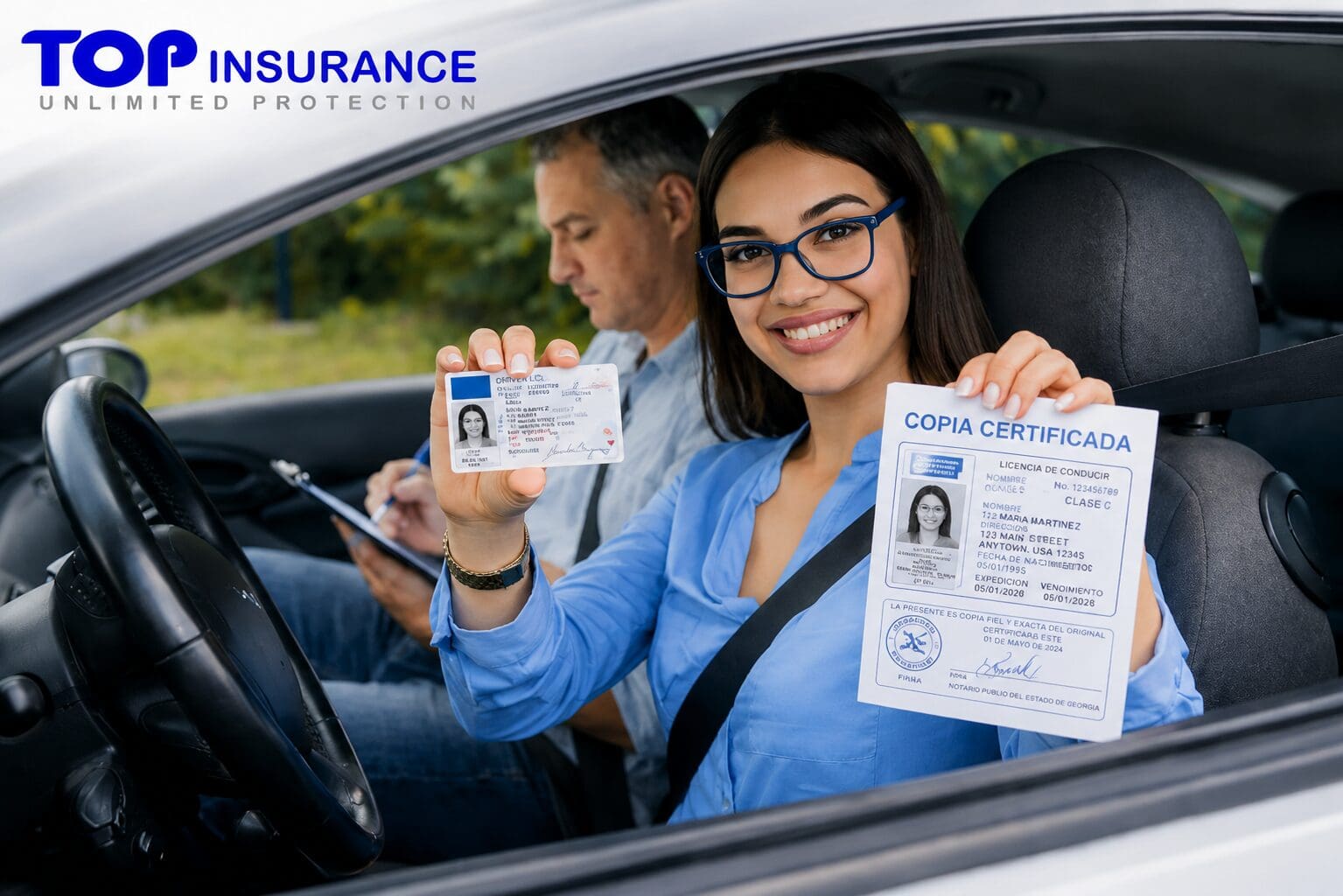
Yes, it may be possible to get car insurance without a U.S. driver’s license. Many insurers can consider applicants who have a valid foreign driver’s license, an international driving permit used alongside a foreign license, a learner’s permit, or a licensed primary driver listed on the policy.
However, eligibility is not automatic. Insurance companies, state laws, vehicle-registration rules, and the reason you do not have a U.S. license can all affect your options.
If you are new to the United States, visiting temporarily, buying a vehicle, or helping insure a family member’s car, this guide explains how auto insurance without a U.S. driver’s license works in 2026.
Important: Having insurance does not make it legal to drive without a valid license or other driving authorization accepted by the state where you are driving. Always verify local driving and licensing requirements before getting behind the wheel.
Quick Answer: Can You Get Car Insurance Without a U.S. License?
In many cases, yes. You may be able to buy or be included on an auto insurance policy if you:
-
Have a valid, unexpired driver’s license from another country.
-
Are visiting the United States temporarily.
-
Have an International Driving Permit (IDP) used together with a valid foreign driver’s license.
-
Own a car but another licensed person is the primary driver.
-
Have a learner’s permit.
-
Need insurance for a parked, stored, classic, or collectible vehicle.
-
Have a suspended license and need coverage for a reinstatement-related filing, where applicable.
-
Are a non-U.S. citizen without a Social Security number, depending on the insurer’s underwriting rules.
Insurers often request a U.S. license number because it helps them review driving history and price a policy. If you do not have one, an insurer may instead ask for information such as a foreign license, passport, state-issued ID, vehicle identification number, or the valid license information of the person who will drive the car most often.
According to Liberty Mutual, some drivers may be able to obtain coverage using a valid, unexpired foreign license, although requirements can depend on the driver’s home country, time in the United States, and the state where they live or drive.
Who May Need Auto Insurance Without a U.S. Driver’s License?
There are several common situations where someone may need coverage but may not yet hold a U.S. driver’s license.
International visitors and tourists
A visitor may have a valid foreign driver’s license and need insurance for a rental car or a personally owned vehicle. Rental companies commonly offer coverage options, although availability and requirements vary.
For longer stays, it is important to review the licensing rules of the state where you will be living or driving.
New residents of the United States
If you recently moved to the U.S., you may be transitioning from a foreign license to a state-issued U.S. driver’s license. Some insurers may be able to offer coverage while you complete that process.
Non-U.S. citizens and immigrants
Citizenship is not the same as driving eligibility or insurance eligibility. A non-U.S. citizen may qualify for auto insurance if the insurer can verify the necessary information and the applicant meets the company’s underwriting requirements.
Vehicle owners who do not drive
You may own a vehicle but not operate it. For example:
-
A spouse, adult child, caregiver, or employee is the primary driver.
-
You are unable to drive for medical or personal reasons.
-
You own a vehicle for a family member.
-
You own a classic or collector vehicle that is stored.
-
Your vehicle is parked while you work toward a license.
In these cases, an insurer may require the actual primary driver to be listed on the policy.
Drivers with a learner’s permit
A person with a learner’s permit may need to be added to a parent’s, guardian’s, or household member’s policy. Requirements differ by insurer and state, so it is important to ask before assuming coverage is in place.
Drivers with a suspended or revoked license
Insurance may still be necessary when a license is suspended, especially if a state requires proof of financial responsibility before reinstatement. However, this is a specialized situation and often requires speaking directly with an agent or insurer.
Progressive notes that people may be able to purchase insurance without a license in certain circumstances, often by listing a licensed primary driver. It also emphasizes that insurance does not authorize someone to drive without a valid license.
Foreign Driver’s License vs. International Driving Permit: What Is the Difference?
These documents are often confused, but they are not the same.
Foreign driver’s license
A foreign driver’s license is a license issued by another country. Depending on state law and insurer guidelines, a valid foreign license may be accepted for a limited period or used as part of an insurance application.
International Driving Permit (IDP)
An International Driving Permit is generally a translation or companion document that is used with a valid driver’s license from your home country.
An IDP is not a replacement for a driver’s license, and it is not a standalone authorization to drive. If you have an IDP, keep your valid foreign license with you as well.
U.S. driver’s license
A U.S. driver’s license is issued by the state where you live. If you plan to become a long-term resident, most states will require you to obtain a local license after a certain period.
Can You Get Car Insurance Without a Social Security Number?
Possibly. A Social Security number is commonly used to help insurers verify identity and access certain records, but it is not always the only option.
Depending on the insurance company, you may be able to apply using alternative information, such as:
-
Passport
-
Foreign driver’s license
-
State-issued identification card
-
Individual Taxpayer Identification Number (ITIN), if applicable
-
Visa or immigration documentation, if requested
-
Vehicle information
-
Address and residency information
-
A valid U.S. driver’s license for the primary driver
Requirements vary significantly by company. Be truthful and consistent when providing information. Using inaccurate information, listing the wrong primary driver, or failing to disclose household drivers can lead to policy problems or claim disputes.
How to Get Car Insurance Without a U.S. Driver’s License
Online quote systems often require a U.S. license number, so speaking with an independent insurance agency may be the most efficient option.
1. Explain your situation clearly
Tell the agent or insurer why you do not have a U.S. license. For example:
-
“I have a valid license from another country.”
-
“I am visiting the U.S. temporarily.”
-
“I recently moved to Georgia and am working on my state license.”
-
“I own the vehicle, but my spouse is the primary driver.”
-
“The car will be stored and not driven.”
-
“My license is suspended and I need to understand my insurance options.”
The reason matters because it can affect the available policy type, required documents, and price.
2. Identify the true primary driver
The primary driver is the person who uses the vehicle most often. Insurance companies use this information to evaluate risk and determine the policy premium.
If someone else drives the vehicle regularly, list that person accurately. Do not name someone as the primary driver simply to try to obtain a lower rate if they are not actually the main user of the vehicle.
3. Gather your documents
Before requesting a quote, be prepared to provide some combination of the following:
-
Valid foreign driver’s license, if applicable
-
Passport or government-issued photo ID
-
U.S. address
-
Vehicle year, make, model, and VIN
-
Vehicle registration details, if available
-
Driver information for all household members who may operate the car
-
U.S. driver’s license number for the primary driver, if someone else will drive
-
Prior insurance history, if available
-
Details about the vehicle loan or lease, if applicable
4. Compare equivalent coverage
When comparing quotes, make sure each quote includes the same:
-
Liability limits
-
Deductibles
-
Collision coverage
-
Comprehensive coverage
-
Uninsured/underinsured motorist coverage
-
Rental reimbursement
-
Roadside assistance
-
Named or excluded drivers
A lower price may reflect lower limits or fewer protections—not necessarily a better policy.
5. Ask about coverage before driving
Do not assume a policy is active simply because you began a quote or made a payment. Confirm:
-
The effective date and time
-
Which drivers are listed
-
Whether you are excluded from driving
-
Whether the vehicle is properly registered
-
Whether your license or foreign license is acceptable for your intended use
-
What proof of insurance is available
What Types of Coverage Might You Need?
The right coverage depends on your vehicle, state requirements, budget, and whether you own, finance, lease, or rent the vehicle.
Liability insurance
Liability insurance helps pay for covered injuries or property damage you cause to others in an at-fault accident. Most states require a minimum amount of liability coverage to legally drive.
Collision coverage
Collision coverage may help repair or replace your vehicle after a covered crash with another vehicle or object, subject to the deductible and policy terms.
Comprehensive coverage
Comprehensive coverage may help with certain non-collision losses, such as theft, vandalism, fire, weather damage, falling objects, or animal strikes.
This can be especially helpful if a vehicle is stored or parked and you want protection from theft or physical damage without driving it.
Uninsured/underinsured motorist coverage
Uninsured/underinsured motorist coverage may help if another driver causes an accident and has no insurance or insufficient insurance. Availability and rules vary by state and insurer.
Non-owner car insurance
A non-owner policy may be an option for people who do not own a vehicle but occasionally borrow or rent cars. It generally provides liability coverage and usually does not include collision or comprehensive coverage for the vehicle itself.
Not every insurer offers this policy type, and eligibility may depend on whether you have a valid driver’s license or legally recognized driving authorization.
Can You Register a Car Without a U.S. Driver’s License?
Vehicle registration and insurance are separate processes, but they are often connected.
In many states, you may be able to own or register a vehicle without a U.S. driver’s license. However, the documents needed for registration—including identification, insurance proof, title, emissions testing, and residency documentation—vary by state.
Before buying a vehicle, check with your local motor vehicle agency about the exact registration requirements for your situation.
Can You Get Car Insurance in Georgia Without a U.S. Driver’s License?
You may be able to obtain auto insurance in Georgia without a U.S. driver’s license, depending on the insurer, your documentation, and who will operate the vehicle.
Georgia drivers are generally required to carry liability insurance. The minimum limits are commonly written as 25/50/25:
-
$25,000 bodily injury liability per person
-
$50,000 bodily injury liability per accident
-
$25,000 property damage liability per accident
If you own a car in Georgia but someone else will drive it, you may be able to insure the vehicle by listing that person as the primary driver. If you plan to drive regularly as a Georgia resident, confirm the requirements and timeline for obtaining a Georgia driver’s license.
Because insurance eligibility can differ among carriers, working with an independent agency can help you compare available options.
Will Insurance Cost More Without a U.S. License?
It may cost more, but not always.
Insurance companies use many factors to determine pricing, such as:
-
Driving history
-
Years of driving experience
-
Claims history
-
Vehicle type
-
Location
-
Coverage limits
-
Deductibles
-
Credit-based insurance score, where permitted by law
-
The primary driver’s record
-
Whether the insurer can verify your driving history
A foreign driving history may not transfer automatically into U.S. insurance-rating systems. As a result, some insurers may treat an applicant as having limited or no verifiable driving history in the U.S.
That does not mean you should accept the first quote you receive. Compare options with the same coverage levels and disclose all information accurately.
Common Mistakes to Avoid
Driving because you have insurance
Insurance is not permission to drive. You still need a valid license or legally recognized driving authorization under the laws of the state where you are operating the vehicle.
Using an IDP without a valid foreign license
An International Driving Permit is generally intended to accompany a valid foreign license. It is not a substitute for one.
Listing the wrong primary driver
The primary driver should be the person who uses the vehicle most often. Incorrect driver information can create serious coverage issues.
Buying only the state minimum without considering risk
Minimum coverage may meet a legal requirement, but it may not provide enough protection after a major accident. Consider your vehicle value, income, savings, family responsibilities, and financial exposure.
Assuming every insurer has the same rules
Insurers have different underwriting guidelines. If one company cannot offer a policy, another may have a different option.
Frequently Asked Questions
Can a non-U.S. citizen get car insurance?
Yes, many non-U.S. citizens may be able to obtain auto insurance. Eligibility depends on the insurer, your state, your documentation, and whether you have a valid foreign license or licensed primary driver.
Do I need a U.S. driver’s license to insure a car?
Not always. You may be able to insure a car with a valid foreign license or by listing another licensed person as the primary driver. The insurance company decides eligibility based on its underwriting rules.
Can I drive in the U.S. with a foreign driver’s license?
Possibly, but the answer depends on the state, the type and validity of your foreign license, the length of your stay, and your residency status. Contact the appropriate state motor vehicle agency to confirm before driving.
Is an International Driving Permit the same as a driver’s license?
No. An IDP is generally used as a companion document with a valid foreign driver’s license. It does not replace a license.
Can I get car insurance without a Social Security number?
Possibly. Some insurers may accept other identification or tax documentation, but requirements vary. An agency can help identify available options.
Can I insure a car if someone else drives it?
Often, yes. You may be able to own the policy and vehicle while listing the person who drives the car most frequently as the primary driver. The information on the policy must be accurate.
Can I get full coverage without a U.S. driver’s license?
Possibly. If an insurer approves the policy, collision and comprehensive coverage may be available. Financing or leasing a vehicle often requires these coverages.
Get Help Finding Auto Insurance Options
Getting car insurance without a U.S. driver’s license can feel complicated, but you do not have to navigate the options alone. The key is to explain your situation clearly, provide accurate documentation, list the correct drivers, and compare coverage—not just prices.
At TOP Insurance LLC, we can help you explore auto insurance options based on your specific needs.
🌐 Start an auto insurance quote: auto.topinsus.com
💻 Visit our website: TOP Insurance
📞 Call TOP Insurance LLC: +1 877 579 0587
This article is for general educational purposes only and is not legal, financial, immigration, or insurance advice. Insurance availability, eligibility, pricing, coverage, exclusions, and state requirements vary by insurer and individual circumstances. Always review your policy documents and confirm local licensing and registration requirements before driving.
Explore your coverage options

TOP Insurance LLC is a licensed independent insurance agency serving Georgia, Florida, South Carolina, Tennessee, Alabama, Indiana and Texas. Our bilingual team of licensed agents compares options from several carriers to find an alternative that fits your needs and budget. With offices in Duluth, Lawrenceville and Gainesville, GA, we specialize in auto, home, life, health and commercial insurance for the Hispanic community and all residents. Some carriers may offer options for applicants with an ITIN, consular ID, foreign passport or foreign license; required documentation and eligibility depend on each carrier.
Ready for your free quote?
Our bilingual agents help you compare options from multiple carriers to find an alternative that fits your needs and budget. Same-day response, no obligation.