What is a Business Owner’s Policy?
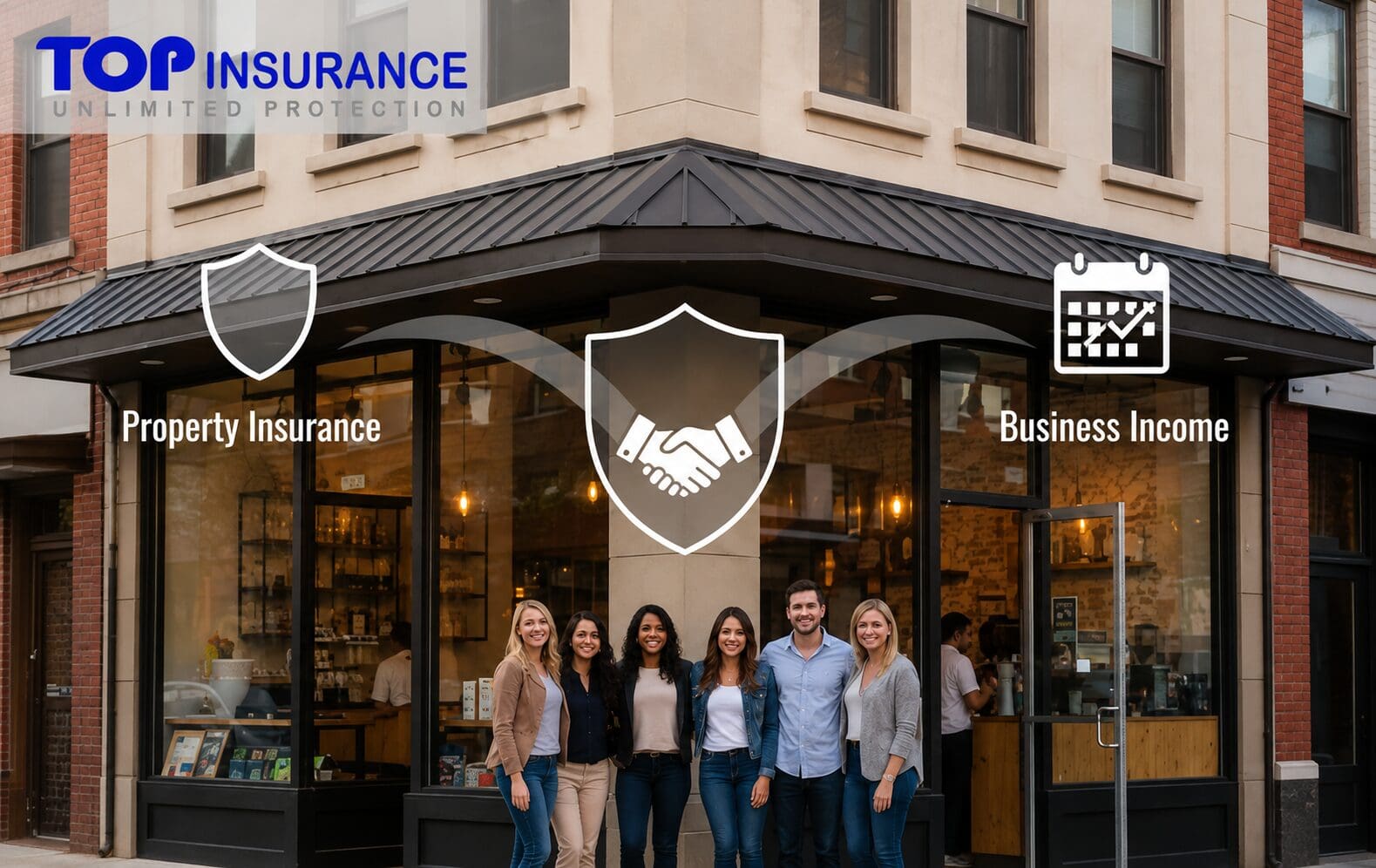
A Business Owner’s Policy is a commercial insurance package that commonly combines general liability, commercial property, and business income or business interruption coverage.
- Insurance type
- General Liability
- Languages
- Spanish and English
- Documentation
- Options available depending on carrier and eligibility
- Free quote
- Yes, no obligation
- Carriers
- Several compared
- Phone
- 1-877-579-0587
Fast, free quotes with bilingual agents. No obligation.
Running a business involves more than serving customers and generating revenue. Every company faces risks that can affect its property, employees, customers, income, equipment, reputation, and ability to continue operating.
A customer could slip and fall inside your business. A fire could damage your inventory and equipment. A storm could affect your commercial location. A burst pipe could force you to close temporarily. A product sold by your business could allegedly injure a customer. In each situation, the resulting expenses could be significant.
A Business Owner’s Policy, commonly called a BOP, is designed to combine several important commercial insurance coverages into one policy. For many eligible small and medium-sized businesses, a BOP may provide a convenient way to organize protection for liability, commercial property, and business income.
However, a BOP is not automatically the right solution for every business. The correct policy depends on the company’s operations, location, revenue, property, employees, contracts, claims history, and overall risk exposure.
This guide explains what a Business Owner’s Policy is, what it may cover, what it typically does not cover, which businesses may qualify, how the cost is determined, and what additional insurance your company may need.
Quick Answer: What Is a Business Owner’s Policy?
A Business Owner’s Policy is a commercial insurance package that usually combines several core coverages, such as:
-
General liability insurance.
-
Commercial property insurance.
-
Business income or business interruption coverage.
-
Extra expense coverage.
-
Coverage for tenant improvements, depending on the policy.
-
Additional endorsements or optional coverages, depending on the business and insurance company.
A BOP may be appropriate for certain:
-
Retail stores.
-
Restaurants and cafés.
-
Offices.
-
Beauty salons and barbershops.
-
Small contractors.
-
Service businesses.
-
Local shops.
-
Professional businesses with eligible operations.
-
Businesses renting commercial premises.
-
Some home-based businesses.
A BOP generally does not replace every type of commercial insurance. A business may still need separate policies for:
-
Workers’ Compensation.
-
Commercial Auto.
-
Professional Liability or Errors and Omissions.
-
Cyber Liability.
-
Employment Practices Liability.
-
Equipment Breakdown.
-
Commercial Umbrella.
-
Flood or other specialty risks.
The exact protection depends on the policy contract, coverage limits, exclusions, deductibles, endorsements, and the business information submitted during underwriting.
What Does Business Owner’s Policy Mean?
Business Owner’s Policy means a package of insurance coverages designed for eligible business owners. The purpose is to combine multiple types of commercial protection into one policy instead of purchasing every coverage separately.
A BOP may simplify insurance management because the business may have:
-
One commercial insurance policy.
-
One renewal date.
-
One insurance company for the package.
-
A combined billing arrangement.
-
Coordinated coverage for several common business risks.
A BOP is not a universal policy with identical protection for every company. The coverage available to a retail store may be different from the coverage available to a restaurant, office, salon, or contractor.
For example:
-
A clothing store may need protection for inventory, displays, computers, furniture, and customer liability.
-
A restaurant may need coverage for kitchen equipment, food inventory, business income, and premises liability.
-
A professional office may need property and general liability coverage but may also require separate professional liability insurance.
-
A contractor may need a BOP along with commercial auto, tools and equipment coverage, workers’ compensation, and additional liability protection.
The policy should always reflect the actual activities of the company.
What Does a Business Owner’s Policy Cover?
The coverages included in a BOP vary by insurance company and policy form. However, most BOPs are designed around three primary areas of protection:
-
General liability.
-
Commercial property.
-
Business income or business interruption.
Additional coverages may be available through endorsements or package options.
1. General Liability Insurance
General liability coverage may protect the business against certain third-party claims involving:
-
Bodily injury.
-
Property damage.
-
Personal injury.
-
Advertising injury.
-
Products-related claims.
-
Certain accidents connected to business operations.
Examples may include:
-
A customer slips and falls inside the business.
-
An employee accidentally damages a customer’s property.
-
A visitor is injured because of an unsafe condition on the premises.
-
A product sold by the business allegedly causes injury or property damage.
-
The business is accused of certain covered advertising or personal injury offenses.
General liability coverage may help pay for:
-
Legal defense costs.
-
Attorney fees.
-
Court-related expenses.
-
Settlements.
-
Covered judgments.
Coverage is subject to the policy’s limits, exclusions, conditions, and definitions. A general liability policy does not cover every type of claim or business dispute.
2. Commercial Property Insurance
Commercial property coverage may protect property used in the operation of the business against certain covered causes of loss.
Depending on the policy, commercial property may include:
-
The commercial building, if the business owns it.
-
Tenant improvements.
-
Furniture.
-
Fixtures.
-
Business equipment.
-
Computers.
-
Electronic equipment.
-
Tools.
-
Machinery.
-
Inventory.
-
Merchandise.
-
Supplies.
-
Business personal property.
-
Signs and certain installed property.
For example, if a covered fire damages a store’s inventory, furniture, and computer systems, the commercial property portion of the BOP may help pay for repair or replacement, subject to the policy terms and deductible.
Business owners should carefully review the value of their property. Underestimating the value of inventory, equipment, or improvements can create problems after a loss.
Replacement Cost and Actual Cash Value
Commercial property may be valued using different methods.
Replacement cost generally refers to the cost of repairing or replacing damaged property with property of similar type and quality, subject to the policy terms.
Actual cash value generally takes depreciation into consideration when determining the value of damaged property.
The method used can affect the amount available after a covered loss. Business owners should ask how their property is valued and whether the selected limits are sufficient.
3. Business Income and Business Interruption Coverage
Business income coverage may help replace certain income lost when a covered physical loss forces the business to suspend or reduce operations.
Depending on the policy, this coverage may help with:
-
Lost business income.
-
Net income the business would have earned.
-
Continuing operating expenses.
-
Rent.
-
Utilities.
-
Loan payments.
-
Certain payroll expenses.
-
Taxes.
-
Other eligible expenses that continue during a covered interruption.
For example, a fire may force a restaurant to close while repairs are completed. If the event is covered and the policy requirements are met, business income coverage may help compensate for certain lost income and continuing expenses during the restoration period.
Business income coverage does not necessarily apply to every decrease in sales. It generally requires a covered loss and must be interpreted according to the policy’s conditions, limits, waiting periods, and restoration period.
4. Extra Expense Coverage
Extra expense coverage may help pay reasonable additional costs incurred to reduce the interruption of business operations after a covered loss.
Examples may include:
-
Renting a temporary location.
-
Moving operations to another premises.
-
Renting temporary equipment.
-
Paying for temporary services.
-
Expediting repairs.
-
Taking emergency measures to continue operating.
The purpose of this coverage is to help the business resume operations sooner and reduce the financial effect of a covered shutdown.
5. Tenant Improvements and Betterments
Businesses that rent a commercial location may invest significant amounts of money in improvements. These improvements may include:
-
Flooring.
-
Interior walls.
-
Electrical work.
-
Plumbing.
-
Lighting.
-
Counters.
-
Cabinets.
-
Shelving.
-
Security systems.
-
Restaurant installations.
-
Salon fixtures.
-
Built-in equipment.
A BOP may provide protection for eligible tenant improvements. However, the business owner should review the lease and determine which party is responsible for insuring each part of the property.
The building owner’s policy may protect the structure, but it may not protect improvements paid for by the tenant.
6. Product Liability
Businesses that sell, distribute, manufacture, or modify products may face product-related claims.
Examples may include:
-
A customer claims that a product caused an injury.
-
A product allegedly damages a customer’s property.
-
Food sold by the business is alleged to have caused an illness.
-
A component installed by the business fails.
-
A product modified or distributed by the company causes damage.
Product liability may be included within general liability, depending on the business operations and policy terms. Companies that manufacture, import, modify, or distribute higher-risk products may need specialized underwriting and higher limits.
Business Owner’s Policy Coverage Table
| Coverage | What It May Protect | Example |
|---|---|---|
| General liability | Third-party claims involving injury or property damage | A customer falls inside the business |
| Commercial property | Business building, equipment, inventory, and furniture | A covered fire damages business property |
| Business income | Certain lost income after a covered interruption | A store must close during covered repairs |
| Extra expense | Costs to continue or resume operations | Renting temporary business space |
| Tenant improvements | Improvements made to a leased premises | Damage to installed business improvements |
| Product liability | Certain claims involving products sold or distributed | A customer alleges a product caused injury |
What Does a Business Owner’s Policy Not Cover?
A BOP can provide valuable protection, but it does not cover every risk a company may face. Some insurance needs are generally handled through separate policies or endorsements.
Workers’ Compensation
Workers’ Compensation is designed to address covered work-related injuries and illnesses suffered by employees. It may provide medical benefits and wage-related benefits according to applicable laws and policy terms.
A BOP should not be treated as a replacement for Workers’ Compensation insurance. Businesses with employees should review their legal obligations and insurance needs with a licensed insurance professional.
Commercial Auto Insurance
A BOP generally does not provide full coverage for vehicles used in business operations.
Commercial Auto may be necessary for:
-
Company-owned vehicles.
-
Delivery vans.
-
Work trucks.
-
Business-use automobiles.
-
Vehicles transporting equipment.
-
Vehicles used by employees for business activities.
-
Vehicles used to transport products or materials.
A personal auto policy may not provide appropriate protection when a vehicle is regularly used for business purposes.
Professional Liability Insurance
Professional Liability, also called Errors and Omissions insurance, may protect against certain claims involving professional services.
It may be important for:
-
Consultants.
-
Accountants.
-
Designers.
-
Technology professionals.
-
Marketing agencies.
-
Real estate professionals.
-
Engineers.
-
Architects.
-
Insurance professionals.
-
Business advisors.
-
Other service providers.
General liability typically addresses different risks from professional liability. A business can need both types of protection.
Cyber Liability Insurance
Businesses that store personal information, process payments, use online systems, or depend on computer networks may face cyber risks.
Cyber Liability coverage may address certain expenses related to:
-
Data breaches.
-
Cyberattacks.
-
Ransomware.
-
Notification of affected individuals.
-
Forensic investigations.
-
Data recovery.
-
Cyber extortion.
-
Business interruption caused by a covered cyber event.
-
Liability claims from affected customers.
A standard BOP should not automatically be assumed to provide broad cyber protection.
Employment Practices Liability Insurance
Employment Practices Liability Insurance, or EPLI, may address certain claims involving employment-related allegations, such as:
-
Wrongful termination.
-
Discrimination.
-
Harassment.
-
Retaliation.
-
Failure to promote.
-
Other employment-related disputes.
A BOP generally does not replace EPLI.
Equipment Breakdown Coverage
Businesses that depend on refrigeration, electrical equipment, boilers, machinery, or specialized systems may need Equipment Breakdown coverage.
This may be especially relevant for:
-
Restaurants.
-
Grocery stores.
-
Laundromats.
-
Manufacturing businesses.
-
Workshops.
-
Commercial kitchens.
-
Businesses with refrigeration systems.
-
Companies dependent on specialized machinery.
Flood Insurance
Flood damage is commonly excluded from standard commercial property policies. A business located in an area with flood exposure may need separate flood insurance or another specialized solution.
Earthquake and Specialty Risks
Earthquake, earth movement, pollution, contamination, and other specialty risks may be excluded or limited. Additional coverage may be available depending on the business and location.
Commercial Umbrella Insurance
A Commercial Umbrella policy may provide additional liability limits above certain underlying policies. This can be considered by businesses with significant assets, contracts, customer traffic, employees, or liability exposure.
Which Businesses May Qualify for a BOP?
Insurance companies establish their own eligibility requirements. A Business Owner’s Policy is generally intended for small and medium-sized businesses with operations that fit the insurer’s guidelines.
Businesses that may qualify can include:
-
Retail stores.
-
Clothing stores.
-
Offices.
-
Beauty salons.
-
Barbershops.
-
Cafés.
-
Bakeries.
-
Small restaurants.
-
Photography studios.
-
Small contractors.
-
Cleaning companies.
-
Maintenance companies.
-
Repair businesses.
-
Local service providers.
-
Professional offices.
-
Small wholesalers.
-
Certain home-based businesses.
Eligibility depends on more than the name of the business. The insurer may also consider:
-
The exact services provided.
-
Whether employees work at customer locations.
-
The use of subcontractors.
-
The size of the premises.
-
The type of equipment used.
-
The presence of cooking operations.
-
The amount and type of inventory.
-
The annual revenue.
-
The number of employees.
-
Previous claims.
-
Whether hazardous materials are used.
-
Whether customers visit the premises.
Businesses That May Need a More Specialized Policy
Some businesses may not qualify for a standard BOP or may need a more customized commercial insurance program.
This may occur when a business:
-
Has complex operations.
-
Has significant annual revenue.
-
Operates many locations.
-
Manufactures high-risk products.
-
Uses hazardous materials.
-
Performs construction work with significant exposures.
-
Uses heavy machinery.
-
Has a large number of employees.
-
Operates a nightclub or high-risk entertainment venue.
-
Transports products or materials.
-
Performs work at significant heights.
-
Stores large amounts of inventory.
-
Owns several commercial buildings.
-
Handles sensitive data on a large scale.
-
Has significant pollution or environmental exposure.
Depending on the circumstances, the company may need a Commercial Package Policy, specialty insurance, excess liability, or multiple separate policies.
How Much Does a Business Owner’s Policy Cost?
The cost of a Business Owner’s Policy varies by business. There is no single price that applies to every company.
Factors that may influence the premium include:
-
Type of business.
-
Business location.
-
Annual revenue.
-
Payroll.
-
Number of employees.
-
Size of the premises.
-
Whether the business owns or rents the property.
-
Building construction.
-
Age and condition of the building.
-
Fire protection systems.
-
Security systems.
-
Inventory value.
-
Equipment value.
-
Tenant improvements.
-
Claims history.
-
Coverage limits.
-
Deductible.
-
Business operations.
-
Use of subcontractors.
-
Products sold or manufactured.
-
Customer traffic.
-
Previous insurance history.
-
Additional coverage selected.
For example, a small office with limited equipment and low customer traffic will have a different risk profile from a restaurant with cooking operations, expensive equipment, food inventory, and frequent visitors.
An accurate quote requires business-specific information. A general online estimate may not reflect the coverage your company actually needs.
How Can You Reduce the Cost of a BOP?
Reducing the premium should not mean removing essential protection. The goal is to obtain appropriate coverage at a reasonable cost.
Compare Multiple Insurance Options
Insurance companies may evaluate similar businesses differently. Comparing available options can help identify a suitable combination of price, coverage, limits, and service.
Maintain a Good Claims History
Loss prevention, safety procedures, and responsible risk management may help improve the company’s insurance profile.
Install Safety and Security Systems
Depending on the property and insurer, certain measures may help reduce risk, including:
-
Alarm systems.
-
Security cameras.
-
Sprinkler systems.
-
Fire extinguishers.
-
Smoke detectors.
-
Access-control systems.
-
Regular equipment inspections.
-
Written safety procedures.
Review the Deductible
A higher deductible may reduce the premium, but the business must be financially prepared to pay that deductible after a covered loss.
Review Coverage Limits
Choosing limits that are too low can create serious financial problems after a claim. Limits should reflect the value of the property and the company’s liability exposure.
Keep Business Information Updated
The policy should be reviewed when the business:
-
Moves locations.
-
Adds equipment.
-
Increases inventory.
-
Adds employees.
-
Changes services.
-
Expands operations.
-
Opens another location.
-
Experiences significant revenue growth.
Train Employees
Employee training may help reduce accidents, customer injuries, property damage, and workplace hazards.
Use Written Contracts
Written agreements with customers, vendors, landlords, and subcontractors can help define responsibilities and insurance requirements.
BOP vs. General Liability Insurance
| Feature | Business Owner’s Policy | General Liability Policy |
|---|---|---|
| General liability | Usually included | Main coverage |
| Commercial property | Usually included | Usually not included |
| Business income | May be included | Usually not included |
| Equipment and inventory | May be included | Usually not included |
| Tenant improvements | May be included | Usually not included |
| Best suited for | Businesses needing several core coverages | Businesses primarily seeking liability protection |
A business that only needs liability coverage may consider a general liability policy. A company with inventory, equipment, furniture, improvements, or business income exposure may need a broader package.
BOP vs. Commercial Package Policy
| Feature | Business Owner’s Policy | Commercial Package Policy |
|---|---|---|
| Typical customer | Small and eligible businesses | Businesses with more complex exposures |
| Customization | Moderate | Usually more extensive |
| Eligibility | Often subject to specific guidelines | May accommodate broader risks |
| Administration | Generally simpler | May require more detailed underwriting |
| Coverage design | Package structure | Can be highly customized |
| Best suited for | Common small business risks | Complex or larger commercial operations |
BOP vs. Commercial Insurance
“Commercial insurance” is a broad term. It may refer to many types of policies, including:
-
Business Owner’s Policy.
-
General Liability.
-
Commercial Property.
-
Commercial Auto.
-
Workers’ Compensation.
-
Professional Liability.
-
Cyber Liability.
-
Commercial Umbrella.
-
Inland Marine.
-
Equipment Breakdown.
-
Employment Practices Liability.
-
Pollution Liability.
A BOP is one type of commercial insurance package. It may be a starting point for some companies but may need to be supplemented with other policies.
Practical Business Scenarios
Scenario 1: A Fire Damages a Retail Store
A retail store experiences a covered fire that damages inventory, display fixtures, computers, and interior improvements.
The commercial property portion of a BOP may help repair or replace covered property. Business income coverage may help address certain lost income and continuing expenses if the policy requirements are satisfied.
Scenario 2: A Customer Falls Inside the Business
A customer slips on a wet floor and claims medical expenses and other damages.
General liability coverage may respond to the claim if it is covered and no exclusion applies. The policy may also help with legal defense costs, subject to its terms and limits.
Scenario 3: A Business Must Temporarily Relocate
A covered loss makes the business location unusable. The owner rents temporary space to continue serving customers.
Business income and extra expense coverage may help with eligible costs, subject to the policy’s terms, limits, waiting period, and restoration period.
Scenario 4: A Business Experiences a Data Breach
A business stores customer information and suffers a cyber incident.
The BOP may not provide sufficient cyber protection. A separate Cyber Liability policy may be necessary to address costs associated with investigation, notification, recovery, and potential liability.
Scenario 5: An Employee Is Injured at Work
An employee is injured while performing job duties.
This type of event is generally associated with Workers’ Compensation insurance, not the general liability portion of a BOP.
Scenario 6: A Business Uses a Delivery Van
A company uses a van to deliver products to customers.
The BOP generally does not replace Commercial Auto insurance. The vehicle and its business use should be evaluated separately.
Do Home-Based Businesses Need a BOP?
A home-based business should not assume that a homeowners insurance policy provides complete commercial protection.
Homeowners insurance may have limited coverage for:
-
Business equipment.
-
Inventory.
-
Customer visits.
-
Business liability.
-
Commercial income.
-
Business-related property damage.
A BOP may be an option for certain home-based businesses, depending on:
-
Business activity.
-
Revenue.
-
Equipment.
-
Inventory.
-
Customer visits.
-
Employees.
-
Business location.
-
Insurance company eligibility rules.
A home-based business should review its current coverage before assuming it is protected.
Do Businesses That Rent a Location Need a BOP?
A business renting a commercial location may still need coverage for:
-
Inventory.
-
Furniture.
-
Equipment.
-
Tenant improvements.
-
Business income.
-
General liability.
-
Damage to rented premises.
-
Contractual insurance requirements.
The landlord’s insurance generally protects the building owner’s interests. It usually does not protect the tenant’s inventory, equipment, business income, or liability arising from the tenant’s operations.
A commercial lease may require:
-
General liability limits.
-
Additional Insured status.
-
A Certificate of Insurance.
-
Specific insurance wording.
-
Coverage for tenant improvements.
-
Certain property or liability requirements.
What Is a Certificate of Insurance?
A Certificate of Insurance, or COI, is a document that summarizes certain insurance information.
A landlord, general contractor, customer, vendor, or business partner may request a COI to verify coverage.
A COI may show:
-
Named insured.
-
Insurance company.
-
Policy types.
-
Coverage limits.
-
Policy effective dates.
-
Policy expiration dates.
-
Additional Insured information, when applicable.
A Certificate of Insurance does not replace the actual policy and generally cannot expand coverage beyond the policy terms.
Business Owner’s Policy Checklist
Before requesting a BOP quote, prepare the following information:
-
Legal business name.
-
Trade name or DBA.
-
Business address.
-
Business structure.
-
Date operations began.
-
Detailed description of business activities.
-
Estimated annual revenue.
-
Number of employees.
-
Estimated payroll.
-
Use of subcontractors.
-
Whether the premises are owned or rented.
-
Square footage.
-
Inventory value.
-
Equipment value.
-
Tenant improvement value.
-
Claims history.
-
Current insurance information.
-
Lease insurance requirements.
-
Requested liability limits.
-
Certificate of Insurance requirements.
-
Additional Insured requirements.
-
Vehicles used for business.
-
Professional services provided.
-
Security and fire protection details.
Common Mistakes When Buying a BOP
Choosing a Policy Based Only on Price
The least expensive policy may have lower limits, higher deductibles, broader exclusions, or less protection for the company’s actual risks.
Failing to Report All Business Activities
The insurer should receive an accurate description of the business. Undisclosed activities may create coverage issues during a claim.
Underestimating Inventory or Equipment
The business should review property limits regularly, especially during periods of expansion or seasonal inventory increases.
Confusing Liability Coverage With Property Coverage
General liability coverage is designed for certain third-party claims. It does not automatically cover damage to the business’s own inventory, equipment, furniture, or building.
Ignoring Business Income Coverage
Business owners should review:
-
The waiting period.
-
Coverage limit.
-
Restoration period.
-
Covered causes of loss.
-
Eligible continuing expenses.
-
Payroll provisions.
-
Extra expense coverage.
Failing to Add Necessary Policies
A business may have a BOP and still need Commercial Auto, Workers’ Compensation, Professional Liability, Cyber Liability, Equipment Breakdown, or Umbrella coverage.
Failing to Update the Policy
The policy should be reviewed after changes in location, revenue, employees, inventory, equipment, services, or business structure.
Frequently Asked Questions
What is a Business Owner’s Policy?
A Business Owner’s Policy is a commercial insurance package that commonly combines general liability, commercial property, and business income or business interruption coverage.
What does a BOP cover?
A BOP may cover certain third-party liability claims, commercial property, equipment, inventory, tenant improvements, and business income after a covered interruption. Coverage varies by insurance company and policy.
Is a BOP the same as general liability insurance?
No. General liability is one type of coverage. A BOP typically combines general liability with commercial property and other coverages.
Is a BOP the same as commercial insurance?
No. Commercial insurance is a broad term that includes many different policies. A BOP is one type of commercial insurance package.
Does a BOP include Workers’ Compensation?
A BOP generally does not replace Workers’ Compensation. Businesses with employees should review Workers’ Compensation separately.
Does a BOP cover business vehicles?
A BOP generally does not provide the same protection as a Commercial Auto policy. Business-use vehicles should be evaluated separately.
Does a BOP cover professional mistakes?
A BOP may not cover professional errors, incorrect advice, or failures in professional services. Professional Liability or Errors and Omissions coverage may be necessary.
How much does a BOP cost?
The cost depends on the business type, location, revenue, property value, employees, claims history, limits, deductible, and selected coverages. An accurate quote requires specific business information.
Can a home-based business purchase a BOP?
Some home-based businesses may qualify, depending on their operations, equipment, inventory, revenue, and the insurance company’s eligibility rules.
Does a BOP cover flood damage?
Flood coverage is commonly excluded from standard commercial property policies. A separate or specialized policy may be necessary.
Does a BOP include Cyber Liability?
A BOP should not automatically be assumed to include broad cyber protection. Businesses with data and technology exposures may need Cyber Liability insurance.
Do I need a BOP if my landlord has insurance?
You may still need your own coverage because the landlord’s policy generally does not protect your inventory, equipment, tenant improvements, income, or business liability.
Can I increase my BOP limits?
Higher limits or additional coverages may be available, depending on the insurance company, business type, and underwriting requirements.
How can I get a BOP quote?
You can contact Top Insurance LLC to review your business activities, property, contracts, coverage limits, and commercial insurance needs.
Conclusion
A Business Owner’s Policy can be a practical insurance solution for eligible small and medium-sized businesses. By combining general liability, commercial property, business income, and other available coverages, a BOP may help protect the company’s property, operations, and financial stability.
However, a BOP is not a complete replacement for every type of business insurance. Depending on the company’s operations, it may also need Workers’ Compensation, Commercial Auto, Professional Liability, Cyber Liability, Equipment Breakdown, Commercial Umbrella, or other specialized coverage.
The right policy should be based on the company’s actual operations, property values, customer exposure, contracts, employees, revenue, location, and potential liability risks.
If you own a retail store, restaurant, office, salon, contractor business, service company, or home-based business in Georgia, Florida, Tennessee, Indiana, South Carolina, Alabama, or Texas, Top Insurance LLC can help you review your commercial insurance options.
Top Insurance LLC
Phone: (877) 579-0587
Website: www.topinsus.com
Commercial Insurance: comercial.topinsus.com
Request a Quote: cotiza.topinsus.com

TOP Insurance LLC is a licensed independent insurance agency serving Georgia, Florida, South Carolina, Tennessee, Alabama, Indiana and Texas. Our bilingual team of licensed agents compares options from several carriers to find an alternative that fits your needs and budget. With offices in Duluth, Lawrenceville and Gainesville, GA, we specialize in auto, home, life, health and commercial insurance for the Hispanic community and all residents. Some carriers may offer options for applicants with an ITIN, consular ID, foreign passport or foreign license; required documentation and eligibility depend on each carrier.
Ready for your free quote?
Our bilingual agents help you compare options from multiple carriers to find an alternative that fits your needs and budget. Same-day response, no obligation.